Get A Quotation For Your Warranty Or Service Contract




Heavy rain can cause more damage to a car than many drivers expect. In Dubai, even a short period of flooding or standing water can lead to problems with the engine, brakes, electrical systems, interior, and bodywork. If your car was damaged during the recent rain, the good news is that there is a process you can follow to support your insurance claim. One important step is applying for a To Whom It May Concern certificate through the Dubai Police app. Here is a simple guide to help you understand what to do. Can you claim for rain damage to your car in Dubai? In many cases, yes. If your car was damaged because of weather conditions such as heavy rain or flooding, you may be able to file an insurance claim. But there is one thing people often miss. A claim is not approved just because the car got wet. Your insurance company will usually check: the type of insurance policy you have the level of damage the cause of the damage the documents you provide That is why it is important to act quickly and collect the right proof. What is the “To Whom It May Concern” certificate? This is a certificate you can request through the Dubai Police app if your vehicle was damaged due to weather conditions. It can help show that the damage happened because of a natural event, such as heavy rain. This document may be useful when you submit your insurance claim. Based on the information shared in the post, the certificate can be requested under the Natural Disasters option in the app. How to apply for the certificate According to the guidance shared online, the process is simple: Download the Dubai Police app Go to the services menu Select Request a Certificate Choose TWIMC Select Natural Disasters Before you apply, make sure you have your vehicle details ready. It is also a good idea to keep photos and videos of the damage. What you should do right after rain damage If your car has been affected by rain, do not rush to start it and do not drive it unless you are sure it is safe. This is especially important if the vehicle has been in deep water. Here are the first steps to take: 1. Take clear photos and videos Capture everything before moving the car or cleaning it. Take photos of: water level around the car damage to the body wet carpets or interior dashboard warning lights any visible mud or water marks This can help support your case later. 2. Do not start the engine if the car was flooded If water entered the engine area, starting the car can make the damage much worse. In some cases, it can completely destroy the engine. If you think water got into the engine, battery area, or electronics, call for recovery instead. 3. Contact your insurance company Ask them what documents they need and whether they want the car inspected before repairs begin. Some insurers may also ask for: the police certificate photos of the damage a workshop inspection report a repair estimate 4. Get the car inspected by a trusted workshop Rain damage is not always visible from the outside. A car may look fine, but hidden issues can appear later. A proper inspection can help identify problems with: engine components transmission brakes suspension wiring and sensors battery and control modules air conditioning system interior mold or water damage Common rain-related car problems After heavy rain, some issues show up immediately. Others take days or even weeks. Here are some of the most common problems we see after water exposure: Electrical faults Modern cars depend heavily on sensors, modules, and wiring. Even a small amount of water can cause warning lights, system errors, and sudden failures. Engine damage If water enters the engine through the intake, the result can be severe internal damage. Brake problems Wet brakes or water-contaminated components can affect braking performance. Interior damage Soaked carpets and seats can lead to bad smells, mold, and long-term cabin damage. Rust and corrosion Moisture left inside hidden areas can start corrosion over time, especially in connectors and metal parts. Why a workshop inspection matters A lot of people wait until the car starts showing obvious signs of trouble. That is a mistake. Rain damage can stay hidden at first. Then later, the owner starts seeing electrical faults, battery drain, strange smells, or performance problems. A proper inspection helps you: understand the full extent of the damage get a repair estimate document the problem for insurance avoid bigger repair bills later At German Experts, we always recommend a full check after any serious rain exposure, especially for German cars with advanced electrical and electronic systems. What if your car still drives normally? Even if the car starts and moves, that does not always mean everything is fine. You should still get it checked if: water entered the cabin the car was driven through deep water warning lights appeared at any time the engine sounds different the brakes feel unusual the AC has a damp smell the electronics are acting strangely Problems can develop slowly after the rain is gone. Need help with rain-damaged vehicle inspection in Dubai? If your vehicle has been affected by the recent rain, getting it inspected early can save you time, money, and stress. At German Experts, we can help inspect your vehicle, assess visible and hidden damage, and guide you on the next steps for repairs. If needed, our team can also provide a workshop inspection report and repair estimate to support your process. Final thoughts Rain damage can be stressful, but the best thing you can do is stay calm and take the right steps. Document the damage, apply for the certificate through the Dubai Police app, speak to your insurer, and have the car inspected by a professional workshop. The sooner you act, the better your chances of avoiding deeper damage and making the claims process smoother. If your car was affected by the recent rain in Dubai, German Experts is here to help.

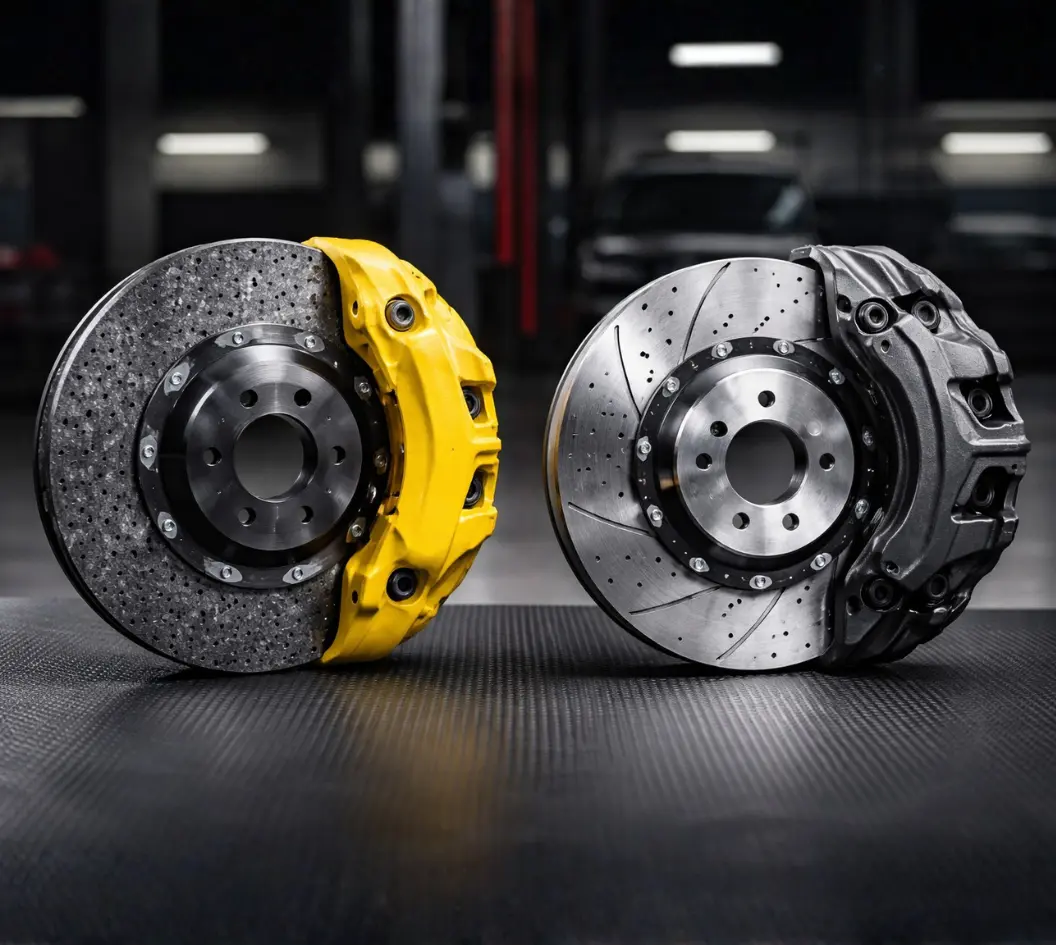
High performance cars attract attention in the UAE for obvious reasons. Long highways, smooth roads, and a strong luxury car culture mean vehicles like the Porsche 911, Ferrari 488, and Lamborghini Huracán are common sights in Dubai and Abu Dhabi. These cars deliver high speed and power, but that performance relies on one critical component: the braking system. This is where many owners face a practical question. Should a performance car use ceramic brakes or traditional steel brakes? At first glance, the answer seems obvious. Ceramic brakes appear in supercars and racing vehicles, which makes them sound like the superior option. But once maintenance costs, climate conditions, and real world driving habits enter the conversation, the decision becomes more complicated. Here’s the thing. Both braking systems have strengths and tradeoffs. Understanding how they behave, how much they cost to maintain, and how they perform in UAE conditions can help owners make a sensible choice. Understanding the Two Types of Brakes Before comparing costs, it helps to understand what these systems actually are. Steel Brakes Steel brakes, often made from cast iron or high grade steel alloys, are the most common braking system used in cars. When the driver presses the brake pedal, pads clamp onto a steel rotor to create friction. That friction slows the vehicle down. This system is simple, reliable, and widely used across the automotive industry. Steel brakes perform well for daily driving and moderate performance use. They are also relatively inexpensive to repair or replace compared with advanced braking systems. Ceramic Brakes Ceramic brakes are usually carbon ceramic brakes. These are made from a composite material that combines carbon fibres with ceramic compounds such as silicon carbide. The manufacturing process involves extremely high temperatures and precise engineering. The result is a brake rotor that is lightweight, highly heat resistant, and very durable. These systems are commonly found in high end sports cars and track focused vehicles because they maintain braking performance under extreme heat and stress. A simple way to think about it is this: Steel brakes are the dependable everyday solution. Ceramic brakes are engineered for high stress performance situations. Why Performance Cars Often Use Ceramic Brakes Luxury sports cars frequently include carbon ceramic brakes as an optional upgrade. In some models, they are part of a performance package. There are several reasons for this. Heat resistance When a car brakes at high speed, the system converts kinetic energy into heat. During aggressive driving or track use, brake temperatures can rise dramatically. Ceramic brakes tolerate far higher temperatures than steel without losing performance. This prevents brake fade, which is the loss of braking power caused by overheating. Weight reduction Ceramic brake discs are significantly lighter than steel rotors. Some systems reduce rotor weight by nearly half. Lower weight at the wheels improves handling and responsiveness because it reduces unsprung mass. That is the weight not supported by the suspension. Longer lifespan Under normal road conditions, ceramic brake discs can last 70,000 to 100,000 miles or more. By comparison, steel rotors often require replacement between roughly 30,000 and 70,000 miles, depending on driving style. This difference is one reason ceramic brakes sometimes appear cheaper over very long ownership periods. But there is a catch. The Real Cost of Ceramic Brakes The biggest barrier to ceramic brakes is not performance. It is the cost. A carbon ceramic brake system can cost anywhere from around AED 37,000 to AED 75,000 as a factory option on many performance cars. That price reflects several factors: The composite materials themselves are expensive. Manufacturing requires specialised processes and high temperature curing. Precision machining and quality control increase production costs. The result is a braking system that delivers outstanding performance but comes with a significant financial commitment. In real life, it looks like this: A Porsche owner in the UAE might pay AED 2,500 to AED 5,000 for a standard steel rotor replacement per axle, depending on the car model and workshop. A ceramic rotor replacement could cost AED 40,000 to AED 90,000 or more, depending on the vehicle. Replacement costs When ceramic rotors eventually wear out or become damaged, replacing them can be extremely expensive. Some exotic cars require rotor replacements costing AED 70,000 to AED 120,000 for a full set. Steel brake rotors, by comparison, are far more affordable and widely available. Specialist servicing Ceramic systems often require specialist technicians and specific brake pads designed for the material. This can increase labour costs and limit service options. Maintenance Costs for Steel Brakes Steel brakes have a reputation for being simpler and cheaper to maintain. In many cases, that reputation is deserved. However, steel brakes require more frequent servicing. Common steel brake maintenance tasks Typical maintenance includes: Brake pad replacements every 20,000 to 40,000 kilometres, depending on driving style. Rotor resurfacing or replacement when wear becomes excessive. Occasional cleaning due to brake dust accumulation. Steel brakes generate far more brake dust than ceramic systems, which means wheels may need frequent cleaning to maintain appearance. For drivers who use their cars aggressively, pads may wear even faster. Long term maintenance pattern Over several years of ownership, steel brake systems tend to follow a repeating cycle: Replace brake pads regularly. Replace rotors periodically. Perform standard inspections during servicing. None of these tasks is especially expensive individually, but the frequency adds up. How the UAE Climate Affects Brake Wear The UAE environment introduces several factors that influence brake maintenance. High temperatures Summer temperatures often exceed 40 degrees Celsius. High ambient temperatures increase baseline heat levels in braking systems. Steel brakes can be more prone to heat related performance issues during aggressive driving in such conditions. Ceramic brakes handle heat far better and maintain consistent performance during repeated braking. Dust and sand Sand and fine dust are common in desert environments. Particles can accelerate brake wear, especially in steel systems where dust mixes with brake debris and increases friction between components. Ceramic brakes tend to produce less dust and are more resistant to wear from abrasive particles. Driving style in the region Many UAE drivers regularly experience high speed highway driving. Long braking events from high speeds generate significant heat. This is an environment where ceramic brakes often show their advantages. However, urban stop and start driving in city traffic can still wear pads quickly regardless of brake type. Real World Cost Comparison A practical comparison helps illustrate how the numbers work. Steel brakes over time For a typical performance car: Brake pads replaced every 20,000 to 40,000 km Rotors replaced every 50,000 to 80,000 km Moderate labour costs and widely available parts Over five years, an owner might perform several pad changes and at least one rotor replacement. Total cost depends heavily on driving style but is usually manageable. Ceramic brakes over time With ceramic brakes: Pads may still require periodic replacement Rotors often last far longer than steel equivalents Routine maintenance is minimal But if rotor replacement becomes necessary, the cost spike is significant. This means ceramic brakes tend to create a different cost pattern: Lower regular maintenance Much higher potential repair costs When Ceramic Brakes Make Sense in the UAE Ceramic brakes work best for certain types of drivers. They can be a sensible choice if: The vehicle is a high performance sports car used for spirited driving. The owner frequently drives at high speeds on highways or mountain roads. The car attends track days or performance events. Brake dust reduction and wheel cleanliness matter. These systems are designed to perform under stress. Drivers who regularly push their cars will benefit most. When Steel Brakes Are the Smarter Choice Steel brakes are still the practical option for many performance car owners. They make sense when: The car is used mainly for daily commuting or city driving. The owner prefers predictable maintenance costs. Budget matters more than ultimate braking performance. The vehicle rarely experiences extreme braking conditions. In everyday driving situations, modern steel brakes perform very well and remain highly reliable. Common Misconceptions About Ceramic Brakes There are a few misunderstandings worth clearing up. Ceramic brakes do not always stop faster Stopping distance depends on tyres, road conditions, and brake pad material. Ceramic brakes excel in repeated heavy braking rather than single emergency stops. Ceramic brakes are not maintenance free They require inspection and proper servicing like any braking system. Pads still wear out, and components still need monitoring. Ceramic brakes are not always better for daily driving Many drivers find steel brakes more predictable at low temperatures and low speed driving. Frequently Asked Questions (FAQ) Are ceramic brakes worth the cost for performance cars in the UAE? Ceramic brakes can be worth the cost for drivers who regularly push their cars hard. High speed driving, track days, and aggressive braking generate a lot of heat. Ceramic systems handle heat far better than steel brakes and maintain consistent performance. For drivers who mainly commute or drive in city traffic, steel brakes are usually the more practical choice. How long do ceramic brakes typically last? Carbon ceramic rotors can last 70,000 to 100,000 miles or even longer under normal road conditions. In many cases, they outlast steel rotors by a large margin. However, heavy track use or improper servicing can shorten their lifespan. Are ceramic brakes cheaper to maintain in the long run? Sometimes they are, but it depends on how the car is used. Ceramic rotors last longer and produce less dust, which reduces routine maintenance. The catch is that if the rotors need replacement, the cost can be extremely high compared with steel brakes. Do ceramic brakes work well in hot climates like the UAE? Yes. Ceramic brakes perform particularly well in hot environments because they tolerate high temperatures without losing braking power. This makes them well suited to the UAE climate, where summer temperatures often exceed 40 degrees Celsius. Why do some drivers prefer steel brakes even on sports cars? Steel brakes offer predictable performance, lower replacement costs, and easier servicing. For many drivers who use their performance cars mainly on public roads, steel brakes provide more than enough stopping power without the high cost of ceramic systems. Do ceramic brakes produce less brake dust? Yes. One noticeable advantage of ceramic braking systems is that they generate far less brake dust than steel brakes. This means wheels stay cleaner for longer, which is a small but welcome benefit for owners who value appearance and easy maintenance. Final Thoughts Ceramic brakes represent impressive engineering. They are lighter, handle extreme heat better, and can last far longer than traditional steel systems. These advantages make them ideal for high performance vehicles and aggressive driving environments. But performance comes with a price. The upfront cost and potential replacement expenses are significantly higher than those of steel systems. Steel brakes remain the dependable option for most drivers. They are affordable, easy to maintain, and capable of handling everyday performance demands. For performance car owners in the UAE, the choice is less about which brake is better and more about which one fits the way the car is used. In real life, the best braking system is not always the most advanced one. It is the one that matches the driver, the roads, and the long term cost expectations.
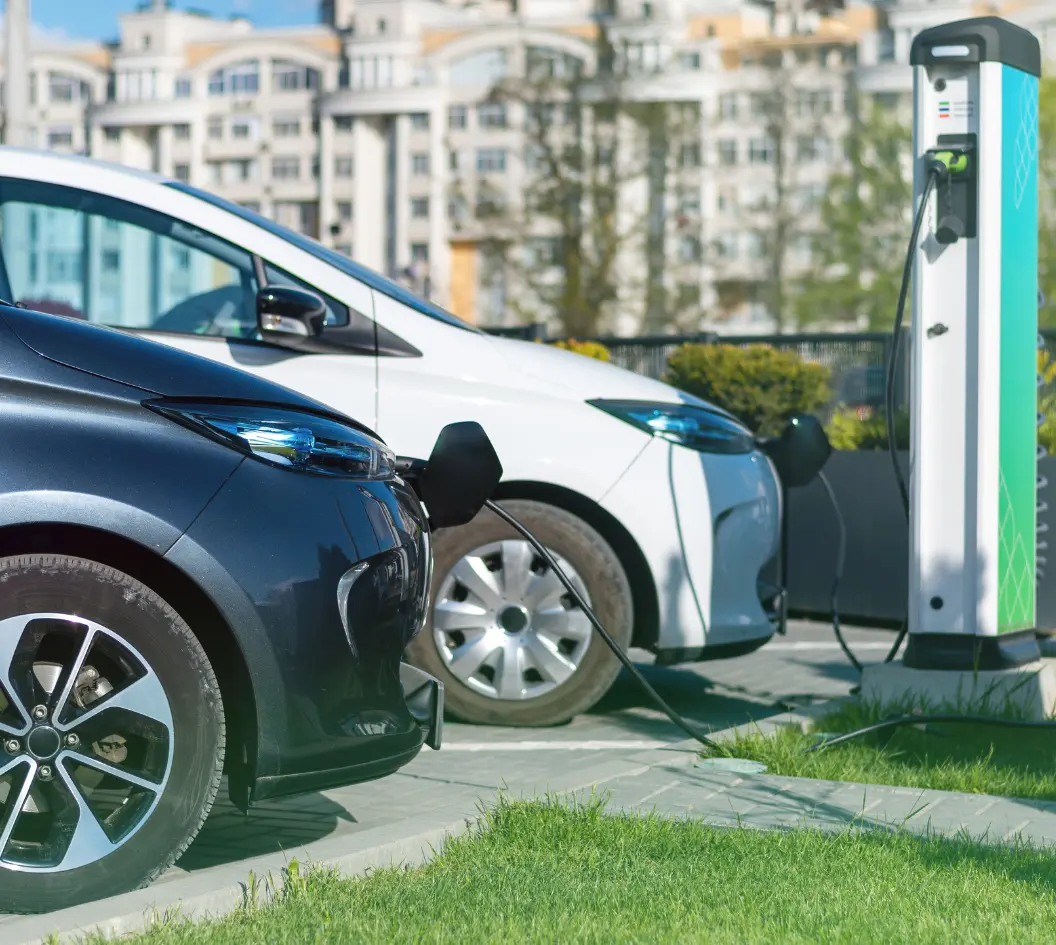
A few years ago, many car brands spoke as if the future had already been decided. Full electric. Fast timeline. No real turning back. Now the tone is different. Brands still talk about EVs, but they are also making room for hybrids, plug-in hybrids, and petrol engines for longer than they first planned. That is not a random change in messaging. It reflects money, regulation, demand, and the reality that not every market is moving at the same speed. For UAE buyers, this matters because it changes what will actually arrive in showrooms over the next two years. It also changes how you should think about resale, charging, and long-term ownership. Why are automakers slowing EV-only plans? The short answer is that the transition is proving more expensive and less predictable than many brands expected. Some automakers spent heavily on EV plants, battery plans, and new platforms, then had to scale back or delay parts of those plans. Reuters reported that global carmakers booked around $55 billion in writedowns over the past year as they pulled back from earlier EV ambitions, and Stellantis alone later reported a €22.3 billion net loss for 2025 tied to €25.4 billion of unusual charges and a broader strategic reset. Here’s the thing. When the cost of changing direction is that high, brands stop making one-way bets. They build backup plans. That usually means a wider mix of EVs, hybrids, and combustion models instead of a clean switch from one to the other. Are automakers giving up on electric cars? No. They are not giving up on EVs. They are giving up on the idea that every market, every customer, and every product segment will move to EVs at the same pace. That distinction matters. EVs are still growing, and carmakers are still launching new electric models. What has changed is the certainty around timing. Instead of saying, “everything will be electric soon,” more brands are now saying, “we will stay flexible and follow demand.” A simple way to think about it is this: the industry is not reversing, but it is taking a less direct route. Why are hybrids making a comeback? Because hybrids solve a real problem for both brands and buyers. For brands, hybrids help reduce emissions without forcing every customer into a full EV. For buyers, they reduce fuel use and city driving costs while keeping the easy refueling and long-range convenience of petrol. That is especially useful in markets where home charging is not guaranteed. This is why hybrids are no longer being treated like a short stop on the way to EVs. They are becoming a core part of the plan. Ferrari is a good example. The company cut its 2030 EV target from 40% to 20% and shifted to a new target mix of 40% combustion, 40% hybrids, and 20% fully electric by 2030, while still planning its first fully electric model for late 2026. What this means is that hybrids are now being used as a long-term business answer, not just a temporary bridge. Is EV demand actually slowing, or is this just an excuse? It depends on the market. EV demand is still strong in some places and weaker in others. Even where EV sales are growing, they may still be growing more slowly than brands expected when they made very aggressive investment decisions. That gap between forecast and reality is what creates trouble. In Dubai, EV ownership is clearly rising. DEWA said the number of electric vehicles in Dubai reached 47,944 by the end of 2025, up 27.9% from the year before. It also said the Green Charger network had expanded to more than 1,860 charging points, with 23,600 registered users by mid-January 2026. That is real growth. But it does not mean EVs have already become the default choice for everyone. Petrol and hybrid cars still make up the bulk of the market, and that is exactly the kind of mixed demand pattern that pushes brands to keep more than one powertrain alive. If EV numbers are rising, why are brands still cautious? Because rising numbers are not the same as universal readiness. A city can have more chargers, more EVs, and more public interest, but many buyers still face practical limits. Not everyone can charge at home. Not every apartment building offers easy access. Public chargers help, but they do not fully replace the convenience of private charging for every driver. In real life, it looks like this: an EV can be a very smart buy for someone with home charging and predictable daily mileage, but a frustrating buy for someone who depends entirely on public charging and drives long, irregular routes. That is why brands are not only asking, “Are EV sales growing?” They are also asking, “How many buyers are truly ready to live with one?” Those are not the same question. Are government policies also changing the EV timeline? Yes, and this is one of the biggest reasons brands are staying flexible. In Europe, the policy direction became less rigid than many carmakers expected. The European Commission’s automotive package said carmakers will need to meet a 90% tailpipe emissions reduction target from 2035, with the remaining 10% potentially addressed through measures such as low-carbon steel, e-fuels, or biofuels, rather than sticking to a simple zero-emissions-only sales outcome. Why does that matter in the UAE? Because Europe shapes the product plans of many brands that matter here. If European rules become more flexible, brands have more room to keep combustion and hybrid models alive longer. That affects what gets developed, what gets approved, and eventually what reaches our market. The catch is that policy can still change again. That is exactly why automakers do not want to commit too hard in one direction. Which brands show this slowdown most clearly? You can see it in both mainstream and premium brands, but premium brands are especially useful examples because they usually have more money, more pricing power, and more freedom to experiment. Porsche said it expects around €3.1 billion in extraordinary expenses for 2025 as part of a strategic realignment tied to product strategy changes, battery activities, and organisational adjustments. That does not mean Porsche has turned against EVs. It means even a strong premium brand is finding the transition expensive enough to rethink pace and priorities. Ferrari’s updated 2030 mix tells the same story from another angle: even brands that can charge more per car are not treating EV-only plans as the obvious answer anymore. Will petrol cars stay around longer than expected? In many segments, yes. That does not mean the industry has abandoned electrification. It means brands are extending the life of petrol and hybrid models because customer demand is still there, rules are more flexible than expected, and EV adoption is still uneven. Premium performance cars are a clear example. A lot of buyers still want the range, sound, and refueling convenience of combustion, even if they are open to hybrid assistance. For UAE buyers, this can help if you were worried that buying a petrol car in 2026 would immediately feel outdated. That outcome now looks less likely than many people assumed a couple of years ago. Should UAE buyers still consider an EV in 2026? Yes, but only if the ownership setup makes sense for your real life. This is where many buying decisions go wrong. People compare EVs and petrol cars as if the answer is universal. It is not. The smarter approach is to match the car to your routine. Ask yourself three practical questions: Can you charge easily? If you can charge at home or at work, an EV becomes much easier to live with. If you cannot, the experience depends heavily on public charging habits, and that can make ownership less convenient. What kind of driving do you actually do? If most of your driving is short urban trips, an EV can make a lot of sense. If you do frequent long drives across emirates with irregular schedules, petrol or hybrid may still be simpler. How much do you care about resale certainty? Some buyers are comfortable being early adopters. Others want stable resale and proven market demand. Right now, that confidence still varies by brand and model. Here’s how it works: if your charging is reliable and your route is predictable, an EV can still be an excellent UAE car. If not, a hybrid may be the safer answer. Does slowing EV-only plans mean ownership will get simpler? No. In some ways, it means the opposite. A slower EV-only transition often creates a more complex car parc, not a simpler one. Workshops will be dealing with petrol, mild hybrid, full hybrid, plug-in hybrid, and full EV systems at the same time. That means more variation, more software dependence, and more need for proper diagnostics. A simple way to think about it is this: hybrids combine two worlds in one car. That can give owners useful flexibility, but it also means more systems to manage and maintain. For UAE conditions, thermal management matters even more. Battery systems, hybrid components, cooling systems, and software all have to handle high temperatures and heavy daily use. That raises the importance of workshops that understand both the mechanical and electronic side of modern vehicles. So what should UAE buyers do now? Do not buy based on slogans. Buy based on your charging reality, your mileage, and how long you plan to keep the car. If you have easy charging and mostly predictable driving, an EV can still be a smart choice. If you want one car that handles city trips, long drives, and uncertain charging with less hassle, a hybrid may now be the better fit. And if convenience matters more than anything else, petrol is not disappearing tomorrow. That is the real story behind automakers slowing EV-only plans. It is not the death of EVs. It is the end of overconfident timelines. For UAE buyers, that likely means more choice, more overlap between technologies, and a market where the best answer depends less on headlines and more on how you actually live.

If you drive an S-Class in the UAE, you already know the role it plays. It is not just a luxury sedan. It is the “default flagship” for a lot of business owners, executives, and families who want comfort, quiet, and status without needing a supercar. So when Mercedes updates the S-Class, it matters here more than it does in many places. The 2026 update is not a totally new generation. It is a major mid-cycle refresh, the kind that tries to keep a car feeling current when rivals are pushing new tech hard. Mercedes itself has talked about a “major upgrade” for the S-Class in 2026 as part of a broader product plan. Quick overview: what changes and what stays the same The basic promise stays the same: a big, calm sedan designed around comfort and long-distance driving. What changes is the detail: More advanced lighting and design tweaks outside. A stronger focus on software and screens inside. Driver assistance and autonomy stories that now include the UAE in a direct way. Refinements to ride, steering, and the “easy to drive in a city” feel. The key is to separate confirmed direction from market-dependent details. Some features vary by region because of regulations and trim planning. UAE specs are often generous, but you still need to confirm what you are actually getting. Exterior updates: subtle, but easy to spot at night Mercedes is not trying to reinvent the S-Class look mid-generation. Instead, it is doing the usual facelift work: small shape changes and lighting signatures that make the car feel new. Motor1 reported redesigned headlight elements and new taillight styling themes on the facelifted car’s first official appearance, with Mercedes branding cues showing up more strongly in the lighting. In Dubai, this matters more than you might expect. Night driving is common, and the “presence” of a flagship is often communicated through lighting. You will likely notice the update first in the rear view mirror. Digital headlights: why they matter in real life Some reports about the 2026 update highlight more advanced headlight systems, including more precise light shaping. Here’s how it works: the car uses sensors and software to adjust the beam pattern so you can see farther without blinding other drivers. In the UAE, where highway speeds are high and street lighting quality varies, better headlights are not a gimmick. They can reduce fatigue on night drives to Abu Dhabi, Al Ain, or the Northern Emirates. Cabin tech: more software, more screens, more dependence on updates Mercedes has leaned into the screen-heavy cabin direction for years. The refreshed S-Class continues that approach. Motor1’s coverage also points to the wider industry trend: large displays are now treated as a luxury expectation, not an experiment. That is fine if you like digital cabins. But it changes ownership. A modern S-Class is partly a software product, which means: You will experience updates like you experience phone updates. Small glitches can appear and disappear depending on software versions. Features can feel different after an update, even if nothing “broke.” A simple way to think about it is this: when you buy the updated S-Class, you are buying the car and the update path. Driver assistance and autonomy: the UAE is now part of the story This is where the 2026 S-Class update gets interesting for UAE buyers, because Abu Dhabi is not just a “market where the car is sold.” It is part of an autonomy pilot story. Mercedes-Benz announced that it is teaming up with Momenta and local mobility provider Lumo for an SAE Level 4 robotaxi experience, with a first phase in Abu Dhabi using an S-Class robotaxi offering. Level 4 means the car can drive itself in specific areas and conditions without needing a driver to take over in the moment. It is not “drive anywhere with no attention,” but it is far beyond normal driver assistance. A practical caution: not all autonomy tech is rolling out smoothly At the same time, Mercedes has faced real-world constraints in Level 3 systems. The Verge reported Mercedes is temporarily halting the roll-out of its Level 3 Drive Pilot feature, citing limits like narrow operating conditions and other practical barriers. What this means is… the autonomy story is not linear. Brands are learning in public. Some features pause, others accelerate, and markets differ. For an S-Class buyer in the UAE, the main takeaway is not “my car will be a robotaxi.” It is that the platform is being pushed hard in autonomy testing, and that usually drives more sensors, more computing, and more software complexity. Engines and trims: expect variety, and the V12 is still a talking point Flagship buyers often ask the same question: is the big engine going away? The answer, at least for now, is no in certain trims. Motor1 noted that the V12 is expected to continue, typically linked with Maybach positioning. And if you look at the Maybach side, Car and Driver describes the 2026 Mercedes-Maybach S-Class with: An S580 with a 496 hp twin-turbo V8. An S680 with a 621 hp twin-turbo V12. A limited S680 Edition Emerald Isle, restricted to 25 units for the US market, with pricing estimates around $340,000. Those numbers are not directly a UAE spec sheet, but they show Mercedes is keeping serious engines alive in the flagship family, at least in top-end forms. What UAE buyers should think about with engines If you drive mostly in the city, the smoothness of the power delivery often matters more than peak horsepower. If you do frequent highway trips, you will notice stability and quiet more than engine size. The “cost story” differs. A V12 flagship usually means higher running costs, and parts can be more expensive and sometimes slower to source. If you only do one thing, do this: choose the engine based on your real driving pattern, not on what looks best on paper. Ride and steering: comfort is the point, but agility matters in Dubai The S-Class has always been about ride comfort, but a big car still needs to feel manageable in tight areas like Downtown Dubai parking ramps or Abu Dhabi mall car parks. Some reporting on the facelift highlights refined air suspension systems and rear-wheel steering options, often described in the range of a few degrees as standard and higher degrees as optional, depending on market. Here’s why rear-wheel steering matters in real life: at low speed, the rear wheels turn slightly to reduce turning radius. That makes the car feel less like a long sedan and more like a shorter one when parking and doing U-turns. At higher speed, it can improve stability in lane changes. For UAE buyers, this is not a “fun feature.” It is a convenience feature that makes ownership easier day to day. The S-Class in UAE heat: what to watch for beyond the brochure You already know the obvious: the AC must be strong. But modern luxury cars add new layers. 1) Cooling systems are doing more work than before Even petrol cars have more electronics, more screens, and more computing. All of that creates heat. When you combine that with UAE summers, the cooling system has to manage more load. This can help if you are choosing between trims: higher-performance trims can run hotter, and they may require more careful maintenance. 2) Tires and wheel size are not cosmetic decisions Many UAE buyers love large wheels. They look great. The catch is that lower-profile tires can feel harsher over broken surfaces and can be easier to damage on sharp edges and speed bumps. 3) Software matters more in tough environments Heat stress can expose weak sensors, camera performance, and battery behavior in auxiliary systems. If the car’s driver assistance depends on cameras and radar, you want a clean calibration and good sensor health. Should you buy the 2026 update right away, or wait? This is the classic flagship question. Reasons to buy early You want the latest tech and you plan to keep the car for several years. You care about the updated features and you do not want the “older” version. You have a strong service plan and you do not mind software updates. Reasons to wait You want the most stable version of the update, after early software patches. You want clearer resale patterns once the market decides which trims hold value. You want to see which features actually come to the UAE spec you want. Here’s the thing: both choices can be smart. The mistake is pretending there is no tradeoff. Delivery and test-drive checklist for UAE buyers A modern S-Class can feel perfect for 15 minutes and still hide a problem that shows up later. A delivery checklist helps. Test every camera view and parking sensor mode in a real parking situation, not just in the showroom bay, because calibration issues show up when distances feel “off.” Drive at highway speed and listen for wind noise around mirrors and door seals, because small fit issues are easier to spot early and easier to document for warranty. Pair your phone, test navigation, and test voice controls, because infotainment is not “extra” anymore and you will feel it daily. Check that driver assistance features work smoothly and predictably, because jittery lane centering or inconsistent warnings can indicate sensor alignment or software quirks. Test the AC while driving, not only while parked, because the real load is different when the car is moving in heat. Ask for a clear explanation of the update path and service schedule, because a flagship is expensive to run if you miss the basics. The 2026 S-Class update is about keeping the flagship relevant in a world where luxury is increasingly digital. In the UAE, it will likely remain a top choice for buyers who want a quiet, comfortable daily car with serious presence. Just treat it like what it is now: a luxury sedan with a lot of software, a lot of sensors, and a lot of options that can change the ownership experience.

You see it every year in Dubai and Abu Dhabi. A new trim, a special edition, a fresh tech feature, or a brand-new model shows up here quickly. Sometimes it lands here before you feel like it has properly “settled” in other markets. If you follow cars even casually, you start asking a fair question. Why does the UAE keep getting early access? Here’s the thing. It is not just because the UAE likes luxury cars. Lots of places do. The UAE is becoming a launch market because the money, the logistics, the customer profile, and the pace of change all line up in a way that makes sense for car brands. What “launch market” actually means A launch market is not only “the first place a car is sold.” It is broader than that. In real life, it looks like this: A brand sends early batches of a new model to a market where buyers are likely to pay for the highest trims and the newest options, because that protects the brand’s margins. The market has strong dealer groups, financing, and aftersales capability, so the customer experience stays smooth even when the product is new. The market gives brands useful feedback quickly, because buyers drive a lot, in tough conditions, and expect issues to be fixed fast. The market has the media attention and showroom traffic that makes a launch feel like an event, not a quiet delivery. The UAE checks more of these boxes than people assume. Wealth inflow and high-end buyers change the math for brands Luxury brands care about two things at launch: demand and profit per car. The UAE is strong on both. A big reason is simple. More high-net-worth people are moving to the UAE, and that shifts demand toward top trims, special editions, and custom orders. In 2025, the UAE was projected to attract a net inflow of about 9,800 millionaires, based on the Henley private wealth migration reporting that many outlets covered. What this means is… luxury demand is not only coming from long-time residents. It is being refreshed by new residents who arrive ready to buy, and who often want a car quickly because they are setting up life here. There is also a “stability factor.” When people relocate for business or lifestyle reasons, they tend to buy the kind of car that feels safe and familiar, which usually means well-known premium brands. That creates steady demand for flagship sedans, performance SUVs, and high-spec daily drivers. The Golden Visa effect is real, even if it is not the whole story Long-term residency options matter because they reduce the “temporary resident” mindset. If you think you may stay for years, you are more comfortable buying a high-value car, ordering a custom build, and maintaining it properly. The UAE Golden Visa is a long-term residence visa, typically 5 or 10 years, and it removes the need for a sponsor in many cases. In Dubai, a real estate investor route commonly references a property purchase value of AED 2 million or more for certain Golden Visa services. This does not mean every luxury buyer is on a Golden Visa. But it does mean the market has a growing base of people planning long-term ownership, which supports premium launches. Logistics is a quiet superpower: vehicles and parts move through Dubai fast Even the richest market is not a launch market if you cannot move cars and parts reliably. This is where Dubai quietly becomes hard to beat. In 2024, DP World reported handling a record 1.3 million vehicles across its terminals in Dubai, a 53.6% increase from the previous year, with Jebel Ali Port handling nearly 960,000 units. A simple way to think about it is this: if a brand wants to supply cars quickly, and keep parts flowing for service and warranty work, a strong port and logistics system reduces risk. On top of that, Jebel Ali Free Zone is packed with automotive businesses. Jafza has said it is home to over 930 automotive and spare parts companies. That supports everything from regional distribution to specialist parts availability, which matters most when a model is new and parts demand is unpredictable. The UAE is also a re-export and regional hub, not just a local market Brands do not only look at the UAE as “people who buy cars here.” They also look at it as a gateway. Dubai’s role as a trade hub means vehicles and parts can be stored, moved, and re-exported efficiently to nearby markets. That helps brands and dealer groups support wider regional demand from a base that is stable and well connected. For a launch, this can mean one shipment serves multiple markets, and the UAE becomes the operational center even when the customer is elsewhere. Big automotive events make launches louder and faster Launches are marketing moments. A market that can host major automotive events helps brands create attention with less friction. Automechanika Dubai positions itself as the largest international trade show for the automotive aftermarket industry in the region, and it lists 2,300+ exhibitors from 60+ countries for its scale. Even if you are not attending these events, they influence the ecosystem. Suppliers, tech partners, training, tools, and media all cluster around markets that host big industry gatherings. That makes it easier to support new technology. New mobility tech is being tested in the UAE, not just sold Launch markets are often test markets. The UAE is showing that it can host real-world pilots, including advanced autonomy projects. For example, Mercedes-Benz announced a partnership with Momenta and a local mobility provider for an SAE Level 4 robotaxi experience using an S-Class-based offering, with a first test phase in Abu Dhabi. This is important for two reasons: It shows regulators and cities are willing to trial advanced mobility projects. It signals to brands that the UAE is not only buying tech, it is helping shape how tech is deployed. That kind of environment attracts early releases and first-market rollouts. EV adoption is growing quickly, which encourages early launches of electrified models Even if the UAE is not an “EV-only” market, it is becoming EV-ready fast, especially in Dubai. DEWA reported that by the end of 2025, Dubai had 47,944 electric vehicles, up from 37,486 a year earlier, an increase of 27.9%. DEWA also reported more than 1,860 charging points across Dubai and 23,600 registered users of its EV Green Charger initiative by mid-January 2026. What this means is… brands can launch EVs and plug-in hybrids with more confidence, because the supporting network is expanding and the user base is no longer tiny. This can help if you are a buyer who wants the latest electrified model but worries about charging access. The situation is improving, and it is improving with real numbers behind it. The climate forces honest engineering, and that attracts serious buyers A new model can feel perfect in mild weather and short drives. The UAE does not give cars that kind of easy life. High temperatures, heavy AC use, dust, and long highway cruising expose weak cooling design, poor sealing, and fragile interior materials quickly. Brands already know this, and many build Middle East or GCC specs with changes meant to handle local conditions. From a launch perspective, this is useful. If a vehicle works well here, it often works well anywhere. That makes the UAE a place where brands can prove durability and refine specifications. The catch is that “Middle East spec” is not always identical across brands or models. Some changes are meaningful, like cooling capacity and filtration. Others are minor, like trim variations. If you only do one thing, do this: ask what is mechanically different, not just what looks different. What this means for UAE buyers: real upsides, and real risks Being a launch market is fun when you are the first to get the new model. But it is not always the best deal. New models often have early software updates, early production quirks, and uncertain resale patterns. Upsides You get the newest safety systems, infotainment upgrades, and efficiency improvements earlier than many markets. You often get better access to limited editions and high-spec configurations. Dealer groups and workshops tend to build capability faster when the market is a priority. Risks First-year cars can have small issues that get fixed later, especially software problems. Some parts may be slower to arrive early in the model cycle, even in a strong logistics market. Resale value can be unpredictable until the market decides which trims are “the one to have.” How to avoid first-year hassles when ordering a brand-new model If you want the newest model anyway, you can still buy smart. Here is a simple framework. 1) Decide what kind of “early buyer” you are If you love new tech and you can tolerate updates and small glitches, you can buy early. If you want maximum peace of mind, consider waiting six to twelve months, when common issues are known and software is mature. 2) Make sure the spec fits UAE reality Ask if the car has Middle East or GCC spec, and what the practical differences are, especially for cooling and filtration. Confirm tire ratings and wheel sizes. Large wheels look great but can be less forgiving on rough roads and speed bumps. 3) Treat software like part of the car, not an extra Modern luxury cars are partly software products. That means updates matter. Ask the dealer how updates are handled and what happens if a major update fails. 4) Plan your service support from day one This is where a specialist workshop matters most. New models often need the right diagnostic tools and trained technicians. If you are buying a new luxury model in the UAE, a good habit is to keep your service history clean and consistent. It protects resale and helps you catch issues early, before they become expensive. 5) Do a delivery-day check that matches how new cars fail A normal “walkaround” is not enough anymore. On delivery, do this: Check every driver-assistance feature you plan to use, including parking sensors, cameras, and adaptive cruise. A calibration issue can be subtle at first. Pair your phone, test navigation, and test voice controls. If something is glitchy now, it usually stays glitchy until a software update arrives. Drive at highway speed and listen for wind noise and rattles. Early build cars sometimes have trim fit issues that get improved later. Test the AC performance in real conditions, not just while parked. The UAE punishes weak HVAC design quickly. Being a launch market is exciting, but it rewards buyers who stay practical. The UAE is getting earlier access because it is wealthy, connected, and fast-moving. Your job is to enjoy that advantage without paying the early-buyer penalty.

A headline that keeps popping up lately goes something like this: Porsche can sell in days what Maserati sells in a year. The exact framing changes, but the underlying story is real. Porsche delivered 320,221 cars worldwide in 2023. Maserati sold about 26.7 thousand vehicles in 2023, and then fell to about 11,300 deliveries in 2024. If you love cars, it’s tempting to treat this like a brand popularity contest. But if you are buying, owning, and maintaining a luxury car, the more useful question is different: Which luxury brands actually win in real-world ownership, when wear and tear, repair risk, and long-term running costs show up? Here’s the thing. “Luxury” does not mean “low maintenance.” In many cases, luxury means more systems, more sensors, more electronics, and more parts that need correct servicing. So let’s use the Porsche vs Maserati contrast as a way to think clearly about what matters: profit, reliability, and the kind of durability that only shows up after years on UAE roads. What sales volume tells you, and what it doesn’t Sales volume is not a direct measure of quality. But it is a signal of something that does affect owners: how strong the brand ecosystem is. A brand that delivers 320,000 plus cars a year has a larger global service network, more independent specialists, more parts circulation, and more “known issues” that have already been diagnosed and solved thousands of times. Porsche’s 2023 delivery figure is 320,221 cars, and it was spread across major regions with strong after-sales support. Maserati is a different situation. Stellantis’ reporting shows Maserati’s 2023 sales at 26,689 vehicles, with meaningful regional concentration. When a brand is that much smaller, two things tend to happen in real life: First, parts availability can be more uneven, especially for less common trims or low-volume models. Second, fewer technicians see the same failure patterns repeatedly, which can increase trial-and-error time during diagnosis. What this means is that volume can shape ownership convenience, even if it does not prove a car is “better made.” Profit matters because it pays for engineering, but it is not a guarantee People often say, “Porsche is one of the most profitable car makers.” That is broadly true for recent years. In 2023, Porsche reported sales revenue of 40.5 billion euros and operating profit of 7.3 billion euros, which works out to roughly an 18% operating margin. That level of profit matters because it gives a brand room to do expensive things that owners benefit from later, like: Running longer durability testing cycles. Improving supplier quality control. Updating software and electronics platforms. Funding technical service bulletins and field fixes. But profit is not a shield against problems. Porsche itself has warned that profitability can tighten in heavy investment cycles. For example, it guided for a lower operating return on sales range in 2024 versus 2023 levels. Now look at Maserati’s recent numbers. Maserati’s deliveries fell from 26,600 plus in 2023 to about 11,300 in 2024, and revenues fell from about 2.335 billion euros to about 1.04 billion euros, based on figures reported in early 2025. That kind of drop usually forces hard choices: fewer new products, slower refresh cycles, and tighter spending. A simple way to think about it is this. Strong profits do not guarantee trouble-free ownership, but weak and unstable profits often make long-term support harder. Wear and tear is where luxury ownership gets real Most luxury-car pain is not from the headline-grabbing failures. It’s from normal wear items that cost more and wear faster because the car is heavier, faster, and more complex. Here’s how it works. Luxury cars often put more load through tires, brakes, suspension, and cooling systems. Add UAE heat, heavy traffic, and high AC usage, and those systems work even harder. One example that surprises many owners is tires on performance EVs. In a major dependability study, 39% of battery electric vehicle owners said they replaced tires in the past 12 months at around three years of ownership, which was 19 percentage points higher than owners of gasoline vehicles. That is not “EVs are bad.” It’s physics: weight, torque delivery, and tire compounds. In real life, it looks like this: A Porsche Taycan or similar high-torque EV can chew through rear tires faster than a comparable gasoline sedan if driven hard off the line. A luxury SUV with large wheels may feel amazing, but low-profile tires are more vulnerable to pothole damage and sidewall failures. A performance brake setup stops brilliantly, but pads and rotors can be expensive, especially if you drive in heavy traffic or do frequent hard braking. Wear and tear is not a reason to avoid luxury cars. It is a reason to buy with clear eyes and maintain with discipline. Reliability is not a feeling, it is measured problems over time Luxury brands are great at selling a feeling. Reliability is not a feeling. Reliability is how many problems show up after years of ownership, and how serious those problems are. One of the more useful lenses here is J.D. Power’s Vehicle Dependability Study, which looks at problems experienced after three years. In the 2024 study, the industry average was 190 problems per 100 vehicles (PP100). Lexus ranked highest overall at 135 PP100. Among premium brands, Porsche ranked second with 175 PP100, and BMW ranked third with 190 PP100. This does not mean Porsche is “perfect.” It means that in that dataset and timeframe, owners reported fewer issues than many premium peers. It also highlights something owners often miss: infotainment and phone connectivity are major complaint areas across the industry. The same study reported infotainment as the most problematic category, with Android Auto and Apple CarPlay connectivity and built-in voice recognition among top issues. What this means is that a “reliable” luxury car can still annoy you daily if the software experience is weak, even if the engine and gearbox are solid. The expensive systems that separate “fine” from “painful” Luxury cars tend to share a pattern: small parts can trigger big invoices because labor is complex, and systems are interconnected. If you only do one thing, do this: learn which systems are the big-ticket items on the exact model and year you are considering. Here are the usual suspects, explained in plain language: Air suspension and adaptive suspension Air suspension uses pressurized air springs to control ride height and comfort. When it works, it is brilliant. When it leaks, you can get sagging corners, compressor strain, or repeated warning lights. The catch is that owners sometimes replace whole assemblies when only seals, lines, or specific components are failing. The right diagnosis matters because it changes the cost outcome. Cooling systems in hot climates In UAE conditions, cooling systems are not “just another maintenance item.” They are a survival system for the engine and gearbox. Overheating can happen even when coolant appears full, because the issue can be circulation, fan control, thermostat behavior, radiator flow, or a water pump that is not moving coolant correctly. A small coolant leak that you ignore can turn into warped components, blown hoses, or heat damage that shows up later as misfires and oil leaks. Batteries and electronics Modern luxury cars rely on stable voltage. A weak battery can cause a cascade of weird symptoms that look like bigger failures. AAA notes that in hot southern locales, a car battery typically lasts around three years, versus five years or more in cooler climates. In the UAE, many owners experience even shorter lifespans depending on driving pattern and how much heat soak the car sees daily. So battery testing becomes preventive maintenance, not a once-in-a-while thing. What this means is simple. A battery that is “still starting the car” can still be weak enough to create faults in modules that hate low voltage. What warranty claims teach that forums don’t Forums are useful, but they are noisy. Warranty claim patterns are different because they show repeatable failure modes at scale. After 11 years of working with luxury cars through warranty cases and high-level service, a few lessons show up again and again: Many big failures start as small issues that were easy to spot early. A minor oil seep becomes a bigger leak. A faint vibration becomes a driveline issue. A small coolant loss becomes overheating. “Normal service history” is not always enough. Two cars can have the same stamped service book, but one had correct fluids, correct intervals, correct warm-up habits, and careful diagnostics. The other had quick fixes and delayed repairs. The same brand can be “great” or “painful” depending on model and year. This is where people oversimplify. They say “Brand X is reliable” as if every engine and gearbox is identical. It’s not. Here’s the thing. Owners often focus on the purchase decision and then treat maintenance as an afterthought. Luxury ownership flips that logic. Maintenance is part of the purchase. Quality over quantity: a simple framework to choose better If you are choosing between luxury brands, the useful goal is not “the best badge.” The useful goal is “the best long-term ownership outcome.” Here is a simple framework that works well in practice. Step 1: Separate the brand from the specific powertrain Do not ask, “Is Porsche reliable?” Ask, “Is this engine and gearbox combination reliable in this generation?” The same logic applies to Maserati, BMW, Mercedes, Audi, Range Rover, and every other luxury brand. Some powertrains are proven. Some are complex and sensitive. Some are fine only when serviced perfectly. This can help if you are shopping used, because a “good brand” can still be a risky buy if the specific model-year has known issues. Step 2: Match the car to your real driving pattern A performance sedan that does short trips only, sits in heat, and does stop-start traffic daily will age differently than the same car used mainly on long highway drives. In real life, it looks like this: Short trips can mean more condensation in oil, more strain on batteries, and less time for systems to stabilize. Long hot idling with AC can stress cooling fans, radiators, and electrical load. Aggressive driving on cold fluids can increase wear on turbos, differentials, and gearbox components. Step 3: Choose based on service support, not just features Luxury ownership is easier when you have: Easy access to parts. Technicians who have seen the same faults before. A workshop that can diagnose properly, not just replace parts. This is where high-volume brands often have an edge, simply because the ecosystem is larger. Maintenance that actually reduces wear and tear in the UAE A lot of advice online is vague: “maintain your car.” Let’s make it practical. A simple, high-impact maintenance checklist You do not need to do everything. You need to do the right things, on time, for your model. Battery health check every few months, especially before summer. In hot climates, batteries often fail earlier, and low voltage can cause false electronic errors that waste time and money. AAA’s guidance that hot climates shorten battery life is a good baseline to keep in mind. Cooling system inspection at every service. Look for leaks, weak hoses, fan operation, and signs of poor circulation. Overheating is often about flow and pressure, not just “is there coolant in the tank.” Tire inspections more often than you think you need. Luxury cars and especially high-torque EVs can wear tires fast. If you drive a heavy, powerful vehicle, tire budgeting is part of ownership. The BEV tire replacement rate in the three-year window is a reminder of how common this is. Scan for stored fault codes, not just warning lights. Many issues store codes before the dashboard light becomes permanent. Catching that early can prevent limp mode days later. Here’s the thing. None of this is glamorous. But it is exactly how you keep a luxury car feeling like a luxury car. Early inspection: the cheapest way to avoid expensive surprises People often skip inspections because the car “feels fine.” That’s understandable. Luxury cars can mask problems until the moment they don’t. An early inspection is valuable because it finds issues in the cheap phase, not the expensive phase. In real life, it looks like this: A small oil leak caught early might be a gasket and some labor. Left alone, it can contaminate components and turn into multiple replacements. A cooling fan issue found early might be a relay, sensor, or fan repair. Ignored, it can lead to overheating events that damage much more. Uneven tire wear can point to bushings or alignment. Fixing it early can save you a full set of tires. The catch is that early inspections only help if the workshop is thorough and honest about what is urgent versus what can wait. So who wins: Porsche, Maserati, or the owner? Porsche’s scale and recent profitability are real, and the numbers show it. Maserati’s smaller volume and recent declines are also real. But the practical truth is that the brand “wins” only on paper. In real life, the owner wins when they buy smart and maintain smarter. What this means is that “quality over quantity” is not just a brand strategy. It is an ownership strategy. If you own a luxury car in the UAE, the most cost-effective move is often boring: schedule an early inspection, catch small faults, and stick to correct maintenance with proper diagnostics. If you want the best car maintenance in the UAE, German Experts can help you do exactly that, from detailed inspections to model-specific servicing built on years of real warranty and repair patterns. The real question is: are you waiting for a warning light to force your hand, or are you protecting the car while the fixes are still small?

If you’ve sat in a modern car recently, you’ve probably done the awkward thing: tapping a glossy screen to do something simple like change audio volume or skip a track, while your eyes keep flicking between road and menu. Audi heard that frustration, and the 2027 Q6 e-tron update is a pretty direct response. This is not a brand-new generation of the Q6 e-tron. It’s the same core EV platform, but with meaningful usability and software changes that affect daily driving. Some of these updates sound small on paper. In real life, they change how the car feels every single day. Here’s how it works: the 2027 model-year refresh focuses on controls, software, driver-assist convenience, and regenerative braking behavior. If you’re in the UAE and you’re considering a Q6 e-tron, or you’re deciding whether to buy now or wait for the updated version, this is the practical breakdown. What “2027 model year” actually means Car companies use model years in a way that confuses normal people. A “2027” model can start showing up in some markets in 2026. That’s common in the auto world. Multiple outlets reporting Audi’s announcement say the updated 2027 A6/Q6 e-tron family is scheduled to arrive in dealerships in Q2 2026 in markets like the US. What this means is… UAE timing may not match those dates exactly. GCC allocation, specs, and ordering windows are handled by local distributors. But when a global model-year update starts landing in major markets, it usually signals that the “updated build” is coming next for other regions too. So the smart way to read this is: The Q6 e-tron is already a real product in the GCC. The 2027 update is the “next build” with usability and software improvements. UAE buyers who hate touch-heavy controls will care about this one. Audi has already pushed the Q6 e-tron hard in the region as part of its Middle East rollout, including the Q6 e-tron quattro and SQ6 e-tron being available to order in GCC markets. The headline change: physical steering wheel controls are back Audi is bringing back physical scroll controls on the steering wheel for the 2027 update. Multiple sources describe the return of the scroll wheels as a direct response to what drivers have been asking for. This is not a “nice to have” detail. In real life, it looks like this: You’re on Sheikh Zayed Road at 110 km/h. You want to lower volume, skip a track, or adjust something without taking your eyes off traffic. A physical wheel or scroll control lets you do that by feel. A touchscreen usually forces you to look down. Audi is not alone here. The industry has been getting pushback on touch-only interiors. The catch is… Audi is still keeping some key controls on the touchscreen. At least one major report notes that climate controls remain touchscreen-based, even after the steering wheel control fix. So the update improves daily usability, but it doesn’t fully return to the “old-school” button layout. A cleaner, faster cabin interface Audi is also improving the in-car software and visual layout. The goal is simple: fewer menus and less hunting. Reports on the 2027 update mention: improved graphics clearer icon/background contrast fewer menu layers more intuitive layout a more polished “Digital Stage” experience (Audi’s term for the screen ecosystem) Digital Trends also notes you can mirror navigation or media into the virtual cockpit, which matters because drivers often want key info in front of them, not split across multiple displays. This can help if you’re the type of driver who wants a clean “driver-first” setup and hates screen clutter. Convenience features that matter in tight UAE parking Two features mentioned in the 2027 update are worth calling out because they fit UAE driving perfectly. Reverse Assist Digital Trends describes a Reverse Assist feature that can automatically reverse the car over a short recorded distance (reported as up to 150 feet). In real life, it looks like this: You pull into a tight spot in a mall parking structure. You realize the angle is awkward, cars are creeping behind you, and reversing out cleanly is stressful. Reverse Assist is designed for exactly that kind of situation. Trained Parking Digital Trends also mentions “Trained Parking” for repeating parking maneuvers in regular spots (reported as up to five saved spots). This matters more than people think in the UAE because a lot of drivers park in the same places every day: home building basement office tower parking school pickup spots gym basement parking If this feature works reliably, it reduces daily friction. If it doesn’t, it becomes a gimmick. That’s why real-world testing matters. Regenerative braking: Audi is making it stronger and more usable Regenerative braking is when the electric motor slows the car and sends energy back into the battery. It also reduces how often you use the physical brake pads. Audi is improving regenerative braking behavior for the 2027 A6/Q6 e-tron family, and sources describe it as “more powerful” and more effective. Digital Trends specifically claims the stronger regen can bring the car to a standstill without using the friction brakes. Why that matters in the UAE: Stop-and-go traffic is common. Drivers want smooth low-speed control. Brake dust and brake wear are real annoyances, especially on heavier EVs. A simple way to think about it is… better regen means smoother daily driving and potentially less brake wear, but it also means you need to get used to the car’s “lift-off” behavior when you come off the accelerator. “Power Nap” and cabin modes: not critical, but useful This part sounds like lifestyle fluff, but it’s not totally pointless. Digital Trends mentions a “Power Nap” feature that creates a calmer cabin setup for short stops during charging, plus “Experience Worlds” that sync lighting, sound, and climate for preset moods. If you’ve ever fast-charged in summer, you already know the reality: you often end up sitting in the car for 15 to 30 minutes. A better cabin experience is not life-changing, but it does make the wait less annoying. Digital Trends also mentions in-car gaming with Bluetooth controllers, with privacy features to avoid distracting the driver. For most owners, this is a “nice extra,” not the reason to buy. But families will care. The core EV hardware still matters most: PPE, 800-volt charging, thermal management Now to the part that actually affects ownership cost and convenience: battery and charging. Audi’s Q6 e-tron is built on the Premium Platform Electric (PPE). Audi’s MediaCenter describes PPE development focusing on range and charging performance, including: an 800-volt electrical system sophisticated thermal management for the battery That’s important for the UAE because heat impacts charging behavior. Good thermal management helps the battery stay within safe temperature ranges, which supports more consistent performance. Sportback e-tron numbers UAE buyers will search for On Audi Dubai’s official page for the Q6 Sportback e-tron, Audi lists: range up to 656 km (this is typically WLTP-style marketing range, not UAE highway reality) DC charging up to 270 kW 10% to 80% in about 22 minutes about 265 km added in about 10 minutes under ideal conditions Those are strong headline numbers. Here’s the thing: real-world UAE range will vary a lot based on: speed (120 km/h cruising will drop range compared to mixed-city WLTP testing) AC load (summer AC use is not optional here) battery temperature tire choice and pressure how often you fast-charge back-to-back So the right mindset is: use the official numbers as a reference point, then plan with a buffer. What UAE buyers should check before buying the 2027 Q6 e-tron This is the part that saves you headaches later. 1) Make sure you’re clear on which version you’re ordering The Q6 e-tron family includes: standard SUV body Sportback body different motor setups (RWD vs quattro AWD depending on spec and market) SQ6 performance variant (depending on allocation) Even within the GCC, the available trims and motor options can differ. Audi’s regional release mentions GCC ordering availability for Q6 e-tron quattro and SQ6 e-tron in the region. 2) Ask what build you’re getting If you’re buying during the transition period, ask the dealer directly: is this the updated 2027 build with the revised steering wheel controls? which software version ships on delivery? what features are enabled in the UAE market (some driver-assist features can be market-dependent) 3) Test the interface like you actually drive Do not just play with the screen while parked. During the test drive: adjust volume and skip tracks use navigation toggle common settings see how many taps it takes to do normal things The goal is to avoid buying a car that annoys you daily. 4) Verify charging behavior on real chargers If possible, ask about: DC fast charging peak rate in UAE conditions whether the car supports battery preconditioning before charging (and how to trigger it) what typical 10% to 80% time looks like in summer heat The official charging headline is great, but UAE charging sessions often depend on temperature and charger quality. “Should I wait for the 2027 update?” It depends on what bothers you. Wait if: you hate touch-heavy steering wheel controls and want the scroll wheel return you care about a cleaner, less annoying screen experience you want the improved regen behavior and newer driver-assist convenience features Buy now if: you found a strong deal on current stock you don’t care about the scroll wheel change your priority is getting into the PPE platform and 800-volt charging sooner A simple way to think about it is… if a “small” daily annoyance will bug you for years, it’s worth waiting. If you just want the EV hardware and you’re happy with the current layout, buying sooner can still make sense. What German Experts can help with If you’re planning to buy a Q6 e-tron soon, the smart move is to treat it like a software-heavy luxury EV, not like a simple petrol SUV. This can help if you want: a pre-purchase inspection focused on EV systems, cooling, and charging behavior a check for software-related fault logs and update status a practical ownership plan for UAE heat and charging habits To book, call +971 800 397 3787 or email [email protected].
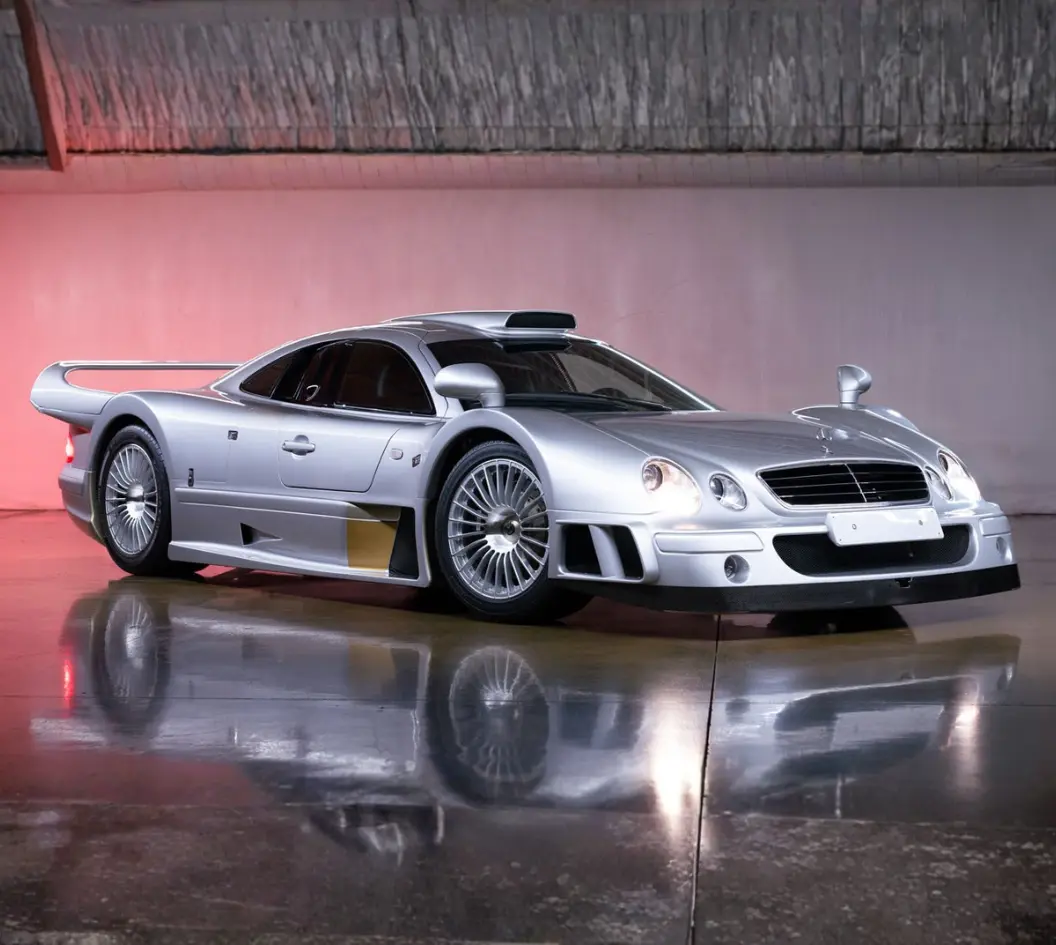
If you see a Mercedes-Benz CLK GTR parked on a street, your first thought is usually: “That cannot be legal.” And it mostly wasn’t meant to be normal. The CLK GTR exists because Mercedes-Benz and AMG wanted to win races, and the rules forced them to build a small batch of road cars to prove the race car was “real.” That’s why it feels like a track machine wearing number plates. It is not a tuned CLK coupe. It just borrows the name and a few styling hints. Here’s how it works: racing series set rules, car makers work around them, and sometimes the result is a once-in-a-generation machine. The CLK GTR is one of those. The quick backstory: why it was built at all In the late 1990s, the FIA GT Championship had a top class called GT1. On paper, GT1 was for “road-based” cars. In real life, it became a contest of who could build the most advanced race car while still meeting the minimum road-car requirement. Mercedes-Benz wanted a title. AMG wanted a weapon. So they built the race car first, then created a tiny run of road-going CLK GTRs so the project could qualify. What this means is the road car is basically the price of admission. The racing program was the point. And yes, the car was rare on purpose. A simple way to think about the CLK GTR Most performance cars start as road cars and get sharpened. The CLK GTR did the opposite. It started as a race car, then got just enough changes to drive on public roads. That shows up everywhere: The shape is about downforce and cooling, not beauty contests. The cabin is tight because the structure is built for stiffness and safety first. The ride is firm because it was never designed for potholes. The engine sits mid-mounted, like a prototype racer, not a luxury coupe. So if you’re expecting “Mercedes comfort,” this car will disappoint you. If you’re expecting “race car energy,” it delivers. The racing side: where the car earned its reputation The CLK GTR’s legend did not come from magazine covers first. It came from winning. Mercedes-Benz entered FIA GT1 in 1997 with the CLK GTR and quickly became the team to beat. The car was fast, reliable, and supported by serious factory effort. It helped Mercedes take top honors in the championship that year. But there’s a tradeoff people forget. When one manufacturer builds something this extreme, the class often breaks. That GT1 era is remembered as a time when the rules were stretched so hard that the category couldn’t stay healthy for long. So the CLK GTR is not just a cool car. It’s also proof that racing rules can create strange, short-lived masterpieces. The road car: what you actually got The road-going CLK GTR was made in very small numbers, basically “mid-20s” depending on how you count variants and prototypes. That makes it rare in the most literal way. You could go your entire life loving Mercedes-Benz and never see one in person. Most road cars were coupes, and there were also open-top versions later. Under the skin, it’s all serious hardware: Carbon-fiber monocoque (think of it as a single-piece carbon “tub” that forms the core structure) Mid-mounted V12 Race-style suspension layout A sequential-style gearbox (a manual that shifts in a straight line, like many race cars) If you only do one thing, do this: separate the CLK GTR from normal “supercar talk.” It’s closer to a racing prototype than a street GT. The engine: V12 power, but not in a modern way The CLK GTR’s V12 is part of the appeal, but it’s not a “press a button and everything is smooth” kind of experience. Yes, it’s powerful. Yes, it sounds like a proper old-school AMG-era V12. But the character is different from today’s high-tech hypercars: The power delivery feels mechanical, not filtered. Heat management matters more than people expect. Everything around the engine bay is tight and purpose-built. Some versions are tied to a 6.9L V12, and later road cars are often associated with the famous 7.3L AMG V12 family. The exact details vary by variant, and that’s not trivia. It affects parts, documentation, and resale value. So if you’re researching one, the badge and the story are not enough. The build sheet matters. What it’s like inside: more race car than “Mercedes” People hear Mercedes-Benz and assume soft leather and quiet cruising. Here’s the thing: the CLK GTR cabin is more “helmet-friendly” than “date-night friendly.” You get: A low seating position with a wide sill to step over Minimal storage A layout built around the carbon tub Controls that feel purposeful rather than luxurious It can still look special inside, but it’s not trying to pamper you. It’s trying to work. In real life, it looks like this: You pull up to a valet at a nice hotel. The valet is confident until you open the door and they see the sill height and the low roofline. Then they hand you the ticket and politely step back. How fast is it, really? Numbers get thrown around a lot with cars like this. The honest answer is: it’s very fast, even now, but the headline figures are less important than how it gets there. A CLK GTR accelerates hard because: It has serious power It’s relatively light for the output The aerodynamics and gearing are built for speed, not comfort But the catch is the driving experience is not “easy fast.” It demands attention. This is not a car that flatters sloppy inputs. It rewards clean driving. Why it became iconic: it’s not just the speed Plenty of cars are quick. Very few have this mix: Factory Mercedes-Benz effort AMG influence Race-first design Road-car homologation story Extremely limited production That combination is why the CLK GTR gets talked about in the same breath as other homologation specials from that era. And because it’s rare, the story keeps growing. Most people only know it through photos, games, and rumors. That distance adds to the myth. Ownership: the part nobody posts on Instagram The CLK GTR is iconic, but ownership is not romantic. Even if you can buy one, you still have to live with the realities: 1) Parts and support When a car is this rare, parts supply is a real issue. Some components are unique to the car. Others are race-derived. Either way, you cannot treat it like a normal Mercedes-Benz. You plan ahead, you network with specialists, and you accept delays. 2) Heat, fluids, and maintenance discipline This kind of V12 and drivetrain setup rewards proper warm-up and careful service. Skipping basics gets expensive quickly. 3) Clearance and bodywork risk Low cars meet high curbs. It’s not a matter of “if.” It’s “when.” In real life, it looks like this: You’re leaving a parking garage. The ramp angle is steeper than it looks. You creep forward, but the front splitter still kisses the concrete. That sound is not loud. It’s just painful. 4) Tires and setup Tire choice is not just about size. It’s about load ratings, heat tolerance, and how the car was designed to behave. On a car like this, the wrong tire can make it feel nervous or unstable. What to check if you ever get near one Most people will never shop for a CLK GTR. But knowing what matters helps you understand the car. If you’re inspecting one or even just studying it, focus on areas that are “high consequence”: Carbon structure condition: cracks, repairs, and documentation matter more than shiny paint. Cooling system health: hoses, radiators, fans, and evidence of overheating. Service history quality: who worked on it, and whether the work is traceable. Transmission behavior: smooth engagement, proper calibration, no strange noises. Aero pieces: splitters, diffusers, and underbody panels are easy to damage and hard to replace. A simple way to think about it is this: with a normal car, cosmetics can be fixed later. With a CLK GTR, structural and mechanical integrity comes first. Cosmetics are second. The “but why” question: is it actually usable? Usable is a tricky word. Can you drive it on the road? Yes. Will you want to drive it often? That depends on your tolerance for compromises. It’s loud. It’s low. It’s intense. It needs space. It draws attention even when you don’t want it. But if you treat it like a special-event machine, it can make sense. In real life, it looks like this: You plan a short early-morning route with smooth roads and wide lanes. You keep the drive under an hour because heat soak and traffic are not your friends. You come back buzzing, not relaxed. That’s the CLK GTR vibe. Why the CLK GTR still matters today Modern hypercars are faster in many ways. They have better traction systems, better brakes, and smarter electronics. But the CLK GTR matters because it represents a moment when manufacturers could still build something borderline unreasonable for the road, simply because the rulebook allowed it. It’s a snapshot of an era: When racing series tried to stay “road relevant” When factory teams pushed the limits When homologation created cars that were almost accidental legends And it’s also a reminder that “AMG” doesn’t only mean tuned sedans and SUVs. It also has this history of building serious motorsport hardware when the mission demanded it. A practical note on repairs and bodywork Because the CLK GTR is rare and built around carbon and race-style aero, cosmetic damage is not “just cosmetic” the way it is on a normal car. Paintwork often ties into panels with complex shapes, tight tolerances, and sensitive mounting points. If a car like this ever needs body repair, you want a shop that understands: Low-volume supercar panel alignment Carbon repair basics and when not to repair How aero pieces affect stability at speed How to work cleanly without chasing quick fixes In Dubai, if you ever found yourself responsible for a CLK GTR’s bodywork, a specialist-level shop matters more than the fanciest waiting room. German Experts, known as a Bodyshop of the year winner, is the kind of team that at least speaks the right language for rare, high-stakes repairs. That’s not a promise. It’s just the realistic bar for a car like this. The takeaway The Mercedes-Benz CLK GTR is iconic because it isn’t a normal “limited edition.” It is a race car with plates, built to satisfy a rulebook and win a championship. If you only remember one thing, remember this: the CLK GTR is a story about intent. Mercedes-Benz and AMG were not trying to build a comfortable road car. They were trying to build a winner, and the road version is the evidence trail. So when you see one, don’t judge it like a luxury coupe or even a typical supercar. Judge it like a piece of motorsport history that somehow escaped onto public roads.

Some wins feel louder than the room. Not because of the applause, but because everyone in the workshop knows what it took to get there. Hours of practice. Tight process. Doing the small things right, again and again, even when nobody is watching. That’s why this one matters. German Experts proudly emerged as the winner of the Automotive Technology Skills Competition at the Emirates Skills Show Industry Week, part of the Sheikh Zayed Festival. And there’s more. Hamza Al-Kouz achieved a perfect 100% score, the first time this has happened in the history of the Skills Program. We want to share what happened, why it matters, and what it says about the standard we’re building at German Experts. What we won, and where it happened The win took place during Emirates Skills Show Industry Week, within the wider Sheikh Zayed Festival program in Abu Dhabi. The festival runs across the season, and the official festival site lists this edition from 1 November 2025 to 22 March 2026. Inside the festival, there’s a dedicated Skills Program that highlights engineering and vocational talent, with competitions and hands-on activities visitors can watch and take part in. This is the environment where the competition happened. Not behind closed doors. Not as a private industry event. It’s a public platform that puts technical skill in the spotlight. What the Skills Program is trying to do A lot of people outside the trade underestimate how difficult modern automotive work has become. Today’s cars are full of electronics, safety systems, diagnostics, precise torque requirements, and tight tolerances. One wrong step can cause another fault. One shortcut can create a comeback. The Skills Program exists to raise the level of technical skills and to show young people that engineering and vocational careers are real careers with real future paths. The Sheikh Zayed Festival describes the Skills Program as something that encourages technical skills and highlights engineering and vocational talent through competitions. ACTVET also describes the Skills Show as a major initiative under the patronage of the Sheikh Zayed Festival, focused on developing and empowering youth with future skills, while raising awareness about technical and technological specializations. In short, it’s not just an event. It’s a signal. The UAE is investing in skill, not only headlines. Hamza’s 100% score is not a “nice to have” statistic Let’s talk about the 100%. In workshop life, “almost right” often means “wrong.” One missed test step can lead to a wrong diagnosis. One loose connector can trigger a chain of errors. One incorrect torque can create noise, wear, or failure later. That’s why a perfect score in an automotive technology competition is a big deal. It suggests the work was done correctly under time pressure, with the right sequence, and with clean execution. According to the announcement shared with the team, Hamza Al-Kouz achieved a perfect 100% score, the first time ever in the history of the Skills Program. That kind of result does not happen by luck. It happens when someone has a system and trusts it. Why German Experts cares about these competitions This win is not only about a trophy. It’s about proof. Proof that the habits we build inside German Experts translate into performance when it matters. A simple way to think about it is this: Competitions test what workshops claim. Real work tests what workshops actually do. We’ve always believed that the “real” standard is not what you say online. It’s what happens when a technician has to make a call with limited time, real consequences, and no room for guessing. This is where mentorship matters too. The announcement shared publicly connects this victory to technical excellence, mentorship, and the future of skilled trades in the UAE. That line is not random. Skills don’t grow in isolation. They grow faster when experienced people teach the right habits early. What automotive technology skill really looks like People sometimes imagine automotive skill as “being good with tools.” Tools matter, but tools are not the point. Good automotive work usually comes down to a few repeatable behaviors: Following a logical fault-finding order instead of jumping to parts Measuring before replacing, especially on electrical issues Keeping work clean, because messy work causes new problems Treating safety steps as non-negotiable, not optional Documenting what you found, so the next step is clear In real life, it looks like this: A car comes in with a warning light and a rough idle. A rushed technician might swap coils because that’s the common fix. Sometimes it works. Sometimes it doesn’t, and you’ve wasted time and money. A proper process checks the basics first, confirms the symptom, tests the likely cause, and only then replaces what’s proven faulty. That methodical thinking is exactly what skills competitions are designed to reward. Why this matters beyond German Experts There’s a bigger story here, and it’s not about us. ACTVET and the Skills Show concept are built around preparing youth for real-world technical careers and making these skills visible to the public. The Abu Dhabi Media Office also describes the Skills program as a competition platform that showcases young talent and draws attention toward fields like engineering and mechanical specialties, with Automobile Technology included as one of the featured skills. That matters because the UAE automotive market is growing in complexity fast. More advanced vehicles, more safety systems, more electronics, more specialist repair needs. If the technical talent pipeline doesn’t grow with it, everyone feels it: longer repair times more repeat issues more trial-and-error repairs higher total cost for owners So when a local technician hits a perfect score in a national skills setting, it reflects something positive about where the industry is heading. What happens next We’re proud of the win. We’re proud of Hamza. But we’re not treating this as a finish line. We see it as a reminder to keep building: stronger training habits clearer standards more mentorship inside the workshop more investment in technical development And if you’re a young technician reading this, or someone thinking about entering the trade, here’s the honest truth: This career rewards people who take pride in doing things properly. Not quickly. Properly. Congratulations, Hamza To Hamza Al-Kouz, congratulations on an achievement that sets a new bar. Winning the Automotive Technology Skills Competition is strong. A perfect 100% score, and a first in the Skills Program, is something else entirely. We’re proud to have you representing German Experts.

You’re about to sleep and your phone buzzes. “My BMW: Remote Software Upgrade available.” It sounds harmless. Like updating an app. But you’re thinking: “If I install this now, will the car act weird tomorrow morning?” That worry is valid. Here’s the thing: BMW iDrive updates can fix real problems, but the update process is still software. And software sometimes fails at the worst time. This guide is for UAE owners who want the benefits without the drama. We’ll cover: what BMW is actually updating when it’s smart to install when waiting is the safer move what to do if the update fails First, what people call “iDrive updates” are actually three different things Before you decide to update, you need to know what you’re updating. 1) Remote Software Upgrade (the big one) This is the main vehicle software update. It can include new functions, improvements, and fixes. BMW calls this Remote Software Upgrade, delivered through the My BMW App or the car’s own connection. BMW dealerships in the UAE also describe Remote Software Upgrade as over-the-air updates once the car is connected via the vehicle SIM. 2) Apps and Services update (smaller, but important) This refreshes ConnectedDrive apps and background services. It can affect things like remote functions and in-car apps. BMW says the Remote Software Upgrade can also refresh installed apps and the integrated owner’s manual. 3) Navigation and phone compatibility updates Sometimes “the problem” is not the car’s main software. It’s your phone pairing, Bluetooth compatibility, or an app connection issue. BMW has a dedicated page explaining how software updates can help resolve connectivity problems and improve compatibility. A simple way to think about it is this:If your issue is “my car drives weird,” that’s usually Remote Software Upgrade territory.If your issue is “CarPlay/Bluetooth keeps dropping,” it might be apps/services or phone compatibility. Why BMW pushes these updates in the first place Remote Software Upgrades are not only about adding features. BMW says they can include new functions, functional improvements, and quality enhancements. And yes, sometimes updates really do fix annoying daily issues: random iDrive reboots Bluetooth pairing bugs camera glitches driver assistance odd behavior “phantom” warning messages that disappear after a restart But updates can also introduce: temporary warnings right after install (that later clear) changed settings (audio, driver profiles, driver assistance preferences) new menus that feel unfamiliar What this means is… you should treat an update like a small event, not like background noise. When you should install the update sooner There’s no universal rule, but these situations usually favor updating. 1) You’re already experiencing a known software-type issue If your iDrive is freezing, rebooting, or your phone connection is unstable, updating is often worth trying because BMW explicitly positions updates as a way to address compatibility and connectivity issues. 2) You’re not about to travel or rely heavily on the car tomorrow BMW says installation should be done when the vehicle is safely parked and will not be used for the next 20 minutes. So don’t do it right before a tight schedule. 3) You have good signal at home and a calm place to park Updates can download either to your phone or directly to the vehicle. BMW recommends a strong cellular or Wi-Fi signal for downloads, and notes it may be best to drive in an uncongested area if downloading via the car. In the UAE, underground parking and weak signal areas are common. If your home parking has good reception, it’s one less failure point. When waiting is the smarter move Waiting is not laziness. It can be good risk management. 1) You’re about to do a long trip, a desert drive, or anything time-sensitive Even if the update usually takes 20 minutes, life is messy. If something goes wrong, you don’t want to be troubleshooting while you’re late. 2) The car is running perfectly and you hate surprises If you have zero issues and you’re not missing features you care about, waiting a couple of weeks can be rational. In real life, it looks like this: Week 1: early adopters install and report any odd glitches. Week 3: patterns become clearer. Week 6: many issues are patched or have known workarounds. You’re basically letting other people do the testing. 3) Your car has aftermarket coding, retrofits, or non-OEM electronics Not a scare story, just common sense. When the car’s software baseline is changed, updates can behave differently. Some coded features may revert. If you did coding for comfort features, lights, exhaust valves, or driver assistance behavior, talk to a specialist before updating. 4) Your 12V battery is weak Many update problems that look like “software failure” are actually power stability issues. If the car struggles with: slow cranking (for non-hybrids) random electrical warnings battery discharge messages stop-start malfunction warnings …address battery health first. The safest way to do a BMW iDrive update in the UAE Here’s how it works, with fewer surprises. Step 1: Confirm your car supports Remote Software Upgrade BMW says Remote Software Upgrade requires certain pre-installed hardware and is on most vehicles with Operating Systems 7, 8, 8.5, or 9. You can check inside iDrive under the vehicle settings if “Remote Software Upgrade” is shown. Step 2: Read the release notes before touching “Install” This sounds boring, but it saves you from “Why did this change?” frustration. Release notes also remind you that new features can depend on your installed equipment. Step 3: Download over Wi-Fi if possible BMW’s FAQ notes Remote Software Upgrades can be 1 to 2 GB and recommends settings like “Download via Wi-Fi only” to avoid data costs. In the UAE, mobile data is usually fine, but Wi-Fi is still more stable. Step 4: If using the My BMW App route, keep the phone connection stable BMW explains you can download to your smartphone or directly to the car. If you download to the phone first, you’ll usually need the phone connected to the car (Bluetooth plus Wi-Fi connection) so the car can receive the package during driving. Practical tip: do not start this when your phone is at 10% battery and you’re in a rush. It’s asking for failure. Step 5: Choose an install moment when the car can sit untouched BMW’s guidance is clear: park safely and make sure you won’t need the vehicle for the next 20 minutes. For UAE life, this usually means: at home, not in mall parking not in a basement with weak signal not in extreme midday heat if you can avoid it (shade helps everything) Step 6: Start installation and let it finish Do not interrupt it. Don’t “help it” by turning things on and off. When it’s done, expect a few minutes of “systems waking up” behavior. What to do if an update fails If you see a malfunction message, your first move should be boring. BMW’s own FAQ says: follow instructions shown on the control display or in the My BMW App. If it can’t be corrected, contact your local BMW Center or another qualified repair shop. Do these first (safe steps) Read the on-screen message carefullyIt often tells you what the car needs next. Try again later in a better signal areaBMW notes download success depends on strong cellular or Wi-Fi, and even suggests driving in an uncongested area if downloading via the vehicle. Update Apps and Services Even when the main update is fine, sometimes the services layer is stuck. A general Remote Software Upgrade note indicates apps and the owner’s manual can be refreshed as part of updates. Check 12V battery health If the car is refusing to install, weak battery is a common hidden reason. If you’re getting battery discharge warnings, fix that first. Avoid these (they create bigger problems) Don’t disconnect the battery to “reset” it unless a qualified workshop tells you to. Don’t keep restarting the car repeatedly in panic. Don’t clear faults with a generic scanner just to hide the message. What this means is… treat the failure like a diagnostic event, not a fight. Common “failure” situations and what they usually mean “Download won’t complete” Usually one of these: weak signal where the car is parked phone app download paused the car is trying to download over cellular in a spot with poor coverage Fix: move to better reception, use Wi-Fi, or drive in a less congested area as BMW suggests. “Install won’t start” Often caused by preconditions not met. Common preconditions include the car being parked, not needed for 20 minutes, and general readiness that the car checks internally. Fix: lock the car, walk away, let it sleep for a bit, then try again in stable conditions. “Update finished, but things feel off” This happens more than people admit. In real life, it looks like this: Driver profile resets some settings Audio balance changes Driver assistance feels different CarPlay takes longer to connect Give it a day. If it persists, document it and book a diagnostic. UAE-specific tips that prevent most headaches 1) Don’t install in underground parking if you can avoid it Even if installation itself doesn’t require signal, the update flow often does. Keep it simple: do it where your phone and car both have strong reception. 2) Avoid peak heat install windows when possible Heat doesn’t “break” an update, but it increases stress on electronics and batteries. Shade and cooler times reduce risk. 3) If you park the car for long periods, fix battery drain habits first If your car sits for days and the battery is already marginal, updates become harder. If you’re a “park it for 5 days while traveling” type, consider: checking the 12V battery condition regularly not leaving accessories plugged in making sure doors and boot are fully closed turning off unnecessary background features if advised by a specialist 4) Use your local BMW ConnectedDrive channel if needed BMW dealers in Dubai and Abu Dhabi describe Remote Software Upgrade as part of ConnectedDrive and link it to the vehicle’s SIM connectivity. If your remote functions are not working, it can be a services or connectivity issue, not the update itself. A simple decision rule you can use every time If you want a quick way to decide without overthinking: Update now if: you have a known issue the update might fix you have a calm 30-minute window your battery is healthy you have stable Wi-Fi or cellular Wait if: you have a trip tomorrow the car is stable and you’re not missing features you recently coded or retrofitted something your battery health is questionable This can help if you’re the kind of owner who wants the car to feel predictable, not experimental. What to tell the workshop if you need help When you book a visit, don’t say “the update broke my car.” Say: what version you were updating to (screenshot it) what stage it failed (download vs install vs after install) what messages appeared (photo is best) whether the car was in underground parking or low-signal areas whether you had low battery warnings recently The more specific you are, the faster it gets solved. Quick checklist you can screenshot Read release notes first Use Wi-Fi for download if possible, updates can be 1 to 2 GB Confirm you won’t need the car for 20 minutes during install Install in a stable signal location If it fails, follow on-screen instructions, then contact BMW Center if unresolved

If you’re shopping for an S-Class in the UAE right now, you’re stuck in an awkward spot. Buy the current one and you get a known product, with most of the early bugs already ironed out. Wait, and you get the refreshed 2027 S-Class, which Mercedes says is a big update and is expected to reach buyers in the second half of 2026. So the question isn’t “Is the refresh better?” It probably will be. The real question is: what changed that actually matters in daily ownership, and what are the risks of being early? Let’s walk through the tech changes in plain language, then finish with a practical “before you buy” checklist. What the refresh really is Mercedes didn’t redesign the car from scratch. But it also isn’t a small “new bumper, new screen” update. Multiple outlets describe it as one of the most extensive mid-cycle updates Mercedes has done for the S-Class, with over half the components new or revised. Here’s the thing: big mid-cycle updates can be great for buyers, because you often get newer tech without paying the “all-new model” tax. But big updates can also mean more complexity, more software, and more things that need calibration. What this means is… you should think of the refreshed S-Class like a “Version 2.0” of the same generation, not just a minor facelift. Exterior changes you’ll actually notice Mercedes didn’t change the basic shape, but it did add a few high-visibility changes. Star-shaped headlights and new lighting tricks The refreshed S-Class gets star-themed headlight graphics, and Car and Driver notes Ultra Range high-beams as part of the update. It also leans harder into lighting as a “feature,” including projection-style light effects. Why it matters in real ownership:Lights are no longer just bulbs. They’re expensive assemblies with control units, cooling, and sometimes camera-linked functions. If a car is sensor-heavy, “small front-end damage” can turn into a bigger bill because more parts live behind the bumper and inside the headlight. Bigger illuminated grille and optional glowing hood ornament Car and Driver mentions an illuminated grille that’s 20% larger and an optional glowing hood ornament. This is pure luxury signaling. But it also introduces more exterior lighting components, which can matter for warranty terms and accident repair quality. In real life, it looks like this:A parking bump cracks a grille section. On older cars, it’s cosmetic. On newer cars, it might also include lighting elements and electronics. The biggest change: the cabin is now “screens-first” Mercedes is clearly moving the S-Class interior toward a single idea: everything becomes digital, integrated, and updateable. The Hyperscreen setup becomes central Car and Driver calls out the Hyperscreen layout, which is basically three integrated displays across the dash. This is a big buyer decision because some people love it and some people hate it. A simple way to think about it is this: If you want a cabin that feels like a modern control room, you’ll love it. If you prefer physical buttons and fewer screens, the pre-refresh car may actually fit you better. Better rear-seat screens and even video conferencing Yes, video conferencing in the back seat is now a talking point. Car and Driver mentions expanded rear-seat screens and video conferencing capability. In the UAE, rear-seat comfort matters more than in many markets because a lot of S-Class owners are either chauffeured, drive with family, or use the car as a high-end daily. The catch is… the more you add (rear displays, cameras, microphones, connectivity), the more your car behaves like a networked device. That can mean more software updates, more compatibility issues, and more “it works most days, but not today” situations. Heated seatbelts and comfort tech that sounds weird until you try it The refreshed car adds heated seatbelts, described as a first for automobiles by Car and Driver, and also mentioned by Road & Track as part of the comfort upgrades. This sounds gimmicky until you remember: in winter, UAE nights can get cool, and leather seats and metal buckles feel cold fast. It’s not a must-have, but it’s the kind of detail S-Class buyers pay for. MB.OS and the “car as a computer” shift If you only remember one part of this refresh, make it this: The S-Class is becoming more software-defined. Road & Track describes a new MB.OS software architecture and a new computing backbone powering the latest MBUX generation. What does that mean for you? It means the car’s features, stability, and even some comfort behavior can be influenced by software updates. Here’s how it works: More functions get centralized into fewer control systems. Updates can improve things after you buy the car. But updates can also introduce new bugs, because you’re basically updating a complex device on wheels. The new voice assistant is smarter, but still not magic Car and Driver mentions an AI-enhanced voice assistant powered by Google. Road & Track describes the “LittleBenz” assistant as part of the new system. Real-world expectation setting: It will probably be better at natural language and contextual commands. It will still have moments where it misunderstands you, especially with mixed accents, cabin noise, or uncommon place names. This can help if you rely on voice commands for navigation, calls, and cabin controls and you hate the current “robot voice” experience. Ride quality gets a tech upgrade: predictive damping Mercedes is putting serious emphasis on ride comfort, but in a new way. iDamping and cloud-informed suspension behavior Car and Driver calls out iDamping, described as a predictive suspension system. Road & Track adds that the damping system can use shared road data to proactively adjust damping. Edmunds also describes cloud-based road condition data being used to smooth the ride before you hit imperfections. Why UAE buyers should care:Dubai and Abu Dhabi roads are generally good, but speed humps, expansion joints, and parking ramps are everywhere. A suspension system that reacts faster and smarter can make daily driving feel noticeably calmer. The catch is… more advanced suspension control often means more sensors, more calibration, and higher parts cost if something fails out of warranty. It’s not a reason to avoid it, just a reason to budget realistically. Powertrain updates: not a full reset, but meaningful changes Mercedes is keeping the familiar trim structure, but with meaningful updates inside. Car and Driver notes the lineup remains S500, S580, and S580e, all with all-wheel drive and a nine-speed gearbox. S580 gets a new flat-plane crank V8 and more power Road & Track says the S580 uses a revised 4.0-liter twin-turbo V8 with a flat-plane crankshaft, making 530 hp and 553 lb-ft. Car and Driver also mentions the power increase to 530 hp. Translation: it’s faster and more responsive, but it might also feel a bit different in sound and character compared to the older V8. Flat-plane designs can have a different vibe. S580e plug-in hybrid gets more power Car and Driver says the plug-in hybrid S580e jumps to 576 hp. Road & Track also lists 576 hp for the S580e. Consumer Reports notes the S580e is a full plug-in hybrid and says it’s more powerful than the outgoing PHEV, while Mercedes had not shared electric-only range at the time of their preview. For UAE buyers, plug-in hybrid math depends on your routine: If you can charge at home or at the office, it can make sense. If you never charge, you’re carrying extra weight for benefits you don’t use. Rear-wheel steering becomes more standard equipment Motor1 reports rear-wheel steering (4.5 degrees) becomes standard. Why this matters: big luxury sedans are a pain in tight parking. Rear-wheel steering can make the car feel shorter at low speeds, which is useful in mall parking, hotel drop-offs, and villa streets. Personalization goes even further Road & Track mentions Mercedes introducing a “Manufaktur Made to Measure” program with a huge range of color options. This matters in the UAE because the S-Class is often bought as a statement car. If you plan to keep the car for years, getting the spec right matters more than chasing whatever looks trendy this month. What to watch out for before you buy This is the part people skip, then regret later. 1) Be honest about how you feel about screens Hyperscreen is a big commitment. It looks incredible, but you are trading simplicity for capability. If you tend to keep cars a long time, ask yourself: will this feel timeless in five years, or will it feel like an older tablet? 2) Expect early software quirks New software stacks tend to have early patches. MB.OS is a major shift, and it’s reasonable to expect the first production year to come with updates and fixes. If you hate being an early adopter, waiting a few months after first deliveries can be the calmer choice. 3) Check what’s standard vs optional in GCC spec Features vary by market. Before you put money down, confirm: the exact driver assistance package the exact headlight system rear-seat screen configuration the audio system and connectivity Don’t assume the spec you saw in a US or EU review is the same as the UAE car. 4) Think about long-term repair complexity More lighting tech, more screens, more cloud-informed suspension, more computing. That usually means: higher replacement part costs more calibration steps after repair more reasons to use specialist diagnostics rather than generic scanning This isn’t fear. It’s just the direction luxury cars are going. A quick buyer checklist for UAE shoppers If you’re considering ordering or waiting for the refresh, these questions keep you out of trouble: Delivery window: When are UAE allocations expected if the global launch is in H2 2026? Software support: How are updates handled, and what is the policy if an update fails? (Ask for it in writing if possible.) Warranty clarity: What’s covered for screens, lighting, and advanced suspension parts, and for how long? Repair pathway: Where will calibrations be done after windshield, bumper, or headlight work? Usage fit: Will you actually charge a plug-in hybrid regularly if you choose the S580e? Spec confirmation: Is rear-wheel steering standard on the UAE cars you’re being offered? If you only do one thing, do this: test drive both the current S-Class and the refreshed one (when available) back-to-back before deciding. Screens and software sound similar on paper, but feel very different in real use. Bottom line The refreshed 2027 S-Class is not just “new headlights.” It’s a meaningful tech update: a Hyperscreen-focused interior, a new MB.OS computing backbone, comfort upgrades like heated seatbelts, predictive damping, and powertrain improvements including a stronger S580 V8. If you love cutting-edge tech and you plan to keep the car under warranty for most of your ownership, waiting for the refresh can make sense. If you want maximum stability and fewer software surprises, buying the current model (or waiting until after the first wave of refresh deliveries) may be the calmer move.
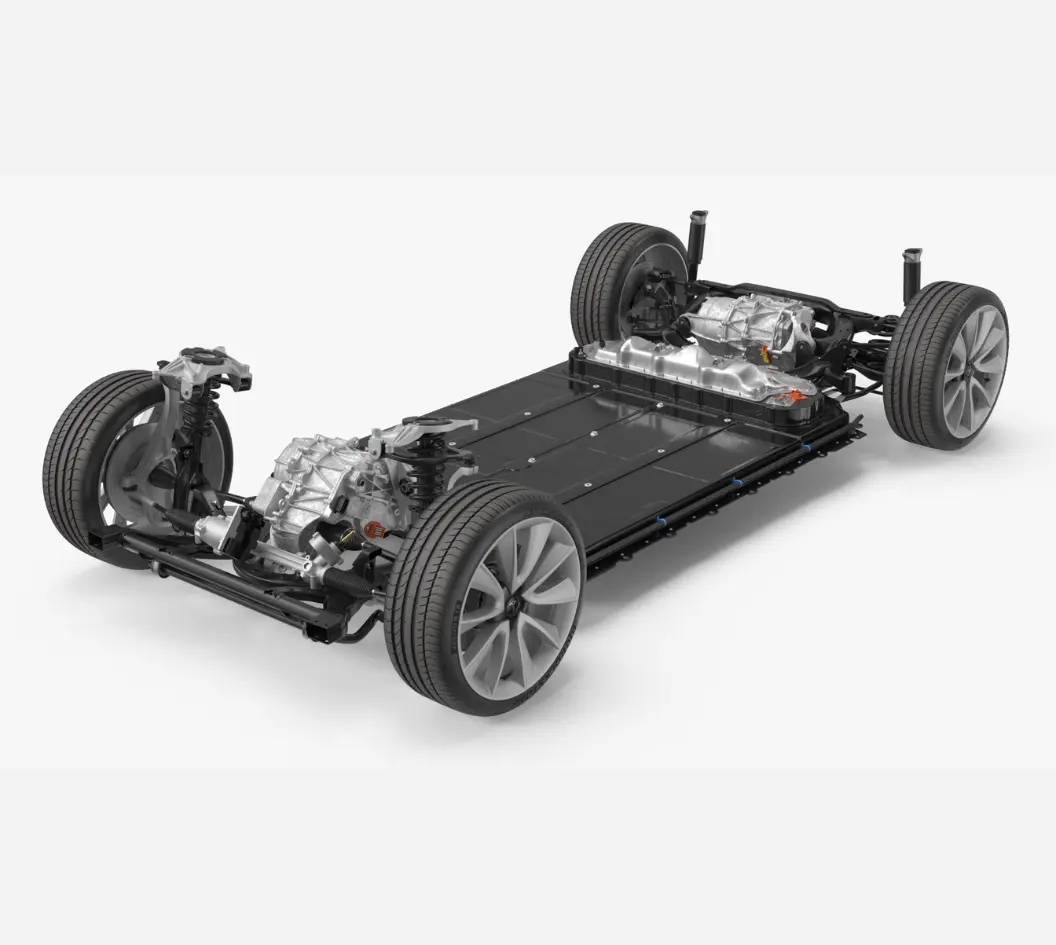
You park on Thursday night. Friday you work from home. Saturday you don’t go out. Sunday morning you grab the keys, hit the start button, and… nothing. Dead. No warning the day before. No slow crank. Just a car that acts like it has been abandoned for a month. If this keeps happening, you’re not “unlucky.” You’re dealing with a power draw problem. Most modern cars pull some power even when they’re off. That part is normal. The issue is when the car never fully goes to sleep, or when one circuit keeps drawing too much current. Then a healthy battery can drop low enough to fail in a few days. This article explains what’s normal, what isn’t, and how to approach it without wasting money on random parts. What “parasitic drain” actually means A parasitic drain (also called parasitic draw) is current the car consumes while parked and “off.” Some draw is expected: alarm system keyless entry receivers memory settings telematics and app connectivity on some models But excessive draw can drain the battery overnight or over a few days. Here’s how it works in plain terms: Your battery is like a water tank. A small drip is fine for weeks. A tap left slightly open will empty it fast. What counts as “normal” draw? A useful rule of thumb comes from Fluke’s diagnostic guidance: Under 50 mA after the car is asleep is usually normal Over 100 mA is suspect And yes, “after the car is asleep” matters. Many cars take time to shut down modules after you lock them. Fluke notes that you should let the vehicle sit 10 to 45 minutes so modules can enter sleep mode before judging the draw. Why this is more common in connected cars Connected cars are basically computers on wheels. They have multiple control units (small computers) that talk to each other. They also have more “always-on” features than older cars: remote services, location tracking, phone pairing, and proximity unlocking. The catch is that all of those features increase the number of things that can keep the car awake. In real life, it looks like this: You park. Something wakes up every few minutes (comfort access, a module retrying a network connection, a stuck relay). The car never reaches its lowest sleep state. Your battery dies in 2 to 3 days. The UAE pattern: why this shows up so often here In the UAE, we see a very specific mix that makes battery drain complaints common: 1) Lots of short trips Short drives don’t always recharge the battery properly, especially if you’re doing: school runs quick grocery trips stop-start traffic with heavy AC load 2) Cars parked for days at a time Many owners have more than one car. Or they travel. Or they simply don’t drive daily. A normal 12V battery doesn’t like sitting half-charged for long. 3) Extra devices are common Dashcams, trackers, OBD dongles, phone chargers left plugged in. These are frequent culprits. Fluke explicitly calls out aftermarket devices like alarms, dashcams, or stereos as common causes of drain. Identifix also lists aftermarket accessories and USB devices as potential sources of parasitic drain. 4) “Key nearby” problems in apartments This one surprises people. If your key is stored near the car (or you walk close to the car often), some vehicles keep waking up to check for the key signal. That can prevent proper sleep. If you want a quick test, put the key far away overnight (not just on the wall by the front door) and see if the problem changes. First check: is your battery already weak? Before you chase wiring faults, be honest about the battery. Many batteries last around 3 to 5 years under normal conditions, and parasitic draw can shorten lifespan. If your battery is old, even a normal draw can feel like a problem. A simple way to think about it is this: A healthy battery gives you “buffer.” A weak battery gives you zero forgiveness. So if you only do one thing, do this: Test the battery properly before blaming the car. (Not just a quick voltage check. A proper battery test checks how it performs under load.) Why “it starts fine after a jump” doesn’t prove anything A jump start only proves one thing: the starter motor and engine can run when power is supplied. You can still have: a weak battery that can’t hold charge excessive draw while parked a charging issue that shows up only under certain conditions So don’t let the jump-start success talk you into ignoring the root cause. What the car does when voltage drops: the warnings are clues Many German cars don’t just die quietly. They start shutting down “comfort” features to protect the battery. Mercedes example: consumer shutoff Mercedes documents describe a battery control module that manages load reduction (“consumer shutoff”). In that same document: At 11.0 V, shutoff stage 1 can trigger and the driver may see: “Battery protection: Comfort functions are temporarily switched off.” The table of what gets shut off includes items like telematics in shutoff stage 2. What this means is… when you get these warnings, the car is telling you it’s already in battery survival mode. The battery might be weak, the car might not be charging enough, or something might be drawing power while parked. BMW example: deep sleep mode and battery protection features BMW also describes a “deep sleep mode” concept for certain vehicles, where functions are reduced while parked to lower power consumption and prevent the vehicle battery from discharging during longer stationary periods. BMW FAQ sources also mention deep sleep mode availability tied to specific operating systems and software versions (example: OS 8/8.5/9 with certain service packs and software from 07/2025, depending on model and market). You don’t need to memorize this. The point is simple: Modern cars try to protect themselves. If they’re protecting themselves often, something upstream needs attention. The usual suspects (in a useful order) There are dozens of possible causes. But a few show up again and again. 1) Aftermarket devices and accessories This is the easiest win. Examples: dashcam hardwired incorrectly GPS tracker tied to constant power aftermarket alarm ambient lighting kits OBD dongles left plugged in Identifix lists aftermarket accessories as a cause of parasitic battery drain, especially when installed improperly. Fluke also reminds technicians not to forget aftermarket devices during diagnosis. 2) USB devices and chargers Many cars keep some ports powered for a while after shutdown. Some keep them powered all the time. Identifix specifically calls out USB devices like chargers, GPS systems, and dashcams as potential drains. 3) A relay stuck “on” Relays are basically electronic switches. If one sticks, it can keep a circuit powered even when the car is off. Identifix lists faulty relays as a common drain cause, especially if they don’t turn off after sleep mode. 4) A control module that never sleeps This is common in connected cars. A module can stay awake due to: software issues wiring faults water ingress in a connector an internal failure in the module itself Identifix describes ECU or computer system issues where a unit fails to enter a low-power state. 5) Interior or luggage compartment lights Not just “you left the dome light on.” Sometimes it’s: glove box light stuck on boot light staying on because a latch sensor is faulty Identifix mentions interior lights and hidden lights (glove box, vanity) as easy-to-miss drains. A quick reality check with numbers (why 2 to 3 days makes sense) Let’s say your car has an excessive draw of 200 mA (0.2 A). That’s 0.2 A × 24 hours = 4.8 Ah per day. A typical battery might be 70 Ah on paper. But you cannot use all of it and still start the car. Starting needs a strong voltage and enough reserve current. So after 2 to 3 days, especially if the battery was not fully charged to begin with, it is very believable that the car won’t start. That’s why “it died after 3 days” usually points to excessive draw, weak battery, or both. How to troubleshoot without turning it into a guessing game You have two paths: owner-friendly checks that cost almost nothing a proper parasitic draw test (what workshops should do) I’ll give you both. Part A: owner-friendly checks (do these first) 1) Remove everything that isn’t factory For 48 hours, run the car “stock.” Unplug chargers and accessories Remove OBD dongles If your dashcam is plugged into a socket, unplug it If your dashcam is hardwired, disconnect its power fuse if it has a dedicated one (or have a workshop isolate it) If the problem disappears, you’ve narrowed it down fast. 2) Keep the key away from the car Try one night with the key far away from the vehicle. If comfort access proximity is waking the car, this can change the behavior. 3) Check for obvious light leaks at night At night, look through the windows and into the boot area. Some glove box and boot lights can be seen as a faint glow. 4) Pay attention to patterns Write down: how many days parked where it’s parked (underground vs open) whether the key is near whether you recently updated software or added accessories Patterns save hours of labor. Part B: the proper parasitic draw test (the “real” diagnosis) This is where you measure current draw and isolate the circuit. Fluke’s step-by-step process is a solid reference: engine off, accessories off, doors closed wait 10 to 45 minutes for sleep mode connect the multimeter in series at the battery negative cable read current draw isolate by pulling fuses one by one until draw drops Fluke also gives practical thresholds: <50 mA normal >100 mA suspect And it includes safety warnings like not cranking the engine while the meter is in current mode. What a good workshop does (and what you should expect) A good diagnostic process usually looks like this: Confirm battery health first (test it) Confirm charging system behavior Measure draw after full sleep Identify which fuse circuit causes the big drop Trace what is on that circuit (module, relay, light, accessory) Confirm the fix by repeating the sleep test If a workshop skips straight to “replace battery,” it might help temporarily, but it might also hide the real problem for a month. What not to do (because it creates new problems) Don’t keep replacing batteries If the drain is still there, you’ll kill the new battery too. Don’t disconnect the battery repeatedly as a habit It can trigger fault codes, reset modules, and cause calibration issues (windows, steering angle, sensors), depending on the car. Don’t pull random fuses without a plan Some systems hate being interrupted. You want a controlled process, ideally with a current clamp or a known method. Prevention that actually works (without changing your life) If you park for several days often This can help if you travel frequently or rotate cars. Use a proper battery maintainer (trickle charger) when parked long-term Drive the car long enough weekly to recharge properly Keep accessories off constant power unless they truly need it If you must run a dashcam or tracker Do it properly. Use a proper hardwire kit with low-voltage cutoff Use a dedicated fuse and correct grounding Avoid cheap installs that tap into random circuits If you’re getting battery protection warnings Take them seriously. Mercedes systems can shut off comfort functions when voltage drops (example messages shown in the Mercedes consumer shutoff document). That’s not the car being “dramatic.” That’s the car trying to keep enough power to run essential systems. When you should stop DIY and book diagnostics Book proper diagnostics if: the battery is new and still dies in 2 to 3 days you get repeated battery protection or consumer shutoff warnings you suspect water ingress (after rain, flooding, or washing) the draw is high and you’re not equipped to test safely This is especially true on newer cars with advanced driver assistance and complex networks. Quick recap Here’s the thing: If your car dies after 2 to 3 days parked, it’s rarely “just bad luck.” Most of the time it’s one of these: a weak battery with no reserve an accessory draining power a module or relay that prevents proper sleep If you only do one thing, do this: Remove all aftermarket devices for 48 hours and see if the problem disappears. That single test often saves you a lot of money.
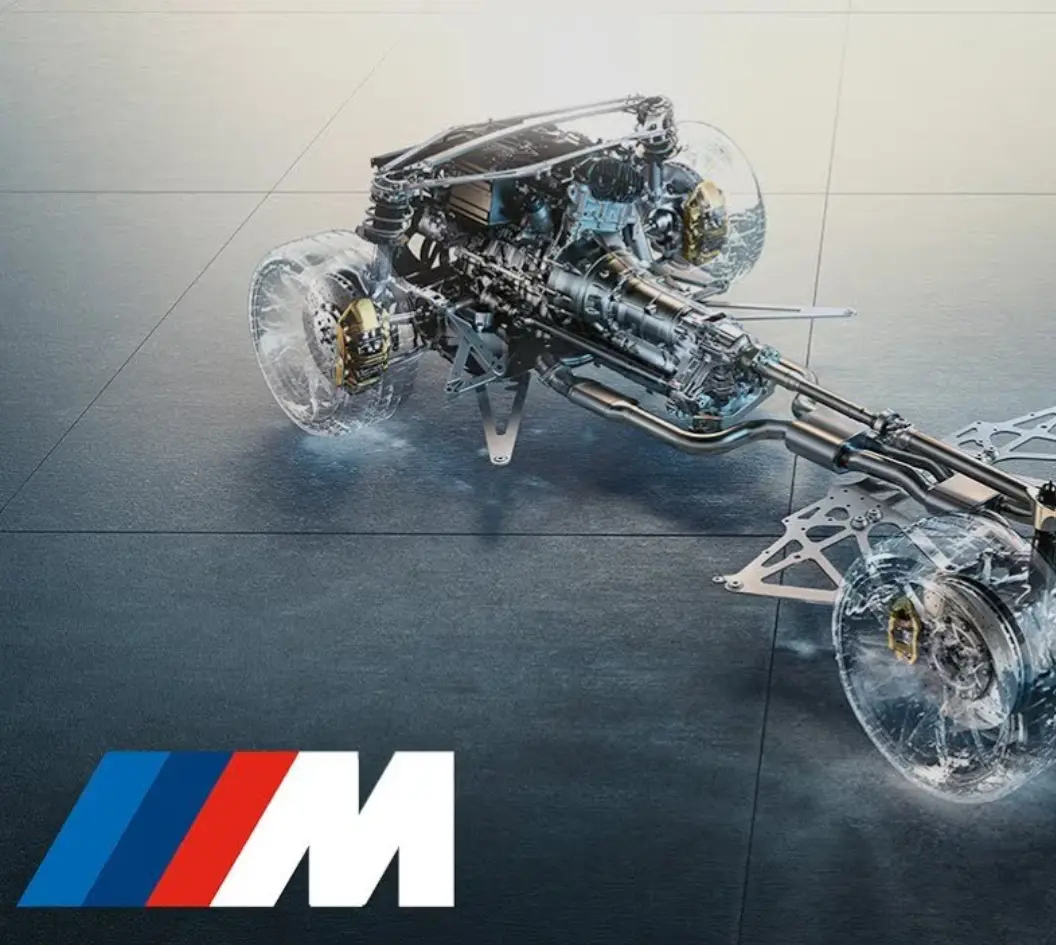
You’re driving normally, and then the dash throws up one of those messages that instantly raises your heart rate: “Drivetrain malfunction. Drive moderately. Full performance not available.” Or worse, something like: “Drivetrain malfunction. Stop carefully and turn off vehicle.” Here’s the thing: “drivetrain malfunction” is a catch-all warning, not a single diagnosis. It means the car has detected a fault that affects how power is delivered and it’s protecting itself by reducing performance or changing how it runs. Sometimes it’s genuinely urgent. Sometimes it’s software being over-sensitive. Sometimes it’s a misfire that’s about to become expensive if you keep pushing the car. This guide is the calm plan. What to do first, how to judge risk, and how to talk to a workshop so you don’t end up funding a random parts swap. Step 1: Read the exact message. BMW uses different “levels” of serious BMW doesn’t always show the same wording. And the wording matters. In one BMW technical bulletin, you can see multiple Check Control message examples, including: “Engine fault. Full engine performance no longer available. Drive with care.” “Drivetrain malfunction. Stop carefully and turn off vehicle.” “Drivetrain malfunction. Limited Range and drive power. Engine restart may not be possible. Please drive to the nearest BMW Workshop.” A simple way to think about it is this: “Drive moderately / full performance not available”Usually means reduced power, often limp mode. You still need to be careful, but you might be able to get somewhere safely. “Stop carefully and turn off vehicle”Treat this as the car telling you: don’t risk it. “Engine restart may not be possible”That’s BMW warning you that if you shut it off, you may not get it back on. It’s telling you to head straight to a workshop, gently, and ideally with recovery on standby. What this means is… don’t treat every drivetrain warning the same. Step 2: The first 2 minutes: do the safety stuff before you do the car stuff If you see any drivetrain malfunction message, do this in order: Ease off the throttle No kickdown. No hard acceleration. No “let me test it.” Check your mirrors and move to a safe lane If you’re on Sheikh Zayed Road or any fast road, your first job is not diagnostics. It’s getting to a safe position. Look for immediate danger signs If you have any of these, stop and call recovery: strong burning smell heavy smoke loud knocking flashing check engine light (if present) temperature rising quickly If the message literally says stop and turn off, do it. Switch the AC to a normal setting This isn’t magic, but in some cases reducing load helps you limp safely. Don’t turn everything off while driving. Just don’t add more load. Step 3: Decide: can you drive gently, or should you stop now? Use this quick decision guide. You can usually drive gently to a nearby workshop if: The car feels mostly normal, just less powerful The message is the “drive moderately” type No smoke, no overheating, no violent shaking You should stop and call recovery if: The message tells you to stop and turn off The engine is shaking hard (misfire feeling) You hear mechanical banging You see overheating behavior You lose power so badly you can’t safely merge or maintain speed In real life, it looks like this: Mild issue: car pulls fine but feels “lazy,” warning shows once, no other drama. Serious issue: shaking, strong fuel smell, smoke, rough running, or power drops suddenly. When in doubt, don’t gamble. Recovery is cheaper than an engine rebuild. What the car is doing when it says “full performance not available” Most of the time, BMW is putting the car into a protective mode. People call it “limp mode.” The car limits torque, boost, RPM, or gear behavior so you can still move without destroying something. RepairPal describes this reduced power message as often linked to issues like misfires or oil leaks, and notes that limp mode can restrict RPM and speed until the underlying cause is diagnosed. So the warning is not just “FYI.” It’s a sign the car has already changed how it runs. Common causes (without turning this into a guessing game) You do not need to guess the exact part. But it helps to know the main buckets. 1) Misfires and fuel pressure problems This is one of the most common real-world triggers. A BMW technical bulletin for the N63R engine (7 Series) describes drivetrain malfunction warnings tied to fuel pressure faults and misfire faults, and notes it can happen after a hot engine soak restart in certain fuel conditions. Even if you don’t drive that exact model, the pattern is useful: hot restart fuel pressure issues misfires drivetrain warning In UAE heat, hot soak restarts are part of normal life, especially after parking outside. 2) Turbo and boost control issues On turbo BMWs, boost control problems can trigger drivetrain warnings. A BMW bulletin for the M2 describes drivetrain malfunction with reduced engine power where the turbocharging pressure control was switched off due to an overly sensitive diagnostic threshold in the engine computer software. The fix described is reprogramming the vehicle. That’s an important point: not every drivetrain warning is “broken hardware.” Sometimes it’s the car being too sensitive and a software update changes the behavior. 3) Software or control-module issues (including hybrids) In another BMW bulletin (covering vehicles like the X5 plug-in hybrid and BMW i3), drivetrain messages and restricted drive mode are linked to software in the electrical machine electronics, with the correction being reprogramming and service functions. It even states that parts replacement will not provide a solution for that situation. Again, don’t over-interpret this as “it’s always software.” But it’s proof that drivetrain warnings can be: mechanical electrical software 4) Oil leaks or low oil pressure related behavior Some reduced power situations are connected to oil leaks and sensor readings. RepairPal lists oil leaks from faulty gaskets or seals as one possible contributor to reduced power alongside the reduced performance message. If you smell oil burning or see smoke from the engine bay, treat it as a stop-and-check situation. 5) Transmission behavior (less common than people assume, but real) Sometimes it is gearbox related, especially if you feel: harsh shifting stuck in one gear delayed engagement But don’t assume it’s the gearbox just because the message says “drivetrain.” The car often uses drivetrain warnings for engine-side faults too. What you can check safely (without tools) These checks won’t “fix” it. They help you decide whether it’s safe to move and give a workshop better info. 1) Temperature gauge If it’s rising quickly, stop. 2) Smell check (outside the car) Strong fuel smell: could be misfire or fuel system problem. Don’t keep driving hard. Burning plastic smell: stop and call recovery. 3) Visible leaks Look under the front area if you can safely do it. puddle or steady drip = don’t drive far 4) How the engine feels at idle smooth idle + warning = could be sensor/software or non-critical fault rough idle + shaking = misfire territory, and continuing to drive can damage the catalytic converter The one mistake that makes diagnosis harder Don’t clear the codes immediately. The car stores fault codes plus “freeze frame” data, which is basically a snapshot of what the engine was doing when the problem happened. If you wipe it, the workshop loses the most useful evidence. If you have a scanner, it’s fine to read codes. Just don’t clear them as your first move. If you must drive, here’s how to do it with less risk This is not a guarantee, but it’s the safest way to limp the car: Keep RPM moderate Avoid kickdown Avoid sport mode Avoid long idling in extreme heat Head directly to a workshop, not “one quick errand” And if the message includes any “restart may not be possible” type language, treat that seriously and choose a route where you can safely stop. What a good workshop will do (and what you should ask for) A good workshop does not start with “let’s replace X.” It starts with: full fault scan look at freeze frame confirm symptoms on a controlled test drive test the suspected system Ask these questions “What are the exact fault codes and what system do they point to?” “What test confirms this part is bad?” “If we replace this part, how will you verify the fix?” “Is there a software update or bulletin related to these symptoms?” That last one matters because BMW bulletins show real examples where a drivetrain malfunction was corrected by updated software rather than parts. UAE reality: why people see this warning more often here A few local patterns make drivetrain warnings more likely: Heat + hot soak restarts You shut off the car, heat builds under the hood, then you restart 20 minutes later. BMW has documented drivetrain warnings linked to fuel system vapor formation after hot soak restart in specific conditions. Even if the exact fuel blend story is different in the UAE, the broader idea holds: hot soak restarts stress fuel and air systems. Short trips and stop-start traffic More heat cycles, more idling, more time for small issues to show up. “It drove fine after I restarted” This happens. And it does not mean the problem is gone. Intermittent faults can come and go. A drivetrain warning that disappears is still worth scanning because you want to catch early signs before it becomes a breakdown. Quick scenarios (so you can place your situation) Scenario A: Warning appears once, car feels normal You can usually drive gently to a workshop. Still scan it soon. Don’t ignore it for weeks. Scenario B: Warning appears and the car shakes Think misfire. Don’t keep driving. Get it checked ASAP. Scenario C: Warning appears after a hot restart, then clears Could be fuel pressure or sensor behavior. Still scan it. BMW has documented drivetrain warnings connected to fuel pressure faults after hot soak in certain cases. Scenario D: Warning appears, and the message tells you to stop Stop. Turn off. Recovery. Bottom line: a calm plan beats panic and guesswork BMW drivetrain malfunction alerts are scary because they’re broad. But you can handle them well if you follow a simple approach: Read the exact message (some tell you to stop). Check for danger signs (smoke, overheating, hard shaking). Drive gently only if it’s clearly safe, straight to diagnosis. Do not clear codes first. Ask the workshop for evidence, not guesses. Remember that in some documented cases, BMW’s fix is software programming rather than parts.
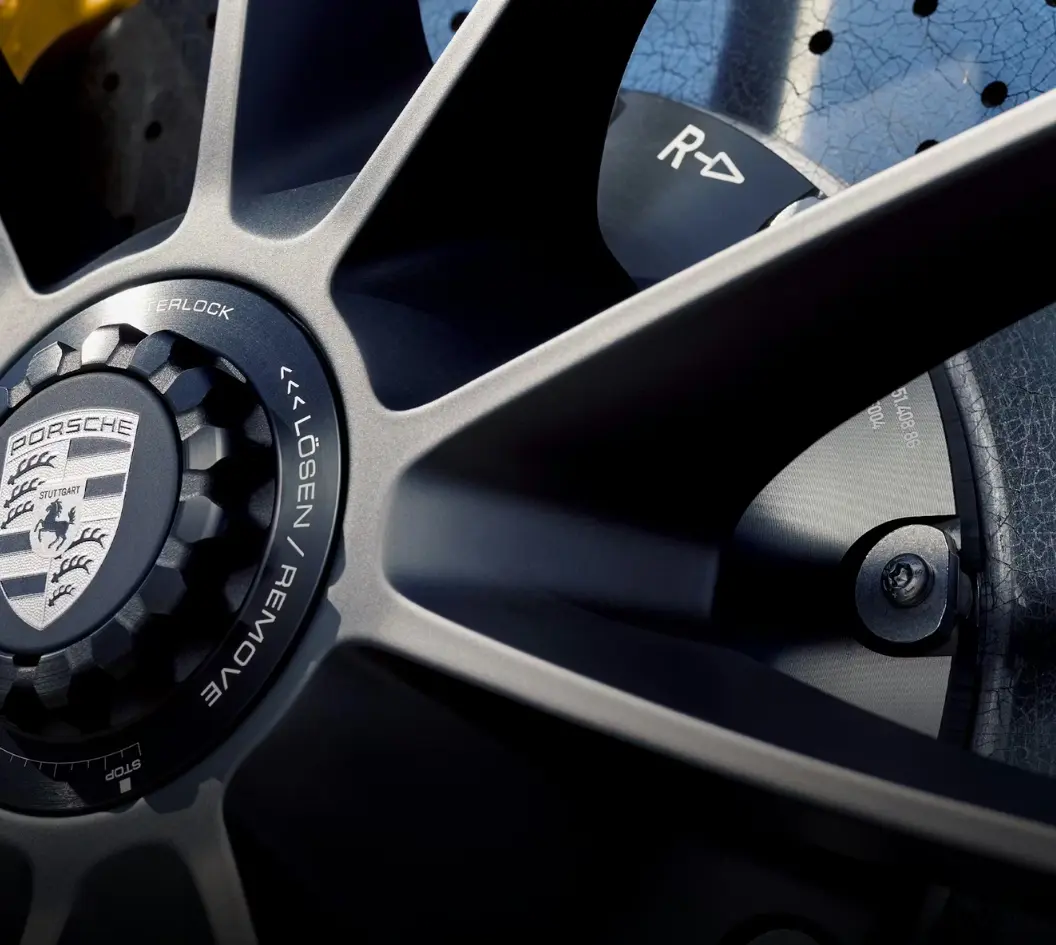
If you drive a Porsche in Dubai, there’s a good chance you’ve heard it. That sharp squeal at low speed. The little “eeeek” right before the car stops. Sometimes it’s only in the morning. Sometimes it’s worse after a wash. Sometimes it disappears the day you decide to book an appointment. And then there’s the other frustration: pads wearing unevenly, or the car feeling slightly rough under braking even though you’re not driving aggressively. Here’s the thing: Porsche brakes are high-performance by design. That often means more bite, more heat, and sometimes more noise. Even Porsche dealers openly say squeaking can happen and list common causes like brake dust, moisture, worn pads, and glazing. But you can reduce it a lot. The trick is knowing which squeal is “normal Porsche behavior” and which squeal is the car telling you something is wrong. This guide is written for Dubai driving: heat, sand, short trips, traffic, valet parking, and frequent car washes. First, don’t treat every brake noise like the same problem Before you fix anything, identify what you’re hearing. 1) Light squeal at low speed, right before stopping Common on performance pads and big brakes. Often worse with light pedal pressure. Frequently related to pad material, dust, glazing, or how the pads are contacting the rotor. 2) Loud squeal all the time, even with medium braking More likely something is not moving freely: pad hardware, shims, caliper sliding points, or the pads are contaminated or glazed. Brembo’s guidance on noise and vibration points to checking and cleaning components and using anti-noise grease on contact surfaces. 3) Grinding sound Stop treating it as “squeal.” Grinding usually means pad material is gone or something is scraping. That’s a safety issue. 4) Vibration or pulsing through the pedal or steering wheel Often related to uneven rotor thickness or uneven pad deposits. Cars.com notes it only takes very small thickness variation for a driver to feel vibration. Wagner also explains brake judder as vibration felt during braking. Different sound, different root cause. Why Porsche brakes squeal more in Dubai Dubai doesn’t just “wear brakes.” It changes how brakes behave. Heat changes pad behavior High heat can harden the pad surface, especially if you do lots of light braking (creeping in traffic) or stop after heavy braking and hold the pedal down. Overheated, hardened pads are a classic path to glazing, which is associated with squealing and weaker bite. Sand and dust are everywhere Brake dust is already abrasive. Add fine sand and you can get extra noise and faster wear. Porsche dealer guidance lists brake dust and debris as common squeal causes. Short trips and gentle braking can make noise worse This sounds backwards. People assume “gentle driving = quiet brakes.” But light pedal pressure can create a situation where the pad vibrates against the rotor instead of bedding in cleanly. That vibration becomes squeal. Brembo discusses noise and vibration being related to the interaction and condition of pads, discs, and hardware. Car washes and humidity spikes After a wash, you can get a thin film of moisture and surface rust on steel rotors. That often causes temporary noise that goes away after a few stops. Porsche dealer guidance also mentions moisture as a factor. The most common causes of Porsche squeal and uneven wear Cause 1: Performance pad compound doing performance pad things Some Porsche pads are designed for strong bite and heat resistance. The tradeoff is noise at low temperatures or low speeds. A simple way to think about it is this: quiet pads are usually softer and more comfort-focused. Performance pads are often louder. If you drive mainly in traffic and you want quiet, you may be on the wrong pad compound for your real use. Cause 2: Glazed pads or rotors Glazing is when the pad surface hardens and gets slick from heat. It can cause squealing and reduced friction. Firestone notes glazing can lead to squealing and reduced braking effectiveness, and the fix often involves replacing pads and sometimes rotors depending on severity. In real life, glazing happens like this: lots of stop-go braking with light pressure occasional heavy stop then you stop and keep your foot pressed on the brake while everything is very hot The pad surface can get “shiny,” and noise increases. Cause 3: Uneven pad deposits (the “it feels warped” problem) Many people blame “warped rotors” immediately. Sometimes rotors do get issues, but a lot of vibration complaints are caused by uneven transfer of pad material onto the rotor surface. This is why proper bedding-in matters. Bedding-in (also called burnishing) helps create a stable transfer layer between pad and rotor, which can reduce noise and improve performance. Cause 4: Holding the brake pedal at a stop after hard braking This one is huge in Dubai because of traffic lights and queues. If the brakes are hot and you sit still with strong pedal pressure, the pad can imprint on the rotor. PowerStop specifically warns that holding the pedal down when rotors are very hot can create an imprint, which then causes pulsation or vibration. What this means is… sometimes the “uneven wear” feeling is actually an uneven rotor surface caused by your stop habits, not a bad part. Cause 5: Brake hardware and contact points not clean or not lubricated correctly Pads sit in brackets. There are springs, clips, shims, and contact points that need to be clean and correctly assembled. Brembo recommends inspecting and cleaning components, checking springs, and applying anti-noise grease on the correct pad contact surfaces. If those pieces are worn, missing, or dry, you get: squeal uneven pad wear pads that don’t retract cleanly Cause 6: A sticky caliper or uneven piston movement If one side applies more than the other, you get: one pad wearing faster uneven rotor wear the car pulling slightly under braking persistent noise on one corner This is more common than people think, especially if the car is washed often and not driven hard enough to fully dry out the brake area. Cause 7: Wrong pad installation or “cheap fix” parts Porsche brakes are sensitive to: correct pad fitment correct shims correct anti-rattle hardware correct torque If any of these are off, squeal becomes constant. A quick self-check before you book anything You can learn a lot in 5 minutes. Step 1: Identify which corner is noisy Front left? Front right? Rear? Both? If it’s always one corner, think: pad hardware caliper sticking contamination If it’s all four, think: pad compound glazing bedding-in driving pattern Step 2: When does it happen? Only in the morning? Only after a wash? Only at low speed? Only when brakes are hot? Write it down. This can help if you want faster diagnosis. Step 3: Look at pad thickness (through the wheel) You don’t need to measure, just compare left vs right. If one side looks noticeably thinner, that’s not a “normal squeal” situation. Step 4: Feel for vibration If you feel pulsing, remember: very small rotor thickness variation can be felt. That points you toward bedding, deposits, or rotor condition. How to reduce squeal in daily Dubai driving Fix 1: Do a proper bedding-in if pads or rotors are new, or if deposits are uneven Bedding-in is not “one hard stop.” It’s a controlled process of multiple moderate stops, building heat gradually, then cooling. The goal is a consistent transfer layer. Here’s how it works (general concept, not a one-size-fits-all recipe): Find a safe, empty road. Do several medium stops from a steady speed. Avoid coming to a complete stop with hot brakes. Let brakes cool by driving without braking much. The catch is safety and legality. Don’t do this in traffic. Don’t do it near speed cameras. Choose a safe time and place. If you’re not confident, let a specialist handle it. Fix 2: Change your “stop habit” at lights This is a small habit that can reduce uneven deposits. If you just did a hard stop (or a spirited drive) and the brakes are hot: leave more space ahead so you can let the car creep slightly or shift to neutral and use light pressure avoid sitting for long with heavy pedal pressure PowerStop’s guidance is clear about hot pads imprinting on rotors when held at a standstill. Fix 3: Wash routine: dry the brakes properly After a wash: drive a short distance do a few gentle stops to dry rotors avoid parking immediately with wet brakes Moisture and surface rust can create temporary squeal. Fix 4: Clean and service the pad contact points and hardware If squeal is persistent, the right fix is often not “new pads.” It’s correct brake service. Brembo recommends cleaning and applying anti-noise grease on the correct pad contact surfaces, and inspecting or replacing caliper springs if worn. This is where many workshops cut corners. A proper job involves: removing pads cleaning the abutment areas checking clips and springs checking shims using the right lubricant in the right place Not everywhere. Not “spray and pray.” Fix 5: Match pad compound to your real driving If your Porsche is mostly: school runs commuting mall traffic short trips …you may get better results from a street-focused pad (still high quality), not an aggressive compound. You trade a tiny bit of initial bite for: less noise better low-speed behavior more consistent wear That tradeoff is often worth it for daily Dubai life. Fix 6: Address glazing properly If the pads are glazed, cleaning alone might not fix it. Firestone notes that already glazed brakes often require pad replacement and sometimes rotor work depending on severity. Sometimes light glazing can be corrected, but if the pad material is cooked, the squeal returns fast. Fix 7: If you have vibration, don’t assume “warped rotors” without evidence Brake vibration can come from: uneven deposits rotor thickness variation rust or dirt build-up Cars.com notes how little thickness variation is required to feel vibration. This is why a good workshop measures runout and thickness variation, instead of guessing. What about Porsche ceramic brakes (PCCB) and coated brakes? If you have PCCB or Porsche Surface Coated Brakes, some noise can still happen. Owners report squeal on PCCB in certain conditions, and Porsche communities often discuss it as a known behavior that can be hard to eliminate completely. What this means is… if your goal is “silent brakes,” ceramics may frustrate you in city driving, even though they’re excellent under heavy use. If you mainly do daily traffic, you should factor that into your buying decision or your expectations. Uneven brake wear: what actually causes it on daily cars Uneven wear is usually a movement problem, not a “bad pad” problem. Common reasons: caliper pistons not retracting evenly worn or sticking pad hardware uneven bedding and deposits alignment or suspension issues causing the car to load one corner more frequent light braking that never fully cleans the rotor surface A good diagnosis checks: pad thickness inner vs outer left vs right comparison rotor condition caliper function If you see one pad worn much faster than the other on the same axle, don’t ignore it. That’s how rotors get damaged. When you should stop driving and get it checked immediately Brake squeal is annoying. But these symptoms are not “just noise”: Grinding sound Strong pull to one side while braking Pedal feels soft or sinks Warning light for brake system Loud clunk with braking Steering wheel shakes hard under braking (especially at highway speeds) Brake judder can range from mild to violent, and it’s worth investigating early. A simple weekly routine that helps a lot If your Porsche is a daily, here’s a low-effort routine that reduces noise and uneven deposits: Once a week, on a safe road, do a few firm, smooth stops (not panic stops). After that, drive a bit to cool brakes. Avoid stopping fully with heavy pedal pressure while brakes are very hot. After washes, dry brakes with a few gentle stops. This can help if your squeal is mostly “daily driving behavior + environment,” not a mechanical fault. Bottom line Porsche brakes squeal more often than normal cars for simple reasons: high-performance pads, big brake hardware, heat, dust, and daily traffic habits. Porsche dealers list dust, moisture, wear, and glazing as common causes. If you want quieter brakes and more even wear in Dubai, focus on: correct bedding-in and avoiding hot pad imprints proper hardware cleaning and correct anti-noise treatment choosing a pad compound that matches daily use drying brakes after washes measuring rotor condition instead of guessing when vibration appears If you only do one thing, do this: stop holding heavy brake pressure at lights right after hard braking. It’s one of the most common ways daily drivers create uneven deposits and future vibration.
If you’ve never driven on sand before, Liwa is the place that can either make you fall in love with off-roading… or make you question every life decision you’ve ever made (usually right after you bury your tires to the chassis). The good news: dune driving is a skill, not a talent. With the right prep, the right mindset, and a bit of humility, you can have an amazing first experience at Liwa Festival without turning your SUV into a sand sculpture. This guide is written for total beginners. No “just send it” advice. No macho nonsense. Just practical steps, safe techniques, and the little details that keep your trip fun, controlled, and memorable. What Makes Liwa Different Liwa sits on the edge of the Empty Quarter (Rub’ al Khali), where dunes are bigger, softer, and more dramatic than most people expect. That means: Sand can be powdery and deep, especially later in the day. Dunes can have sharp drop-offs on the far side. Wind changes the surface constantly, so yesterday’s “easy route” may be today’s trap. Phone signal can be inconsistent depending on where you are. Liwa Festival adds another layer: more vehicles, more spectators, and more “I saw a guy do it on Instagram” energy. The desert doesn’t care about Instagram. Before You Even Touch Sand: Mindset Rules 1) Leave the ego at home The desert rewards patience and punishes overconfidence. Your goal is not to prove anything. Your goal is to return with your bumper still attached. 2) Start small, build up Begin on flat sand and gentle dunes. The big faces and steep bowls can wait until you’re comfortable controlling traction and momentum. 3) Don’t drive alone as a beginner If you’re new, go with a convoy or at least one other vehicle with recovery gear and experience. Solo dune driving is where “minor mistakes” become “call someone with a tractor.” Choosing the Right Vehicle (and What Not to Bring) Best beginner choices Proper 4x4 with low range: Land Cruiser, Patrol, Wrangler, Prado, Fortuner, Pajero (well maintained), similar. Stock is fine if it’s healthy. You don’t need a monster build. What makes it harder Heavy vehicles with street tires Low-profile tires and big rims Worn suspension, weak cooling, old battery Full-size luxury SUVs with lots of weight and delicate bumpers (possible, but not “beginner-friendly”) Please don’t do this on your first Liwa trip Take a 2WD and hope for the best Take a crossover and assume “AWD is the same” Bring a sports car for “just a few photos in the sand” (photos are expensive when you’re stuck) The Non-Negotiable Prep Checklist 1) Tire pressure: your sand superpower For sand, you reduce tire pressure to increase the tire’s footprint. Typical starting point for beginners: 14 to 18 PSI for most SUVs on standard all-terrain tires Heavier vehicles may need slightly lower Very low pressures increase the risk of popping a bead, so don’t go extreme as a beginner Rule: If you’re struggling for traction, don’t instantly use more throttle. First, check tire pressure. 2) Bring the right basic gear At minimum: Tire deflator + pressure gauge Air compressor (to reinflate before road driving) Recovery strap (rated, not a cheap tow rope) Soft shackles or rated bow shackles Shovel (your best friend) Traction boards (optional but very useful for beginners) Flag and pole (helps others see you over dunes) First-aid kit, water, snacks, flashlight 3) Check your vehicle health Before heading out: Coolant level, no leaks Engine oil at proper level Battery in good condition Tires not bald, no sidewall damage Brakes functioning and not overdue No overheating issues (sand + slow speeds + load = heat) 4) Know how to use 4H and 4L 4H (high range): most general sand driving 4L (low range): recoveries, steep climbs at low speed, controlled descents, slow technical sections If your vehicle has traction control settings, learn the basics: Some traction control systems help on sand. Some kill momentum by cutting power. Test what works in a safe flat area. Liwa Festival-Specific Tips (So You Don’t Get “Festival Trapped”) Arrive early Sand is typically firmer in the morning. Later, it gets churned up and softer as more vehicles pass through. Don’t follow random tire tracks blindly Tracks can lead you straight into a soft pocket, a bowl with no easy exit, or a steep drop-off you can’t see until it’s too late. Respect zones and marshals Festival areas often have controlled sections and spectator zones. Stay within allowed areas. The desert is huge, but safety perimeters exist for a reason. Beginner Sand Driving Techniques That Actually Work 1) Smooth throttle beats loud throttle Sand driving is about controlled momentum, not aggression. Too little throttle: you bog down. Too much throttle: you dig holes and sink faster. Aim for a steady, clean pull. Think “glide,” not “launch.” 2) Momentum is your currency On sand, momentum helps you float. But momentum without control becomes speed. And speed plus dunes equals damage. A good beginner rhythm: Build speed gently on flat sand Maintain steady throttle on climbs Ease off slightly near crests Never floor it at the top of a dune 3) Steering: smaller inputs, bigger results Big steering inputs scrub speed and increase the chance you plow the front tires. Look where you want to go Turn smoothly and early Avoid panic turns on soft sand 4) Cresting dunes (the part that breaks bumpers) Cresting means reaching the top where you can’t see the other side. Beginner rule:Approach at an angle, slow down near the top, and peek. Why? The far side may be steep (a “slip face”) There may be a car coming the other way There may be a drop you cannot descend safely A clean crest is slow, controlled, and boring. Boring is good. 5) Descending dunes safely For descents: Use low range if it’s steep Keep wheels straight Avoid braking hard (braking can cause sliding) Let engine braking do the work If you start sliding sideways, gently steer downhill and reduce brake input. Sudden corrections can worsen it. 6) Side sloping (optional for beginners) Driving across a dune face is called side sloping. It can be stable if done correctly, but it’s not where beginners should “learn bravery.” If you do it: Avoid steep angles Keep steady throttle Don’t stop mid-slope If you feel traction breaking, steer downhill gently and exit the slope How to Avoid Getting Stuck (and What to Do When You Do) Common reasons beginners get stuck Tires not deflated enough Stopping on soft sand Too much throttle causing digging Trying to turn sharply at low speed Climbing too steep, too slow, then losing momentum The moment you feel you’re sinking: stop spinning Wheel spin digs you into a deeper hole. Do this instead: Stop, breathe. Straighten the wheels. Reverse gently along your own tracks. If that fails, get out and check sand depth. Basic self-recovery steps Shovel sand away from the front of all four tires and under the chassis if it’s resting on sand. Lower tire pressure a little more (within reason). Use traction boards if you have them. Gentle throttle, straight wheels, slow climb out. If you need a strap pull: Use rated recovery points only Clear spectators away One person coordinates, no shouting chorus Convoy Etiquette (Even if You’re Only With Two Cars) Use a simple communication method Radios are best. If no radios, keep close visual contact and agree on hand signals. Keep safe spacing Dunes hide vehicles. Leave room so you can stop or change line without a surprise meeting at the crest. One car at a time on tricky sections If someone is climbing or descending a steep face, don’t follow directly behind. Give them space to recover or reverse if needed. Safety and Comfort: Don’t Skip These Water and snacks Desert air is dry and you don’t notice dehydration until you’re already slow and cranky. Bring more water than you think you need. Sun protection Hat, sunscreen, sunglasses. You’ll be outside more than you expect, especially if you’re recovering. Seatbelts always Dunes can bounce you around. Seatbelts are non-negotiable. Don’t drive fatigued Sand driving needs attention. If you’re tired, stop, rest, and rotate drivers if possible. A Simple Beginner Route Plan for Your First Day Step 1: Flat sand practice (15 to 30 minutes) Try accelerating smoothly Try turning gently at different speeds Feel how the vehicle responds Step 2: Small dunes Practice climbing and descending Practice cresting slowly and safely Step 3: Medium dunes with guidance Only move up when you’re consistently: Maintaining momentum without wheel spin Cresting with control Recovering calmly when you bog down Step 4: Watch and learn At Liwa Festival, there’s a lot to see. You can learn plenty by watching experienced drivers choose lines and manage speed without turning the day into a “crash course.” What to Pack for Liwa Festival Dune Driving Essentials Tire deflator, gauge, compressor Shovel, strap, shackles/soft shackles Water, snacks, power bank First aid kit Gloves, small toolkit Tow points checked and accessible Nice to have Traction boards Portable shade Air down mat or knee pad (your knees will thank you) Extra coolant and basic fluids Headlamp for late-day packing Beginner FAQs Is dune driving bad for my car? It can be, if you do it wrong. Smooth inputs, correct tire pressure, and proper cooling checks reduce stress a lot. Most damage comes from overheating, hard impacts, or aggressive driving. What tire pressure is “safe”? There’s no single number, but 14 to 18 PSI is a common beginner range for SUVs. Adjust based on vehicle weight, tire type, and sand softness. Reinflating before highway driving is mandatory. Do I need special tires? All-terrain tires help, but you can drive sand on good condition road tires if you lower pressure and drive carefully. The main issue is sidewall strength and heat management. Can I take my family? Yes, if you drive conservatively, avoid risky angles, and keep the trip comfortable. Beginners should stick to gentle dunes and controlled areas. What’s the biggest beginner mistake? Over-throttling. Spinning tires digs holes fast. If you’re struggling, reduce tire pressure and improve your line before adding power. Final Advice: Make It Fun, Not Dramatic Liwa is not a video game map. It’s real desert, real terrain, real consequences. But it’s also one of the best places in the UAE to experience sand driving properly. Start early, air down, drive smooth, and treat every crest like it’s hiding a surprise. If you do that, your first Liwa Festival dune drive won’t just be “survived.” It’ll be the start of a hobby you actually want to keep.
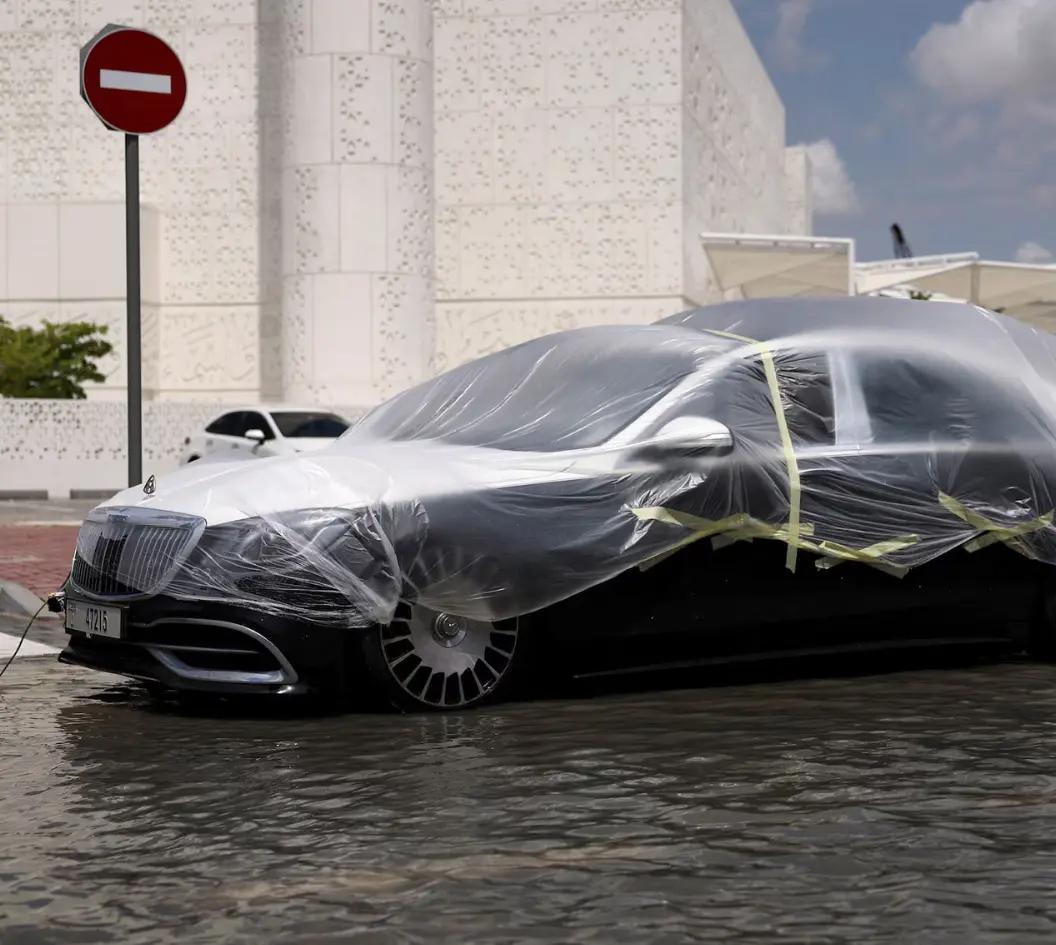
In the UAE, heavy rain can go from “nice weather” to “roads turning into pools” faster than most people expect. Sometimes a car gets through it with no drama. Other times you come back to your vehicle and it refuses to start. Or worse, it stalls in water and now you are standing there wondering if one more attempt will bring it back. This is where people accidentally make the situation much worse. When a car does not start after rain or flood exposure, the danger is not only inconvenience. The risk is turning a repairable issue into a major engine failure, or creating long-term electrical problems that show up weeks later. This guide is written for UAE conditions and real scenarios we see here. It is meant to help you make calm decisions, do safe checks, and avoid the common mistakes that cause expensive damage. The one rule that protects your engine If your car stalled while driving through water, or you suspect water reached the air intake area, do not crank the engine. Not once “just to see.” Not again “because it almost started.” If water has entered the cylinders, cranking can bend connecting rods, crack pistons, or damage internal components. Water does not compress. Engines do. That mismatch is how an incident becomes an engine rebuild. So before anything else, figure out how severe the exposure was. Step 0: Identify your flood exposure level Be honest about what happened. Your next step depends on it. Level 1: Rain only, no standing water You drove in rain normally. No deep splashes. No stalling. Later the car will not start. This is commonly battery or moisture-related electrical behavior. Level 2: Shallow standing water, brief contact You drove through pooled water but it stayed low. No stalling. The car parked and later did not start. Risk is moderate. You can do careful checks but avoid repeated start attempts. Level 3: Deep water, high splash, or stalling Water went up toward the bumper or higher. The car stalled, hesitated, or you heard unusual intake sounds. Risk is high. The safest move is towing and inspection. Level 4: Parked car flooding Basement or parking area flooded. Water reached door sills, carpets, or seats. This is often an electrical and interior issue first, but engine risk can still exist if water reached the intake path. If you are Level 3 or Level 4, treat the situation as serious. Your goal is not to “get it started.” Your goal is to prevent damage. Step 1: Make the situation safe before you touch the car Flood aftermath introduces electrical and safety risks, especially if water is still around the vehicle. If the area is wet or water is still pooled: Do not stand in water while touching the car. Avoid handling anything metal while wet. If you smell burning, see smoke, or the dashboard is behaving strangely, stop immediately and call for towing. If the vehicle is a hybrid or EV, do not do DIY electrical checks around underbody components or orange cables. High-voltage systems require trained handling. Step 2: Observe the starting behavior carefully The way your car fails to start is a clue. Do not rush. Take 20 seconds and watch what happens. Case A: Completely dead No interior lights, no dashboard, no response. This usually indicates: Battery disconnected or dead Main power distribution issue Water affecting battery terminals or main fuse link Case B: Lights on but no crank Dashboard lights up normally, but you get no starter action. You might hear a click. This can be: Starter relay or starter motor issue Safety interlock issue (brake switch, gear selector, immobilizer) Water-affected module preventing crank permission Case C: Cranks but will not start Starter turns the engine, but it does not fire. After flood exposure, this is the scenario where you must be careful, because it can be: Wet ignition components Water in the intake Sensor disruption Fuel system issues In severe cases, water in cylinders Case D: Cranks unusually fast or sounds wrong Stop immediately and do not try again. This can indicate internal mechanical issues or compression changes. A very simple habit that helps: record a short video of the cluster and the sound. That evidence helps diagnosis and helps if insurance becomes involved. Step 3: Decide if you should attempt one start at all This is the decision point. You should not attempt starting if: The car stalled in water Water was high near the grille or above bumper level You suspect intake water There is standing water in the cabin The engine cranks abnormally If none of the above is true and exposure was light, one controlled start attempt is usually safe. Not ten. One. Step 4: Check the obvious and common UAE culprit, the battery In the UAE, batteries age faster due to heat. During rain, a weak battery often shows its weakness because moisture and temperature shifts change electrical resistance and load behavior. Signs of a battery issue: Slow cranking Clicking from the starter area Dashboard flicker when trying to start Interior lights dimming heavily If you have a multimeter: 12.6V roughly suggests a healthy resting battery 12.2V and below is often weak Under 12.0V is commonly a no-start scenario If you do not have a multimeter, a safe test is limited: Try turning headlights on and see if they are strong and stable If lights are weak or the car behaves erratically, do not keep trying About jump-starting Jump-starting can be useful, but it is also abused. If you jump-start: Ensure correct polarity and stable connections Try once, maybe twice If the car does not start, stop Repeated jump attempts can stress control modules, especially if moisture is present. If the car starts with a jump, do not assume everything is fine. You still need to confirm there is no water ingestion and the charging system is healthy. Step 5: Check the key fob and immobilizer behavior This is more common than people think, especially after heavy rain. If your key fob got wet: Signal strength can drop Buttons can stick The internal battery can fail Symptoms: “Key not detected” Start button does nothing even though the dashboard wakes up Lock or unlock behaves inconsistently Try: Your spare key The emergency key placement method (many cars have a specific slot or area where the key must be held) If immobilizer issues are suspected, repeated start attempts rarely help. Diagnosis is better than guessing. Step 6: Quick visual checks under the hood that do not create damage If exposure was mild and you want to do safe checks, you can look without opening sealed systems. Look for: Standing water pooled in the engine bay corners Moisture around the battery and main power distribution area Condensation inside visible housings Loose or wet connectors in accessible areas Do not start pulling connectors apart randomly. Pulling connectors when wet can trap moisture inside or damage pins. Professional drying is often controlled and targeted. Step 7: The intake and air filter check, only if it is easy on your car If your car cranks but will not start after driving through water, the intake path becomes suspicious. A safe, non-invasive check is: Locate the air filter housing (if accessible) Inspect for obvious wetness around the housing edges If you can open it easily and safely, check if the filter is wet If the air filter is wet, stop immediately and do not attempt starting again. Tow the vehicle for proper inspection. A wet air filter suggests water traveled into the intake path. That raises hydrolock risk. Step 8: Understand “cranks but won’t start” in a flood context A crank no-start after rain or shallow flood often comes down to ignition and sensor disruptions. Common scenarios include: Wet ignition components (petrol engines) Some engines have ignition coils and spark plug areas that can hold moisture. If water sits there, spark can weaken and the engine may not fire. This can sometimes resolve after proper drying, but the key is not forcing the situation through repeated cranking. Sensor disruption Water can affect crankshaft sensors, cam sensors, MAF sensors, and other low-mounted sensors. If the ECU cannot read a critical signal, it may block fuel or spark. Water-affected fuel system This is less common from rain alone, but if flooding was severe, water can enter venting systems. Fuel contamination is a workshop diagnosis item, not a DIY item. The correct approach is scanning and verification, not swapping parts based on guesswork. Step 9: Interior water checks that many people skip, then regret Even if the car does start, cabin water is a serious issue in modern cars because wiring looms and control modules often sit low. Check: Front footwells Under-seat areas Door sills Boot and spare wheel well If carpets are wet, lift mats and feel the underlayer. The underlayer can hold moisture like a sponge even when the top feels dry. If there is standing water inside the cabin, avoid driving until inspection. Wet modules can create shorts and long-term corrosion. Step 10: What warning lights can tell you after rain exposure Flood-related issues often present as multiple warnings at once. Patterns that matter: Many random warnings together can suggest low voltage or communication issues ABS, traction, steering, and brake warnings together often point to voltage instability or wet sensors Persistent airbag warning after flooding can mean under-seat connector issues Take a clear photo of the warning cluster. It helps diagnosis later, and it is useful if insurance is involved. What NOT to do, even if someone insists it works This section exists because bad advice spreads fast after rain events. Do not keep trying to start it Repeated cranking is the number one way people convert a manageable situation into a major failure. Do not push-start modern vehicles Many modern cars cannot be push-started safely, especially automatics and many dual-clutch systems. You can also damage driveline components. Do not use random sprays on connectors Sprays can leave residue, attract dust, or push moisture deeper. Proper drying involves controlled methods, sometimes with disassembly, and careful inspection for corrosion. Do not disconnect the battery without knowing what you are doing On some vehicles, sudden battery disconnects can trigger new faults, immobilizer issues, or require re-initialization procedures. Do not assume it is fine because it started Flood-related corrosion often shows up weeks later. A car that starts today can fail later as connectors corrode and resistance increases. When towing is the smartest and cheapest choice Tow the car if: It stalled in water Water reached above the lower door line The air filter might be wet The engine cranks abnormally There is standing water in the cabin The electrical system behaves erratically Towing may feel inconvenient, but it is often far cheaper than replacing control modules or rebuilding an engine. What a proper workshop diagnosis should look like A good workshop does not guess. It follows a sequence designed to prevent damage. A proper process typically includes: Confirming engine safety before any extended start attempts If hydrolock is suspected, the workshop must verify safely before cranking repeatedly. Full-system diagnostic scan, not just engine codes Flood events can trigger body, ABS, steering, and communication faults. Scanning only the engine leaves half the problem hidden. Battery and charging system testing Low voltage can mimic sensor failure. A workshop should separate real faults from voltage noise. Intake system inspection Air filter housing, intake ducting, and signs of water path are checked properly. Electrical inspection in vulnerable zones Fuse boxes, power distribution points, grounds, under-seat wiring, and connectors are assessed for moisture and early corrosion. Controlled drying if water entered the cabin Proper drying often requires lifting carpets and addressing underlayers, not simply vacuuming the surface. The workshop’s goal should be to protect long-term reliability, not just make the car start today. Practical UAE advice you should remember next time If UAE rain is forecast: Avoid underpasses and low-lying roads Do not assume SUVs are safe in deep water If you cannot see the road surface clearly, do not drive into it If water is moving, it is usually deeper than it looks Flood water is unpredictable, and the repair consequences are almost never worth the risk. Next Step If your car is not starting after rain or flood exposure in the UAE, the safest move is a structured inspection that confirms engine safety, checks electrical risks, and prevents delayed failures. German Experts can help with proper diagnostics and repair planning, especially for German vehicles where electronics, sensor networks, and control modules require careful handling.
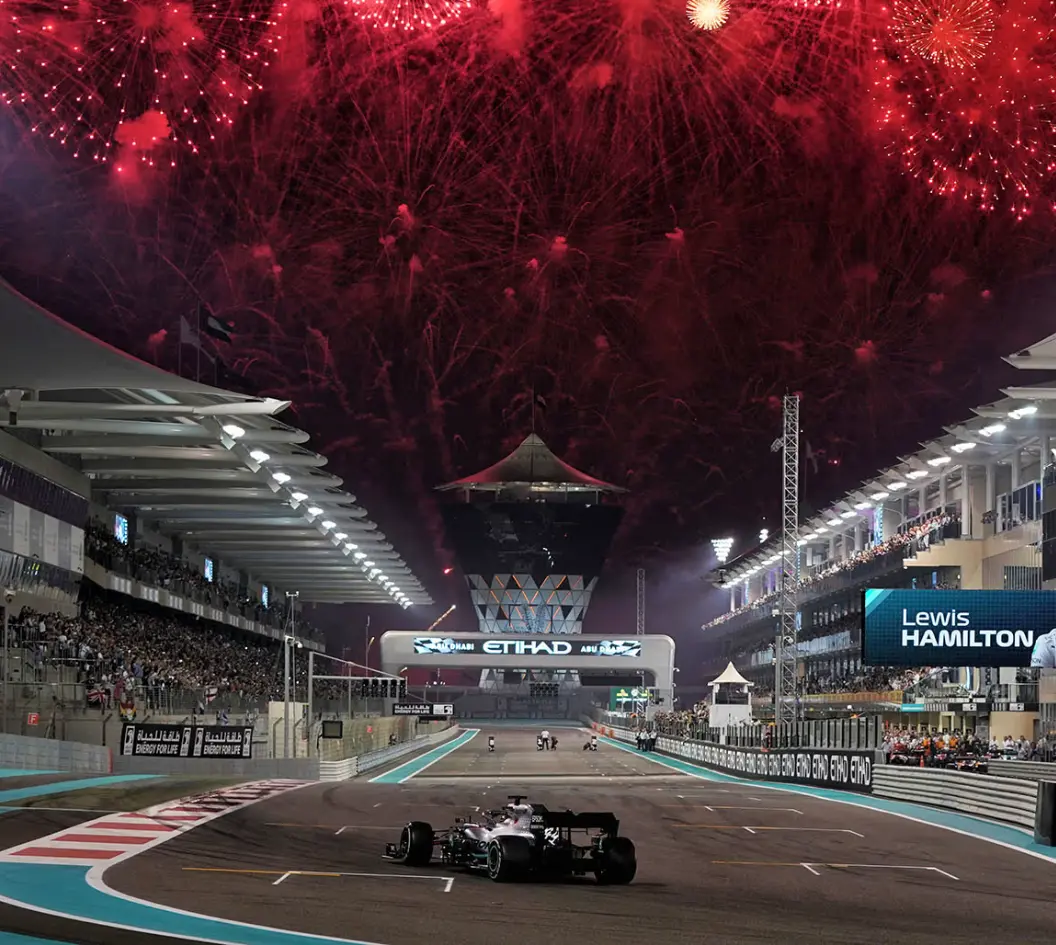
If you watched the Abu Dhabi Grand Prix at Yas Marina recently, you probably felt it even if you could not name it. The race does not just look different at night. It behaves differently. Yas is a twilight event by design. The Grand Prix begins in daylight and ends under floodlights, which creates one of the most fascinating technical challenges on the calendar. The track changes while the race is still in progress. That is the real story. In the first phase, the circuit is still carrying daytime warmth. Then the sun drops, the air cools, and the grip picture starts moving. The same corner can demand a different braking point and a different steering input twenty laps later. It is why the Abu Dhabi race can feel calm on the surface, yet tense underneath. This is also why Yas has become a big talking point in the UAE after race week. The visuals are iconic, sure. But the deeper reason the event is special is what lighting, heat, and evolving grip do to the cars, the tyres, and the decisions. Why Yas Marina Night Racing Is Not Just a Visual Gimmick Night racing at Yas is not a simple scheduling choice. It is a built-in variable that changes the entire competitive problem. On a consistently hot circuit, teams focus on managing heat and preventing tyres from overheating. On a consistently cool circuit, the challenge shifts to tyre warm-up and keeping rubber in the correct operating range. At Yas you can get both, sometimes in the same stint. The best teams do not only ask, “What is fast right now?” They ask, “What will be fast when it matters?” That is why the Abu Dhabi Grand Prix can produce moments where the balance of the car seems to shift mid-race. It is not always the driver suddenly becoming braver or more cautious. Often, it is physics quietly changing the terms of engagement. Lighting: What the Floodlights Change for Drivers and Teams The scale is bigger than most people realise This is not a handful of lights around a stadium. Yas Marina uses a full permanent lighting system across the track, and it is engineered for uniform visibility at very high speeds. Modern circuit lighting is not only about brightness. It is about consistency, glare control, and ensuring drivers can read the surface accurately. It also affects broadcast and atmosphere, which is why the event looks so polished. But for the drivers, it is still a different visual world compared to daylight. Visibility is not the same as sunlight Even with excellent lighting, artificial light does not behave like the sun. Contrast is different. Shadows sit differently on kerbs and painted lines. Some surface textures appear flatter, while others appear sharper. Small changes like these matter because drivers rely on tiny cues to place the car precisely at speed. That is why the early laps as the light transitions can look deceptively calm. Drivers are recalibrating reference points, not because they are uncertain, but because the track is literally presenting itself differently. Depth perception and glare become part of the job Night racing introduces extra work for the eyes. Glare management becomes more important, especially through a visor that can collect rubber dust and fine debris. A driver’s ability to pick braking markers and apex cues is still strong, but the brain is processing a slightly different set of inputs compared to daylight. It is not dramatic. It is subtle. In Formula 1, subtle is enough to change outcomes. Heat: Why the Temperature Drop Changes Everything Yas is famous for its day-to-night transition, and temperature is one of the main reasons that transition matters. Cooler air can help, but it also shifts the balance As air temperature drops, cooling performance generally improves. That can help power units, brakes, and overall thermal management. But cooler air can also change aero behaviour slightly because air density changes with temperature. When cars are extremely sensitive to airflow and ride height, even small shifts can affect balance. Drivers might find the car becomes more stable late in the race. Or they might find it becomes more nervous if tyres start falling out of their operating window. Both outcomes are possible depending on setup and tyre choice. Tyres are the main reason temperature matters Tyres need heat to generate grip. As the surface cools, tyres can lose temperature, and that is when you see the problems that decide races: lock-ups, wheelspin, and unpredictable traction on corner exit. At Yas, timing is everything. Early in the race, the challenge might be keeping a softer compound from overheating in traffic. Later, the problem can flip to keeping the tyre alive and warm enough to bite. Teams chase a moving target, and that target can move quickly. Driver workload changes as the car changes When grip is consistent, driving becomes clean and precise. When grip becomes inconsistent, driving becomes tiring. The driver makes micro-corrections everywhere. It is not always visible from the grandstands, but it builds fatigue. Night racing can feel physically easier because the air is cooler. Mentally, it can be harder, because the car and the tyres are constantly changing. Grip: Why Yas Feels Like a “Moving Target” Surface Grip is not one thing. It is the result of surface material, rubber laid down by tyres, temperature, and contamination. Surface characteristics influence the whole weekend Yas is known for a surface that offers strong grip, which encourages commitment in braking zones and corner entry. The tradeoff is that higher grip can also mean higher wear, depending on compound choice and track conditions. As the track cools, the way the tyre interacts with the surface changes. A car can feel more planted, then suddenly less planted if the tyre drops below its ideal range. This is why drivers talk about feeling the grip rise and fall during a stint. Track evolution is stronger than many fans expect Grip improves over a weekend as rubber is laid down. It also improves during a race as the racing line gets cleaner and more rubbered in. At Yas, the day-to-night shift complicates that story. Rubber laid down in warmer conditions behaves differently once the surface cools, and the grip curve is not always smooth. One lap the car feels glued down. A few laps later it feels like it is sliding just a little more at the same speed. The difference is not always driver error. It is often tyre temperature and surface behaviour interacting in real time. Off-line grip can be a real penalty In Abu Dhabi, fine dust and sand can settle off the racing line. That means overtaking attempts sometimes come with a hidden risk. If a driver goes wide to pass, they may hit lower grip, which affects braking and traction. At a circuit where track position matters, that off-line penalty can shape strategy and race craft. How Teams Set Up for a Race That Changes Mid-Event Practice is about matching race conditions Teams want meaningful data in conditions that resemble qualifying and the race. That is why evening sessions matter at twilight events. If you build your setup only around daytime heat, you risk being out of step when the track cools during the decisive phase. Setup becomes a compromise If you optimise for early race when the surface is warmer, you can suffer later when tyres struggle to stay in range. If you optimise for late race, you might lose track position early and spend the race fighting traffic. The best teams aim for stability. A stable car gives the driver confidence across changing conditions. Confidence reduces mistakes. Mistakes cost championships. Strategy turns into a timing game At Yas, tyre strategy is not only about speed, it is about when the tyre will behave best. A softer compound can be rapid early but fragile later. A harder compound might look conservative early but become stronger as the track settles. The smartest calls often look obvious only after the race ends. What This Means for Fans in the UAE Yas under the lights is one of the most visually striking events in the sport, but the racing difficulty is the real attraction. Night lighting changes perception. Cooling changes tyre behaviour. Grip evolves in phases. Strategy becomes a question of timing, not just pace. If you watch the race with that in mind, you start noticing the hidden battle. You see why a driver might defend earlier than expected, or why a team might pit sooner than the crowd expects. You begin to understand that the circuit is not static. It is a living environment. Final Thoughts Night racing at Yas Marina is not only special because it looks beautiful. It is special because it is technical, shifting, and unforgiving. Lighting changes what drivers see. Cooling changes how tyres behave. Grip evolves as the surface and rubber interact under different temperatures. That is what makes Yas unique. The circuit does not ask teams to be fast once. It asks them to stay fast while the world changes around them.

If you were at Yas Marina recently, you know the feeling I mean. Not the Instagram feeling. The real one. The moment an F1 car comes off a slower corner and the engine note climbs like it is being pulled upward by a cable, the way the car just grips and goes, the way the brakes look like they should be illegal, and then the whole thing happens again two seconds later. You walk out thinking you just watched speed, but what you really watched was control. Brutal control. Now the awkward question: can any road-legal car get you close to that sensation in the UAE? Not to the same level, no. An F1 car is lighter, generates far more downforce, and brakes in a way that road tyres simply cannot replicate. But there are a few road cars that feel closer than the rest, and they do it for specific technical reasons. This is not a list of “expensive cars that are fast.” It is a list of cars that mimic parts of the F1 experience: hybrid punch, aero grip, braking confidence, and that sharp, alert chassis feel that makes everything seem immediate. To keep this responsible and realistic, one thing upfront. If you want to explore these cars properly, do it on a track, or in a controlled experience. The UAE has options for that. More on those later. What “F1-like” Actually Means in a Road Car A lot of people think F1 is mostly about top speed. It is not. The most memorable part, especially at Yas, is how quickly the cars change state. They accelerate hard, yes. But they also brake insanely late, rotate into corners without hesitation, and carry speed in places where a normal car would be washing wide and begging you to lift. Most of that comes down to three things. First, response. F1 cars react to small inputs instantly. There is no softness. Second, braking stability. Many fast road cars have strong brakes, but fewer remain calm, straight, and confidence-inspiring when you hit them hard repeatedly. Third, downforce and grip. Aerodynamics are the real cheat code. Downforce is why F1 cars look like they are on rails. So the best road-legal “closest to F1” cars are usually the ones that bring at least two of these traits together, not just a big horsepower number. The Short List That Makes Sense in the UAE This list focuses on cars you can actually see, buy, and maintain in the UAE’s enthusiast ecosystem. Each entry includes the key specs that matter and the real reason it earns a place. Ferrari SF90 Stradale Hybrid response that feels closer to modern F1 than most people expect The SF90 Stradale belongs on this list because it behaves like a modern performance system, not just a powerful engine. Ferrari rates the SF90 at 1000 cv total system output. That headline number is impressive, but the more important part is how it delivers power. In many turbocharged cars, even very fast ones, there is a slight delay between your intent and the car’s response. With the SF90’s hybrid system, torque fills in instantly. The car feels like it is already in the right gear, already in the right boost, already ready. Ferrari’s own figures put the SF90 at 0 to 100 km/h in 2.5 seconds. That matters in the UAE because the sensation you remember from Yas is repeated acceleration, not a single launch. A car that can deliver instant shove at different speeds feels more “race-like” than a car that only feels dramatic from a standstill. The SF90 also uses four-wheel drive, which is a huge reason it feels so violent off slower corners. At Yas, corner exits matter. The SF90 gives you that planted, catapult-like exit that makes you think of an F1 car deploying power cleanly. It is not the same thing as F1 traction, but the emotional effect is surprisingly close. Where the SF90 really earns its place is the way it blends systems. Hybrid power delivery, traction management, and braking integration are all working together. It feels engineered with a racing mindset, where the goal is not just speed but repeatable performance. McLaren 765LT Lightness, aero intent, and brake confidence that feels like a track weapon The McLaren 765LT is the car on this list that most naturally feels like it was designed by people who think in lap times. McLaren rates it at 765 PS and 800 Nm. It also claims 0 to 100 km/h in 2.8 seconds. Those numbers are strong, but again, the reason it belongs here is the feel, not just the figures. The 765LT’s “F1 weekend” vibe comes from immediacy. You turn and it responds. You brake and it sheds speed with very little drama. The nose points where you want, and the car rotates in a way that feels precise, not lazy. That sharpness is what makes F1 look so unreal in person. It also helps that McLaren’s Longtail philosophy puts real attention on weight reduction and aerodynamic performance. That matters because it changes how the car behaves at speed. It does not feel like a heavy object being forced to go fast. It feels like something that naturally wants to go fast, and then dares you to keep up with it. If you are trying to replicate the Yas sensation of late braking into a slow corner and getting back on the power early, the 765LT is one of the best road cars at translating that rhythm into something you can actually experience. Porsche 911 GT3 RS (992) Aero grip, DRS, and downforce numbers that sound like a joke until you feel it If your mental picture of F1 is not the straight-line blast but the cornering speed, the GT3 RS is the clearest answer. Porsche rates the 992-generation 911 GT3 RS at 525 PS with 0 to 100 km/h in 3.2 seconds. On paper, that sprint figure is not the fastest here, and that is the point. The GT3 RS is not trying to win a drag race. It is trying to carry speed where other cars cannot. The real headline is aerodynamic. Porsche states the car generates 860 kg of downforce at 285 km/h. That is a wild number for a road-legal car. It also features DRS, which Porsche says is fitted to a production car for the first time. This is why the GT3 RS belongs on an “F1-like” list. Downforce changes the entire experience. A car with real aero grip does not just feel faster, it feels calmer at speed. It is more stable on corner entry. It takes a set and holds it. It gives you the confidence to commit, which is exactly what you see from F1 drivers at Yas when they look glued to the racing line. In a city full of very powerful cars, the GT3 RS stands out because of how it corners and how it communicates. The feeling is less “supercar theatre” and more “track tool that happens to have number plates.” Mercedes-AMG GT Black Series Flat-plane V8 character, serious power, and a car that expects commitment Some cars feel fast. The GT Black Series feels intense. Mercedes describes the GT Black Series engine as using a flat-plane crankshaft, along with other specific components like different camshafts and twin-scroll turbochargers. That matters because flat-plane V8s tend to have a sharper, more urgent character than the usual AMG V8 experience. The engine feels more race-bred in how it responds and how it builds speed. Mercedes’ own published numbers for the GT Black Series include 537 kW and 800 Nm, with 0 to 100 km/h in 3.2 seconds and a 325 km/h top speed. So why is it “F1 weekend” material? Because it is aero-led and hardware-led in a way many road cars are not. It is not just an AMG with more power. It is a car built around performance intent. Strong braking, high-speed stability, and an engine that feels like it was tuned to be aggressive, not polite. At Yas, you notice the difference between cars that are simply quick and cars that are confident at speed. The Black Series sits closer to the second category than most road cars, especially when driven in the environment it was designed for. Why These Cars Earn a Spot, Put Simply Here is the honest logic behind the list, in plain language. The SF90 Stradale earns its spot because hybrid response and traction make acceleration feel instant and repeatable, similar to the modern F1 vibe. The 765LT earns its spot because it feels light, sharp, and confident under braking. That is a big part of what makes F1 look surgical. The GT3 RS earns its spot because downforce is the closest thing to real F1 magic you can get on the road, and this car has absurd downforce for something road legal, plus DRS as a functional concept. The AMG GT Black Series earns its spot because it combines motorsport-flavoured engine hardware with track-focused stability and a personality that feels properly serious. If You Want the Feeling, Not Just the Fantasy Yas Marina alternatives that actually make sense If your goal is to chase the Abu Dhabi F1 feeling in a way that is safe and legal, the smartest move is not trying to replicate it on public roads. The UAE gives you better options. Yas Marina Circuit offers driving and passenger experiences throughout the year. You can do track sessions, passenger laps, and other experiences that let you feel speed in a controlled environment. If you want the closest taste of motorsport intensity, that is the place to start. If you already own a performance car and you want to enjoy it properly, a car track day on a circuit is where the car makes sense. Heat management, braking, tyres, and fluid condition suddenly matter. The car becomes a system, not a toy. This is also where preparation matters. Track driving exposes weak points quickly. If you are planning a track session, make sure your brakes, tyres, cooling system, and fluids are in excellent condition. The UAE climate is not forgiving, and performance cars tend to be very honest when they are stressed.

There is a moment every car owner in the UAE eventually reaches. It usually happens after a second visit for the same issue, or when a warning light returns just days after a repair. That moment is when you stop asking how fast a workshop is and start asking how reliable it really is. In a market crowded with bold claims and polished branding, genuine standards are rare. That is where TÜV certification matters. German Experts is proud to be one of the very few workshops in the UAE that holds TÜV certification. Not as a marketing line, but as a reflection of how the workshop is run day to day, job by job, vehicle by vehicle. This article explains what TÜV actually means, why it is difficult to achieve, and why it should matter to anyone who owns and maintains a German car in the UAE. What TÜV Really Is TÜV stands for Technischer Überwachungsverein, a German organization known globally for testing, inspection, and certification. In Germany, TÜV is synonymous with strict technical oversight. Vehicles that fail TÜV inspections are simply not allowed on the road. There is no room for interpretation or shortcuts. When TÜV certification is applied to a workshop, it is not about a single inspection or a one time approval. It is about systems, procedures, documentation, safety practices, and consistency. A TÜV-certified workshop is expected to operate in a structured, disciplined way that does not depend on individual moods, rushed decisions, or informal habits. Why TÜV Certification Is Rare in the UAE The UAE automotive market moves fast. Customers expect quick turnarounds, competitive pricing, and immediate solutions. Many workshops survive by prioritizing speed and volume. TÜV certification pushes in the opposite direction. It demands documented processes, controlled workflows, and internal accountability. That means more effort behind the scenes, more training, more checks, and more responsibility when something goes wrong. For many workshops, that level of discipline is uncomfortable or simply not worth the effort. That is why TÜV-certified workshops in the UAE are still extremely rare. What TÜV Changes Inside a Workshop From the outside, a workshop may look clean and organized. The real difference shows up in how work is carried out. Process Over Guesswork In a TÜV-aligned environment, diagnostics follow a logical sequence. Problems are verified, not assumed. Parts are not replaced simply because they are common failure points. They are tested, measured, and confirmed. This reduces unnecessary replacements and prevents the cycle of trial-and-error repairs that frustrates many car owners. Documentation That Actually Matters Every serious repair leaves a trail. Work orders, inspection notes, diagnostic findings, and final checks are all documented. This is not paperwork for the sake of paperwork. It is there so that anyone reviewing the job can understand exactly what was done and why. That level of clarity protects both the customer and the workshop. Consistency Across Jobs One of the biggest hidden problems in automotive repair is inconsistency. The same car, the same issue, different outcomes depending on who worked on it. TÜV certification pushes workshops toward consistency. Procedures are defined. Quality checks are expected. The goal is repeatable results, not lucky outcomes. Why TÜV Matters More for German/European Cars German/European vehicles are engineered with tight tolerances and interconnected systems. A simple repair often affects multiple components. An incorrect torque value, a missed software adaptation, or a poorly calibrated sensor can trigger new faults that did not exist before the repair. German Experts focuses heavily on German/European brands, and TÜV certification reinforces that focus by ensuring repairs are performed methodically and correctly, especially on complex systems like braking, suspension, drivetrain, electronics, and thermal management. TÜV Certification vs Dealership Service Many owners assume dealership service is automatically the gold standard. In reality, dealership quality varies widely depending on staff, workload, and internal pressure. A TÜV-certified independent workshop can match or exceed dealership standards in several areas. Diagnostics are often more thorough because time is allocated to investigation rather than throughput. Communication tends to be clearer, with explanations grounded in evidence rather than generic recommendations. Repair options can also be more flexible, allowing customers to choose between OEM and equivalent high-quality parts where appropriate. The real distinction is not dealer versus independent. It is structured quality versus improvised service. What TÜV Means for You as a Customer For the customer, TÜV certification is not an abstract concept. It shows up in practical ways. Fewer Repeat Visits When issues are diagnosed correctly and repairs are verified before delivery, the likelihood of repeat visits drops significantly. That saves time, money, and frustration. Better Long-Term Reliability Cars maintained with discipline tend to age better. Problems are addressed earlier, related systems are checked, and minor faults are less likely to cascade into major failures. Stronger Service Records Detailed documentation adds value. Whether you are dealing with warranty discussions, insurance claims, or resale, clear service history matters. TÜV and the UAE Driving Environment The UAE places unique stress on vehicles. High temperatures strain cooling systems, batteries, and electronics. Long highway drives followed by heavy traffic create thermal cycles that expose weak components. In these conditions, poor workmanship reveals itself quickly. A workshop operating under TÜV principles is more likely to anticipate these stresses, check supporting systems, and recommend preventative actions instead of reacting only when failures occur. Common Misconceptions About TÜV Certification One common misconception is that TÜV certification guarantees perfection. It does not. What it guarantees is accountability. When something goes wrong, there is a process to understand why and prevent it from happening again. Another misconception is that TÜV is just paperwork. In reality, paperwork is a reflection of discipline. It forces clarity, responsibility, and traceability. Some also believe TÜV certification only matters in Europe. In fact, its value increases in markets where standards vary widely, because it gives customers a reliable reference point. The German Experts Approach At German Experts, TÜV certification aligns naturally with how the workshop was built. The focus is on careful diagnostics, transparent communication, and repairs done properly the first time. Customers are encouraged to understand what is being recommended and why. There is no pressure to approve unnecessary work, and no benefit in rushing a job at the expense of quality. Certification is not treated as a badge to display. It is treated as a framework that guides daily decisions, especially when jobs are complex or time-consuming. How to Choose a Workshop Wisely Whether you choose German Experts or another workshop, the principles remain the same. Ask how problems are diagnosed. Ask how repairs are verified before delivery. Ask how work is documented. A quality-focused workshop will welcome these questions. Be cautious of vague answers, rushed explanations, or pressure to approve major repairs without clear evidence. Final Thoughts In the UAE, many workshops promise premium service. Very few can demonstrate it through internationally recognized standards. Being one of the few TÜV-certified workshops in the region reflects German Experts’ commitment to structured quality, safety, and long-term reliability. If you value your car, choosing a workshop built on systems rather than shortcuts is one of the smartest decisions you can make.
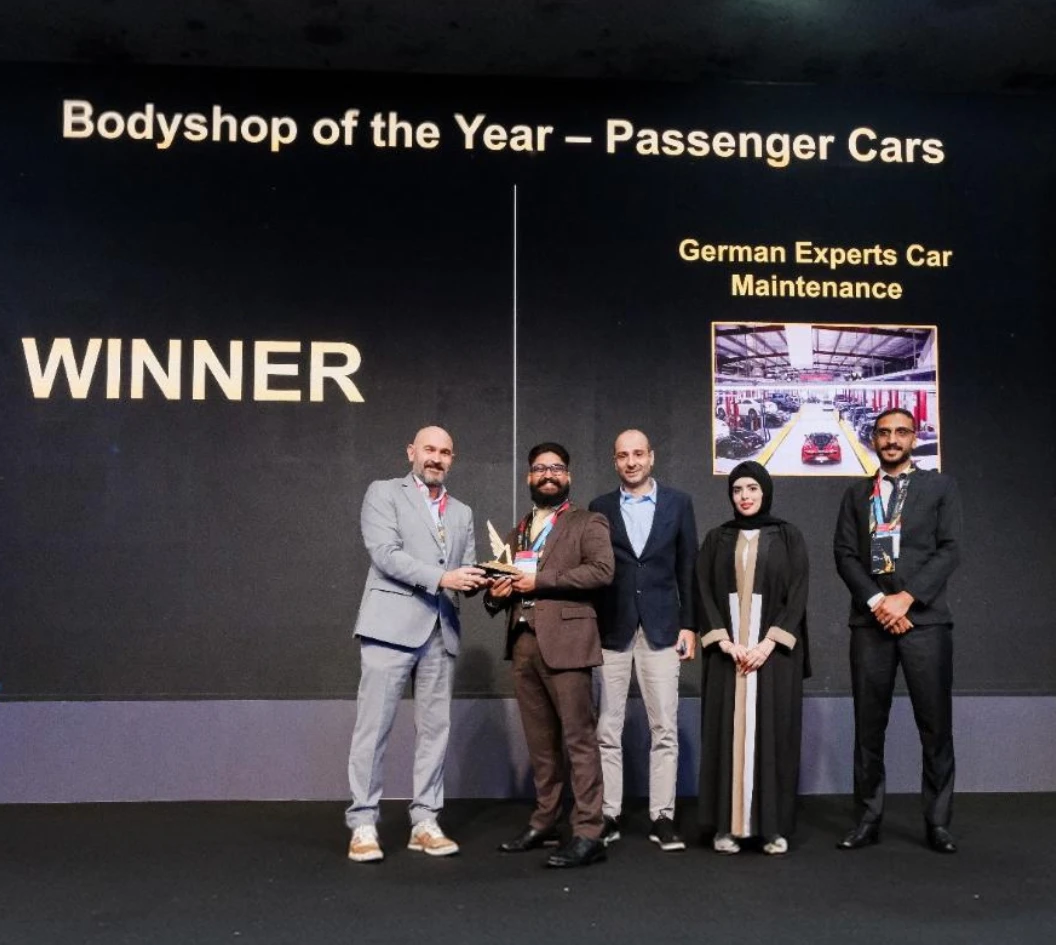
German Experts Secures Double Win at Automechanika Dubai Awards 2025 German Experts Car Maintenance has achieved a major milestone at the Automechanika Dubai Awards 2025, taking home Bodyshop of the Year – Passenger Cars and earning a Highly Commended recognition in Workshop of the Year – Passenger Cars. For our team in Abu Dhabi and Dubai, this double success is more than just a proud moment. It’s a clear validation from one of the most respected automotive platforms in the region that our bodyshop and workshop standards are among the very best in the Middle East and Africa. Automechanika Dubai: Why These Awards Matter Automechanika Dubai is the largest international automotive aftermarket trade exhibition in the Middle East and Africa. Every year, it brings together manufacturers, distributors, workshops, bodyshops, technology providers and innovators from across the region and beyond. Within this huge event, the Automechanika Dubai Awards spotlight companies that set new benchmarks in: Service excellence Workshop and bodyshop operations Product innovation and sustainability People and leadership Being recognised here means your work has been reviewed and endorsed by an independent panel of industry experts, not just by customers or internal teams. Bodyshop of the Year – Passenger Cars: A New Benchmark for Our Repair Quality Winning Bodyshop of the Year – Passenger Cars is a huge achievement for German Experts. This category focuses on bodyshops that consistently deliver: Outstanding accident repair quality – structurally and visually Precise paint and colour matching that restore vehicles to a near factory finish Strict safety and repair standards, aligned with manufacturer recommendations where possible Efficient processes and workflows that reduce turnaround time without compromising quality Clear, honest communication with customers and partners throughout the repair journey This award tells our customers and partners that when a vehicle arrives at German Experts after a collision, it is being handled by one of the top-ranked bodyshops in the region. Highly Commended – Workshop of the Year – Passenger Cars In addition to winning the bodyshop category, German Experts was also Highly Commended in the Workshop of the Year – Passenger Cars category. This recognition highlights the strength of our mechanical, diagnostic and maintenance operations, including: Advanced diagnostics for modern European and premium vehicles Manufacturer-aligned service procedures wherever possible Preventive maintenance and repair strategies that protect long-term vehicle health Strong quality control at every stage of the job A customer journey built around transparency, trust and long-term relationships Together, these two honours show that German Experts is not only capable of restoring vehicles after an accident, but also of maintaining and repairing them to a consistently high standard over their entire lifetime. The Team and Facilities Behind the Awards Behind every panel repair, paint finish and workshop job is a highly trained team and well-invested facilities. At German Experts, we have: Dedicated bodyshop and workshop teams working side by side Modern repair, measuring and refinishing equipment designed for European and premium cars A large-capacity facility in Dubai alongside our established presence in Abu Dhabi Ongoing training programmes to keep our technicians up to date with the latest technologies and repair methods Internal processes that focus on safety, accuracy and efficiency at every step These awards are a direct reflection of that investment in people, tools and systems. What This Double Recognition Means for Our Customers For car owners, fleet operators and insurance partners, this double recognition translates into clear, practical benefits: 1. Confidence You’re Choosing a Proven Leader You’re not just going to “a good garage”. You’re choosing a workshop and bodyshop that have been benchmarked against the best in the region and officially recognised for excellence. 2. One Destination for Body and Mechanical Work Whether it’s accident damage, complex mechanical issues, electrical diagnostics or routine maintenance, you can manage everything under one roof – with the same quality principles applied across every department. 3. Better Outcomes, Less Stress Our goal is not only to repair the car, but also to simplify the experience: clear estimates, regular updates, realistic timelines and a vehicle that feels right when you get it back. 4. Long-Term Protection for Your Vehicle From the way we repair structural damage to the parts and materials we use, our focus is on preserving the value, safety and enjoyment of your car over the long term. A Message to Our Team and Partners These awards belong to everyone who touches a car at German Experts: The technicians and painters who obsess over the smallest details The service advisors and estimators who support customers through stressful situations The workshop and bodyshop managers who keep standards high every single day Our insurers, suppliers and partners who trust us with their customers and their reputations This double recognition is proof that their work is seen, valued and respected at the highest industry level. Looking Ahead: Raising the Standard Even Higher Being named Bodyshop of the Year – Passenger Cars and Highly Commended in Workshop of the Year – Passenger Cars is not the end of the journey for German Experts. It’s a new standard we now have to protect and exceed. In the coming months and years, we will continue to: Invest in training and development for our people Upgrade and modernise our equipment and processes Explore more sustainable and efficient repair methods Strengthen the customer experience, from the first call to vehicle handover Our vision is simple: to remain the benchmark for European and premium vehicle care in the UAE. Visit an Award-Winning Workshop and Bodyshop If your vehicle has been involved in an accident, needs diagnosis for a complex issue, or simply requires expert maintenance, you can now choose a service provider that has been recognised twice at Automechanika Dubai Awards 2025. Get in touch with German Experts in Abu Dhabi or Dubai to: Book an appointment Request an estimate for body or mechanical work Discuss fleet or insurance partnerships Experience what award-winning service excellence looks like – on the workshop floor and in the bodyshop.

Dubai already treats cars as part of its identity, not just a way to get from A to B. Now a new name is joining that scene in a serious way: Carlex Dubai, a boutique dedicated to ultra limited and one of one G-Class creations on Sheikh Zayed Road. For owners who see their Mercedes G-Class or luxury SUV as a long term collectible rather than a simple daily driver, this launch matters. It brings one of Europe’s most specialised customization houses into the heart of the UAE, with a showroom that feels more like a design studio than a traditional dealership. Who is Carlex Design? Carlex Design started as a small interior atelier focused on bespoke automotive cabins. Over time, it grew into a global specialist for high end car and aviation interiors, known for turning already expensive vehicles into one of one or very limited series objects. Interiors are redesigned from the ground up, with new leather, trim, stitching patterns and details that are closer to art pieces than simple upgrades. The company works under its own vehicle label as well as a dedicated upholstery and production arm. That side of the business supplies exclusive interiors to restomod builders, premium tuners and private aviation projects. Much of the work is still done by hand, using complex stitching, embossing and surface treatments that are hard to reproduce at scale. For collectors, this combination of industrial capability and old school craftsmanship is the main attraction. You are not just ordering “Option Pack A” or “Interior Pack B”. You are commissioning a composition that will exist in very small numbers, if at all, outside your own car. Inside Carlex Dubai: A boutique for collectors Location and showroom details Carlex Dubai is presented as a boutique for collectors, not a standard showroom. It is located on Sheikh Zayed Road in Dubai, in a space designed around slow viewing and close inspection rather than fast sales. Instead of rows of cars parked bumper to bumper, the boutique shows a small number of highly curated builds, material samples and accessories. Lighting, layout and spacing are arranged so that each vehicle can be viewed from multiple angles without distraction. The experience is closer to a gallery visit than a visit to a high volume dealership. This approach suits the product. When a build takes months of design and manual work, it makes sense to give each car the room to breathe and be studied carefully. Five showcase vehicles At launch, Carlex Dubai focuses on five G-Class based models, each with its own concept and visual language: Himalaya Diamond, Lago Vintage, Sky Vintage, Havana Vintage and Rose Vintage. All are based on the Mercedes G-Class platform, but each looks and feels distinct. Himalaya Diamond Himalaya Diamond is described as a closed collection of just three unique examples. Each car carries its own combination of colours and details, so even within that tiny series no two are exactly alike. It is aimed at clients who want a G-Class that will not be repeated, even in other markets. Lago Vintage Lago Vintage explores a more feminine, elegant side of the G-Class. The interior leans on soft colour contrasts, intricate stitching and refined finishes that evoke classic luxury rather than an aggressive off road theme. It shows that the same platform can be turned into something calm and graceful rather than only rugged. Sky Vintage Sky Vintage, built on a G63 base, uses blue as its central tone. The idea is to reference sky and ocean, giving the car an open, airy feel rather than a bunker like ambience. It suits owners who use their G-Class for long distance cruising and want an interior that feels like a lounge rather than a cockpit. Havana Vintage Havana Vintage is finished in warm sepia and vanilla tones that recall vintage travel, old leather goods and classic photography. It aims to feel familiar and lived in, even when brand new. For clients who appreciate patina and heritage, this direction turns a modern G-Class into something that feels timeless rather than strictly modern. Rose Vintage Rose Vintage is the most expressive of the group, built around Nappa leather in a pink hue with precise stitching and delicate detailing. Where many G-Class builds lean into power and toughness, Rose Vintage explores a softer, couture style of luxury. It speaks to clients who are comfortable with bold personal statements and do not need their car to follow traditional masculine cues. Together, these five builds demonstrate how far a single platform can be pushed in different directions when design, materials and storytelling are treated as core elements. Exotic materials and accessories Beyond the cars themselves, Carlex Dubai showcases the materials behind the builds. The brand openly uses rare hides such as alligator, crocodile, ostrich and stingray, alongside high grade automotive leathers. Each piece is chosen for tone, grain and texture, then cut, stitched and finished by teams used to working on very small production runs. The boutique also presents an accessories collection that extends the same design language into daily life. Clients can commission bags, small leather goods, belts or made to measure footwear that match the leather and colour palette used in their car. This creates a subtle ecosystem around the vehicle, where the car is the core object and the accessories echo its materials and themes. Why Dubai is a natural home for Carlex Dubai has a long history of welcoming limited series and highly customised vehicles. The Mercedes G-Class in particular has become a common sight in both factory special edition form and heavily modified versions. It is a natural platform for designers and tuners who want a strong visual base to work with. Carlex has already worked with clients in the UAE on bespoke G-Class projects, including builds that reference regional culture and falconry. Those projects showed that there is a local audience interested in more than simple power upgrades or wrap jobs. The opening of Carlex Dubai is a way to formalise that relationship and give those clients a dedicated physical space. The city also offers the right practical environment. There is a high concentration of G-Class and super SUV owners, a strong culture of collecting, and an existing ecosystem of detailers, workshops and storage facilities that understand how to care for high value cars. For Carlex, that means potential buyers who are already used to commissioning and maintaining special vehicles. What Carlex Dubai offers to G-Class and SUV owners One of one and very limited conversions Carlex focuses on cars that are rare by design, not just by price. The company is known for building one of one and very limited series G-Class conversions. Each vehicle receives its own blend of leather, colours, engravings and metalwork, with the intent that it will not be repeated. For Dubai clients, Carlex Dubai makes this process more tangible. Instead of viewing renders and photos from a distance, owners can sit in finished cars, feel the leather, see how colours respond to natural light and inspect the details up close. That reduces uncertainty and makes it easier to commit to long term projects. Craftsmanship and collectible value Carlex clearly positions its work as collectible automotive design. The aim is not just to impress on day one, but to hold interest years later when trends have moved on. That is where details matter. Stitching lines are placed to support the shape of the seat, not simply to show off. Perforation patterns improve ventilation while adding rhythm to surfaces. Engraved parts are executed so that they stand up to close inspection, not just to photographs taken at a distance. These decisions add time and cost, but they are part of what separates a collectible build from a quick cosmetic refresh. For collectors in the UAE, this aligns with how many already treat their cars, watches and art pieces. The expectation is that objects should reward attention and remain engaging over time, not just look good in a single picture. Personal stories translated into materials Most high end tuners can change leather colour, add carbon fibre or fit new wheels. Carlex aims to go further by building interiors and exteriors around specific stories or cultural references. That might mean an interior inspired by a particular region, a favourite era of design, a racing heritage or a personal symbol. Colours, stitching, embossing and even engraved motifs can all be used to support that story. For Dubai clients, this opens interesting possibilities, such as builds that reference family history, local architecture or regional craft. In this way, Carlex Dubai becomes not only a place to buy pre built cars, but a place to start conversations about new, highly individual projects. How Carlex Dubai fits into the wider UAE luxury car ecosystem A Carlex conversion does not replace the need for maintenance, diagnostics and repair. Beneath the leather and tailored details, a G-Class still needs regular servicing, brake work, alignment, tyre changes and occasional body repair. That is where the existing UAE ecosystem remains essential. Specialist European workshops in Dubai and Abu Dhabi already support large numbers of Mercedes, BMW, Porsche and other premium brands. These workshops handle everything from mechanical repairs and complex diagnostics to accident repair and paint work. For owners of Carlex vehicles, they form the backbone of day to day usability. In practical terms, Carlex Dubai sits at the design and commissioning end of the ownership experience. It provides the vision, materials and execution for the transformation. Once the car is on the road, trusted local workshops ensure that it continues to drive, stop and handle properly despite its bespoke nature. For businesses like German Experts, the arrival of Carlex Dubai likely means seeing more G-Class and super SUVs with very individual interiors and trim details. That reinforces the importance of documented processes, careful protection of cabin surfaces, and clear communication with owners about what can and cannot be disturbed during mechanical or body work. Who is Carlex Dubai for? Carlex Dubai is not aimed at first time buyers or people who view cars as simple transport. Its natural audience includes: G-Class owners who want their vehicles to stand apart from factory special editions. Collectors who see cars as part of a long term portfolio and are comfortable with rare commissions. Design focused clients who care about materials, craft and narrative as much as about power or acceleration figures. Buyers already familiar with bespoke products, such as tailored suits, custom watches or commissioned art, who understand the timelines and costs involved. For these groups, Carlex Dubai offers a physical, local touchpoint. It turns a process that might otherwise happen entirely online or in Europe into something that can be experienced in person, tested with real materials and adjusted in conversation. How to experience Carlex Dubai Carlex encourages potential clients to book private viewings rather than treating the boutique as a casual drop in destination. This respects the fact that many visitors prefer privacy and time to absorb the details without crowds. A typical visit might include: A guided tour of the five featured vehicles, with time to sit inside each one and inspect the details. A review of material samples, including standard and exotic leathers, metals and finishing options. A discussion about possible future projects, whether based on a client’s existing car or a vehicle sourced specifically for the build. For enthusiasts and German Experts customers who are already active in the UAE car scene, the opening of Carlex Dubai adds a new dimension. It connects European bespoke design culture with Dubai’s existing passion for standout vehicles, using the G-Class as its core platform. As more of these one of one and limited builds arrive on local roads, the landscape for high end service, detailing and restoration will only become more interesting. Owners will have more options to express their taste, and workshops will have more reasons to refine their processes for handling truly unique cars.

Why you need a different maintenance mindset in the UAE In a mild European climate, you can sometimes get away with long service intervals and relaxed maintenance. In the UAE, that mindset doesn’t work. The combination of high temperatures, heavy traffic, dust, short trips and long highway runs pushes every system in your car harder than the brochure assumes. Oil thins out and degrades faster, rubber dries out, plastics crack, and cooling systems work at their limit for months at a time. The problem is that many people remember only two ideas: “change the oil sometimes” and “do a big service when the mileage looks high.” Everything else gets ignored. That’s how small issues grow into big repair bills and surprise breakdowns. A simple, repeatable schedule is much easier to follow. If you know what should happen around every 5,000, 10,000 and 40,000 km, you can plan your year instead of reacting to problems. This guide isn’t tied to one specific brand. It’s a practical checklist that fits most modern cars in UAE conditions. You can adjust the details based on your owner’s manual and what your workshop sees on your particular model, but the overall pattern will still make sense. The 5,000 km / 6-month checklist – basic health check Think of the 5,000 km or six-month interval as your minimum rhythm. Even if you don’t drive much, time still affects fluids and rubber parts. Oil and filter Engine oil has a hard life here. Heat and stop-start traffic break it down, and it picks up contaminants from combustion. Changing oil and the oil filter roughly every 5,000–7,500 km or six months keeps your engine protected. It’s not just about distance; it’s about how the car is used. Food delivery, ride-hailing, school runs and short city trips are all heavy use. Visual leaks and levels At this visit, a good workshop should check for oil and coolant leaks, cracked hoses, damaged belts and loose clamps. They should also confirm levels for coolant, brake fluid, power steering (if hydraulic), windscreen washer and sometimes differential fluids on 4x4s. Catching a small seep around a hose now is much cheaper than dealing with a burst hose and overheating on Sheikh Zayed Road later. Tyres and pressures Tyres do the hard work of carrying the car and handling sudden lane changes at highway speed. At each 5,000 km check, tyre condition and pressure should be tested. Look for uneven wear, sidewall damage and punctures. In the UAE heat, driving on under-inflated tyres is a quick way to shorten tyre life and risk a blowout. Brakes and suspension quick check A short visual check of brake pads, discs and suspension is also important. The technician doesn’t have to strip the whole system at this stage, but they should look for obvious wear, cracks, leaks and play in joints. If there are early signs of trouble, you can plan a deeper inspection before it becomes urgent. Battery health High temperatures shorten battery life. A quick battery test at every oil change tells you if it is still strong or starting to weaken. This gives you a chance to replace it on your terms rather than discovering a dead battery when you’re already late. The 10,000–15,000 km checklist – a deeper service By the time you reach around 10,000–15,000 km, the basic checks above still apply, but a few extra items should be added to your plan. Some owners do this as every second service; others just treat it as a slightly bigger visit. Air filter Your engine needs clean air to burn fuel properly. In the UAE, air filters clog faster due to dust and sand. A dirty filter chokes the engine, reduces performance and increases fuel consumption. At 10,000–15,000 km, the filter should at least be inspected and often replaced, especially if you drive in dusty areas, on unpaved roads or near construction sites. Cabin (AC) filter The cabin filter cleans the air you and your passengers breathe and also protects the AC system. When it clogs, airflow drops, the fan has to work harder, and the AC feels weaker. Replacing it regularly keeps the system efficient and the interior air fresher. In city use with lots of dust, once a year is a good baseline. Brake system closer look At this interval, brakes deserve more attention. The technician should check pad thickness properly, measure discs if needed, and look at brake hoses and calipers. If you do a lot of high-speed driving, mountain runs or heavy city traffic, brakes can wear faster than you’d expect. It’s better to plan pad changes during a service than wait for metal-on-metal squealing. Suspension and steering Suspension components like bushings, control arms and ball joints take a beating from speed bumps, sharp ramps and rough roads. A more detailed suspension inspection at this stage can pick up parts that are starting to wear, which explains noises or vague steering. Replacing worn suspension early keeps the car stable and stops other parts from taking extra stress. Wheel alignment and balancing If you notice the steering pulling to one side, uneven tyre wear or a crooked steering wheel when driving straight, it’s time for alignment. Even if everything feels fine, doing an alignment check around 10,000–15,000 km is sensible, especially if you’ve hit potholes or curbs. Correct alignment improves tyre life, fuel economy and safety. The 40,000 km “big milestone” – major service items By around 40,000 km, a lot of deeper maintenance tasks start to come due, especially in hard conditions. You don’t always have to do everything at exactly this number, but it’s a good point to think about the bigger picture. Coolant flush Engine coolant doesn’t last forever. Its protective additives weaken with time and heat. A full coolant flush and refill with the correct type for your car helps prevent internal corrosion, blocked passages and overheating. This is one of those services that doesn’t feel urgent until something goes wrong; doing it on schedule keeps you out of trouble. Brake fluid change Brake fluid absorbs moisture slowly over time, which reduces its boiling point and can make the pedal feel soft under heavy braking. Changing brake fluid roughly every two years or around 40,000 km is a common recommendation. In UAE driving, with high speeds and sudden stops, this is not a step to skip. Spark plugs (where applicable) On many cars, standard spark plugs come due around this mileage. Some high-end or iridium plugs last longer, but they also need eventual replacement. Worn plugs can cause misfires, poor fuel economy and rough running. Replacing them on schedule keeps starting, idle and acceleration smooth. Transmission service Automatic and dual-clutch gearboxes often benefit from a fluid change somewhere between 40,000 and 60,000 km, depending on manufacturer guidance. This is especially important in hot climates. Fresh fluid helps protect internal components, ensure smooth shifting and extend gearbox life. If your car has a “sealed for life” transmission, it’s still worth checking what “life” really means under GCC conditions and discussing it with a specialist. Differential and transfer-case fluids on 4x4s If you drive a 4x4 or SUV with off-road capability, don’t forget the differentials and transfer case. They handle a lot of torque and heat, especially if you go off-road or tow. Changing their fluids at the same time as the transmission or as per the manual is a good habit. Belts and pulleys Serpentine belts, tensioners and pulleys should be checked closely at this mileage. In the heat, rubber parts age faster and can crack. A failed belt can leave you without power steering, alternator or AC, or even lead to engine damage if it interferes with the timing system. Adjusting the schedule for your driving style Not every driver needs the exact same schedule. If you cover only a few thousand kilometres a year but keep the car for a long time, time-based intervals become more important than distance-based ones. Oil, brake fluid and coolant still age even when the car sits. In that case, keeping the six-month basic service and two-year major fluid changes makes sense, even if the mileage is low. If you’re a high-mileage driver – for example, doing long commutes between emirates or using the car for commercial work – you might hit 40,000 km in a year or less. In that case, you’re better off thinking in terms of distance and watching for earlier signs of wear on brakes and suspension. Also, different brands and models have specific weak points. For some, suspension bushings are known to wear early. For others, particular seals or cooling components deserve closer attention. A workshop that knows your model well can tweak this general schedule to fit the real-world behaviour of your car. A simple summary you can keep and follow If you want a quick version to remember, here it is: Every 5,000–7,500 km or 6 monthsOil + oil filter, basic leak check, tyre inspection, quick brake and suspension check, battery test. Every 10,000–15,000 kmAll of the above plus air filter check/replacement, cabin filter replacement (at least annually), deeper brake and suspension inspection, alignment check if needed. Around 40,000 km and then in similar stepsCoolant flush, brake fluid change, spark plugs if due, transmission and differential/transfer case fluids where applicable, detailed belt and pulley inspection. Stick to this pattern, adjust it slightly with your workshop based on your specific car, and you’ll avoid most of the nasty surprises that other drivers face. In UAE conditions, planning your maintenance is one of the easiest ways to keep your car reliable, safe and pleasant to drive.
Why sun and sand destroy car paint in the UAE In the UAE, your car’s paint is under attack almost every day. Strong ultraviolet (UV) rays from the sun break down clear coat over time, causing dullness, fading and eventually peeling. High temperatures bake dirt, bird droppings and water spots onto the surface, making them harder to remove. On top of that, sand and dust act like fine sandpaper. Every time a dirty car is wiped or washed incorrectly, thousands of tiny scratches appear. You might not notice the damage from one wash or one hot day, but it builds up. After a couple of years, what was once a deep, glossy finish can start to look flat, tired and covered in swirl marks. At that point, protecting the paint becomes more work and more cost than if you had looked after it from the start. The basics: proper washing to avoid scratching the paint Good paint care starts with something simple: the way you wash your car. Automatic car washes with stiff brushes might be quick, but they are one of the fastest ways to add swirl marks. The same goes for dry wiping dust off with a cloth or using dirty sponges and buckets. A safer approach is a proper hand wash using the two-bucket method: one bucket with soapy water, one with clean water to rinse the mitt. Use a high-quality wash mitt and gentle, pH-balanced shampoo. Rinse the car thoroughly first to remove loose dust before you touch the paint. Always work from top to bottom and avoid circular scrubbing motions. Dry the car with a clean, soft microfibre towel instead of old rags or bathroom towels. These might sound like small details, but they make a big difference over time. The fewer scratches you add at each wash, the longer your paint will stay clean and glossy. What detailing actually includes “Detailing” is a broad term, but generally it means a deep cleaning and restoration of the car’s exterior and interior. On the outside, this can include washing, decontamination (removing bonded contaminants like tar and industrial fallout), polishing and applying protective products. Inside, detailing covers thorough vacuuming, cleaning of surfaces, treatment of leather, plastics and trim, and sometimes odour removal. For paint, one key step in detailing is chemical and mechanical decontamination. Clay bars or synthetic clay mitts remove tiny contaminants that normal washing can’t shift. These contaminants make the surface rough to the touch and interfere with the bonding of waxes or coatings. A clean, smooth surface is the foundation for any further protection. Polishing: removing defects, not just hiding them Over time, your car’s clear coat collects swirl marks, light scratches, water spots and oxidation. Polishing is the process of carefully removing a very thin layer of the clear coat to level out these defects and restore gloss. It’s not the same as waxing. Wax sits on top of the paint; polish actually corrects the surface. There are different levels of polishing, from a light one-step polish that improves overall gloss to multi-step paint correction that targets deeper scratches. In the UAE, many cars benefit from at least a light polish every couple of years, especially if they’ve seen automatic washes or have been parked outside a lot. The important point is that polishing should be done by someone who knows what they’re doing. Using aggressive compounds or machines incorrectly can burn through the clear coat or leave holograms. Paint protection options: wax, sealant, ceramic coating and PPF Once the paint is corrected and clean, it needs protection. There are several options, each with pros and cons. Traditional wax gives a nice shine and water beading, but its protection is relatively short-lived, especially in strong sun. You might need to reapply it every few months. Synthetic sealants last longer than wax and offer better durability, but still require regular maintenance. Ceramic coatings have become very popular in the UAE. These are liquid products applied to the paint that cure into a hard, glass-like layer. A good ceramic coating can last several years if maintained properly. It adds chemical resistance, UV protection, easier cleaning and a deep, glossy look. It doesn’t make the car scratch-proof, but it does make it more resistant to light marring and easier to wash without damaging the paint. For the highest impact protection, especially on front bumpers, bonnets and mirrors, paint protection film (PPF) is the top option. This is a clear, thick film applied over the paint. It absorbs stone chips, light impacts and some scratches. High-quality PPF is self-healing when exposed to heat, meaning small marks disappear. It’s more expensive than coatings and requires skilled installation, but for high-value cars or people who do lots of highway kilometres, it can be worth it. How to choose the right protection for your car and usage Not every car needs a full-body PPF installation. The right solution depends on the value of the car, how long you plan to keep it, and how you use it. Daily drivers that spend time in hot parking lots and see a lot of desert dust often benefit from a good ceramic coating plus PPF on the most exposed areas. A more modest car that mainly stays in shaded parking might be fine with regular detailing and a high-quality sealant or light ceramic. Talk to a detailer who is willing to explain the differences honestly. Beware of anyone promising “never wash the car again” or “scratch-proof forever.” No product can deliver that. Good protection reduces damage and makes washing easier; it doesn’t make a car immune to neglect. Don’t forget the interior The sun does as much damage to interiors as it does to paint. Leather can dry and crack, plastics can fade and become brittle, and dashboards can warp if left exposed to harsh sunlight for years. Interior detailing includes cleaning and conditioning these materials so they stay supple and protected. Using sunshades, parking in shade when possible, tinting (within legal limits) and regular interior care all help. Treat leather seats with the right products, not household cleaners that can strip away protective layers. Wipe dust off gently instead of rubbing sandy surfaces with rough cloths. A simple detailing and protection schedule for UAE drivers You don’t have to live at the detailer. A reasonable plan might look like this: Proper hand wash: every 1–2 weeks, depending on use Quick interior clean: every 2–4 weeks Clay and light polish: once a year, or when paint feels rough and looks dull Ceramic coating: every few years, depending on product and care PPF: install once, then inspect annually for damage and replace panels as needed Between visits, avoid harsh chemicals at random car washes, don’t allow dry wiping of dust, and use clean wash tools. If bird droppings or tree sap land on the paint, rinse them off as soon as you can instead of leaving them to bake in the sun. How paint condition affects resale value Buyers in Dubai and Abu Dhabi often judge a car heavily by how it looks in the first few seconds. Faded paint, heavy swirl marks, dull headlights and a tired interior immediately lower their confidence. Even if the engine is strong, the impression is “this car hasn’t been loved.” That reflects in offers. On the other hand, a car with clean, glossy paint, clear headlights and a fresh interior stands out among many similar listings. Good detailing and paint protection pay you back in two ways: you enjoy a nicer-looking car while you own it, and you usually recover some of the cost through a better resale price and a faster sale.
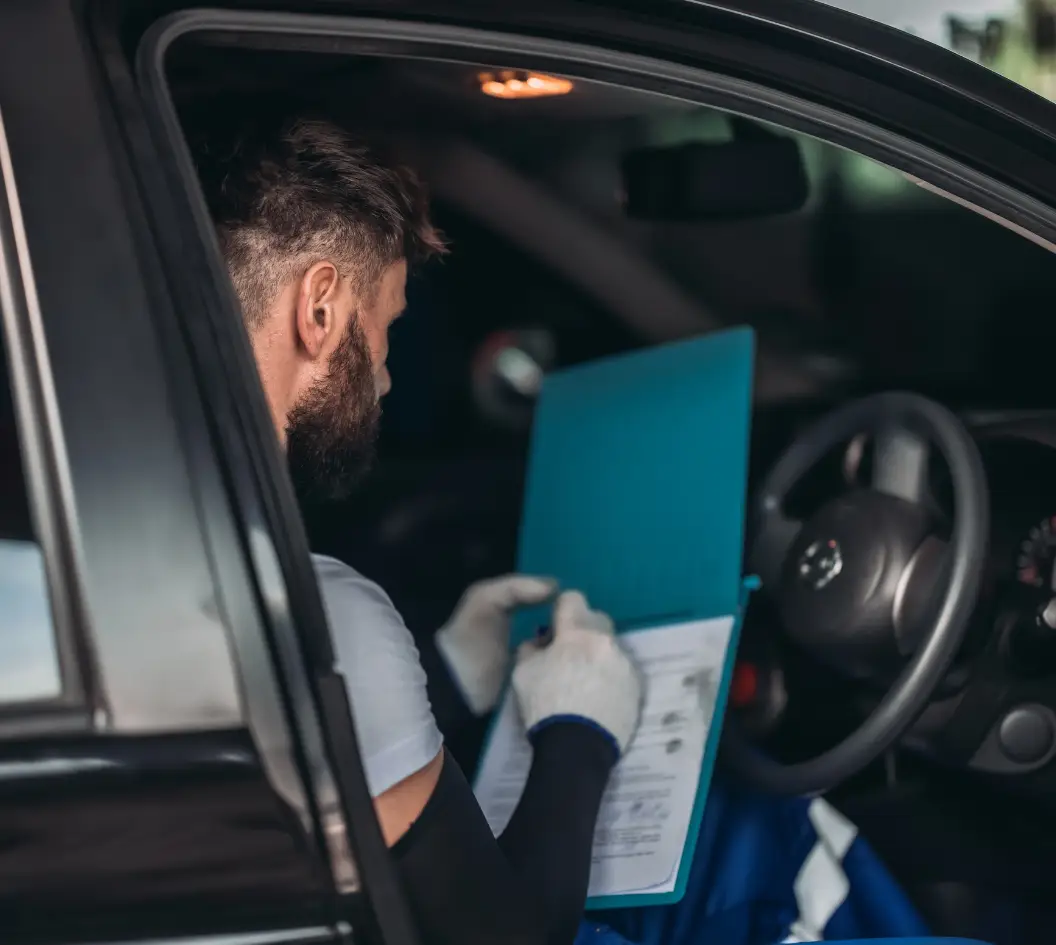
Why a proper inspection is essential in the UAE used car market The used car market in Dubai and Abu Dhabi is huge. You’ll find everything from nearly new ex-lease cars to heavily modified performance models, export stock, and cars that have had a tough life in fleet or rental service. On top of that, some vehicles may have been imported from other countries with different histories, accident repairs or even flood damage. Paperwork and a shiny wash can hide a lot. A pre-purchase inspection (PPI) is your safety net. It doesn’t guarantee perfection, but it massively reduces your risk. Instead of relying on what the seller tells you, you get a neutral view of the car’s condition from someone who knows where the common problems hide. In a place where high heat, sand and stop-start traffic punish cars, skipping this step is asking for trouble. Step 1: Do your homework before seeing the car Before you even see the car, check the basics. Compare the asking price with similar listings to see if it looks realistic. If the price is far below market, there’s usually a reason. Ask for the VIN, year, mileage and service history up front. Check if the car has had regular services at a known dealer or specialist. Cars with patchy or missing history, especially performance models and German cars, should be treated carefully. Also ask if the car has been in any major accidents, if there are any current warning lights on the dash, and if there are outstanding finance or loan amounts. Honest sellers will share what they know; vague answers are a warning sign. Step 2: Your own visual inspection on the spot When you see the car in person, start with a slow walk around it in good daylight. Look for colour differences between panels, uneven gaps, overspray around edges and wavy reflections in the paint – all possible signs of body repairs. Small, well-repaired minor accidents are common and not always a problem, but heavy structural repairs should be noted and priced accordingly. Check the condition of tyres for even wear and matching brands. Uneven wear can point to alignment or suspension issues. Look at the glass for cracks and the lights for fogging or moisture inside. Open and close all doors, the bonnet and the boot to feel if they move smoothly. Any stiffness, creaks or misalignment could indicate past damage or poor repair work. Step 3: Interior and basic function checks Inside the car, smell for dampness or strong air fresheners that might be hiding odours. Check the seats, dashboard and trim for excessive wear compared to the mileage shown. Test all electric functions: windows, mirrors, locks, sunroof, seats, infotainment, air conditioning and any driver-assistance systems. A car where half the buttons don’t work or the AC struggles in mild weather is sending a clear message. Switch the ignition on and confirm that all warning lights illuminate briefly, then go out after the engine starts. If certain lights never come on at all, it might mean someone has disabled a bulb to hide a fault. Step 4: The test drive – what to pay attention to A test drive is not just a quick spin around the block. Ideally, you want to experience city speeds, highway speeds and at least a few bumps or speed breakers. Listen for knocks, clunks or rattles from the suspension. Pay attention to how the gearbox shifts: is it smooth, delayed, harsh or slipping? When you brake, does the steering wheel shake or the car pull to one side? How does the engine feel when you accelerate strongly – smooth and linear, or hesitant and noisy? Watch the temperature gauge throughout the drive. If it climbs higher than normal or fluctuates, that can indicate cooling system issues, especially worrying in GCC heat. Also watch for smoke from the exhaust, unusual smells, vibrations through the seat or steering wheel, and any warning messages that appear during the drive. Step 5: What a professional pre-purchase inspection should include Your own checks are useful, but they’re not enough. A proper PPI at a specialist workshop goes much deeper. The car is lifted so the underbody, suspension, exhaust, drivetrain and any leaks can be inspected. The technician looks for accident damage, poorly repaired chassis areas, rust, oil and coolant leaks, damaged bushes and worn joints. They also check brake pad thickness, disc condition and tyre dates, not just tread. On the mechanical side, a good PPI includes engine performance checks, listening for unusual noises, and sometimes basic compression or leak-down tests for older cars. Cooling system condition, belts, pulleys and mounts are assessed. For automatics and dual-clutch gearboxes, technicians pay special attention to shift behaviour and any signs of slipping or harsh engagement. On modern cars, diagnostics are critical. A full scan of all control units can reveal stored fault codes, even ones that haven’t triggered warning lights yet. These can indicate problems with sensors, modules, airbag systems, ABS, traction control, gearbox electronics and more. The key here is not just reading the codes but interpreting what they mean for the future of the car. Step 6: Hidden problems specific to Dubai and Abu Dhabi In the UAE, there are a few extra things worth checking. One is sand and dust build-up in radiators, condensers and filters. Overheating problems often start here. Another is AC performance – a weak system might seem acceptable when you test it in the evening but will be miserable on a hot afternoon. Battery age also matters, as high heat shortens battery life. If the car has been off-road regularly, check underbody protection, suspension joints and evidence of impacts on the chassis or exhaust. For imported cars, and especially ones with suspiciously low mileage for their age, consider the risk of previous flood damage. Signs include moisture under carpets, corrosion on seat rails and unusual rust in dashboard or wiring areas. A specialist will know what to look for. Step 7: Using the inspection results to negotiate – or walk away A good pre-purchase report doesn’t automatically mean “buy the car” or “avoid it.” It gives you a clear list of issues, from minor to serious. Some items are normal wear and tear; others are red flags. With that information, you can decide whether the car is worth repairing, whether the seller should fix things before sale, or whether you ask for a lower price to cover the work. If the inspection reveals heavy accident damage, serious engine or gearbox problems, or signs of major neglect, walking away is often the smartest choice. In the UAE market, there are usually plenty of alternatives. Losing a small inspection fee is much better than inheriting someone else’s expensive problems. Step 8: Final paperwork and transfer If you decide to go ahead, make sure the chassis number, engine number (where applicable) and registration details all match. Confirm there are no outstanding fines or loans on the car. Keep copies of the inspection report and use it as a starting point for your first service with your chosen workshop. That way, you begin ownership with a clear plan instead of guessing what needs attention. A structured inspection process turns a risky purchase into an informed decision. In a market as busy and varied as Dubai and Abu Dhabi, that’s one of the best investments you can make before buying any used car.
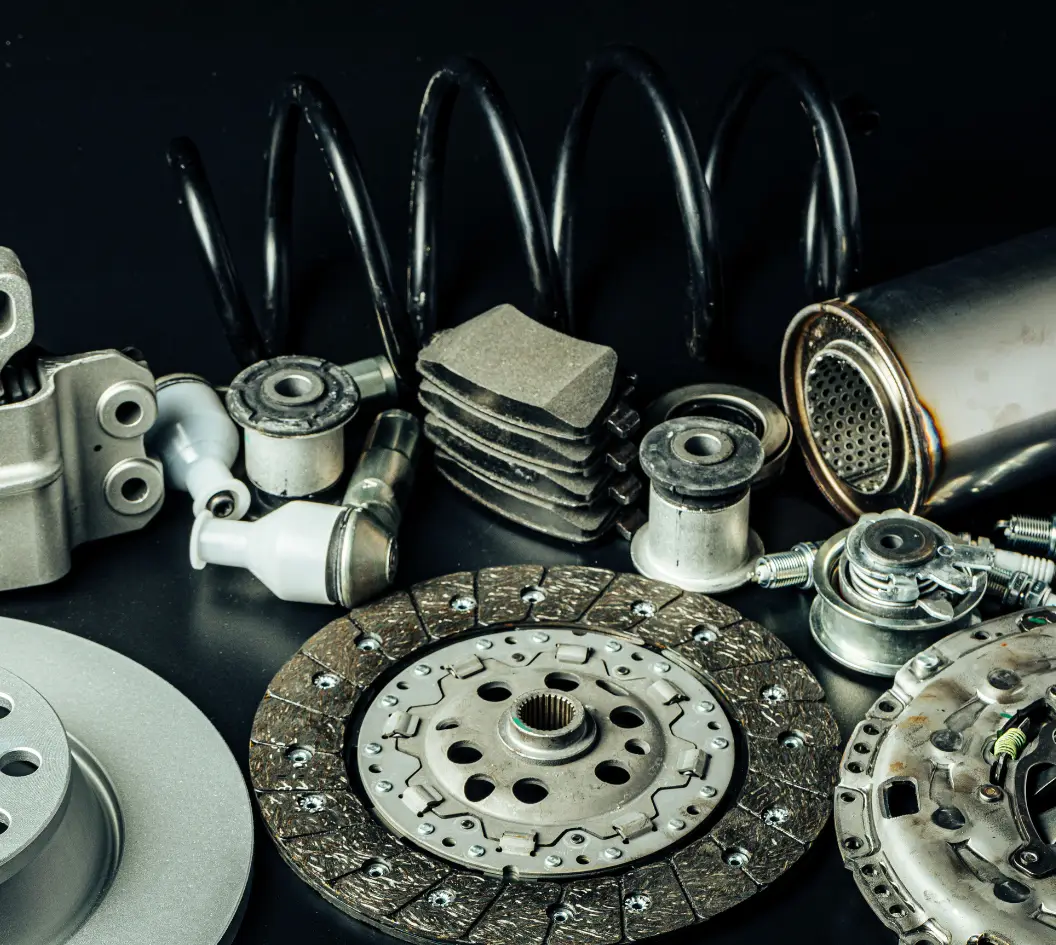
Why this question comes up so often in the UAE Owning a car in the UAE can be expensive, especially if you drive a premium or performance model. Labour isn’t cheap, and some genuine parts can be priced high. So it’s natural for owners to ask: “Can I save money with cheaper parts?” On top of that, the local market is full of options – genuine parts, OEM, aftermarket, reconditioned, “Taiwan made”, and sometimes parts that are simply fake. Without a clear strategy, it’s easy to either overspend on things that don’t need to be original or to cut corners in places where quality really matters. The goal isn’t to say “always buy genuine, no matter what.” Realistically, not everyone wants or needs that. The smarter approach is to understand where part quality has a direct impact on safety, reliability and resale value, and where high-quality alternatives can be perfectly acceptable. Once you know the difference, you can save money in the right places without turning your car into a risk. What “genuine”, “OEM” and “aftermarket” actually mean These words get used loosely, so let’s clarify them. A genuine part is one sold under the car manufacturer’s brand and part number. An OEM (Original Equipment Manufacturer) part is made by the same company that supplies parts to the car manufacturer but sold under the OEM’s own brand. An aftermarket part is made by a third-party company that is not the original supplier; quality can range from excellent to terrible. In many cases, OEM parts are practically identical to genuine parts in terms of quality because they come from the same factory. The main difference is the box and sometimes the price. Good aftermarket brands can also perform very well, especially for wear-and-tear items like some suspension components. The danger is with no-name or counterfeit parts that just copy the look of the original without matching the materials and testing. Safety-critical parts where you should not compromise Some parts are directly linked to your ability to steer, stop and survive a crash. These are not the place to chase the lowest price. Brake pads and discs, brake hoses, steering components, airbag sensors and seat-belt systems all fall into this category. Poor-quality brakes can fade, crack, or wear out unevenly, especially under high-speed GCC driving. Cheap steering components can develop play and cause instability. With safety systems, you often don’t know anything is wrong until something fails in an emergency, which is the worst time to find out. For these kinds of parts, genuine or high-quality OEM is usually the safest choice. If your workshop suggests a cheaper alternative, ask them specifically which brand it is, whether they have used it long-term, and what kind of warranty they offer. If they can’t answer clearly, that’s a red flag. Parts that can be safely downgraded – if you choose wisely There are areas where a smart choice of aftermarket parts can save money without compromising safety. For example, some suspension parts, bushings, engine mounts and body panels can be sourced from reputable aftermarket brands at lower cost. Filters (air, cabin, sometimes oil) can also be good candidates, as long as the brand is known and meets the required specification. In these cases, the key is to stay away from unknown products just because they are cheaper. Look for brands with a track record in Europe, Japan or North America, not random names that only exist in discount catalogues. A good workshop will have experience with certain aftermarket suppliers and should be honest about where they have seen good results and where they have had problems. How cheap parts can cost more over time On paper, saving 30–50% on a part sounds tempting. But if that part wears out twice as fast, fails unexpectedly or causes damage to other components, the total cost of ownership goes up. Imagine fitting very cheap suspension arms that last a year instead of three, or fitting poor-quality engine mounts that start vibrating after a few months. You pay labour again, lose time without the car, and end up buying the part twice. Worse, some parts can cause knock-on damage. A low-quality timing belt or tensioner failure can destroy an engine. A cheap water pump can leak and cause overheating. A poor-quality sensor can send wrong signals that lead to engine misfires, increased fuel consumption or damage to the catalytic converter. In these cases, the “saving” on the part is tiny compared to the repair bill. The impact on reliability and daily peace of mind Part of what you pay for with genuine and top-tier OEM parts is predictability. They have to meet strict standards and work over a wide range of conditions. In the UAE, where temperatures are high and rubber and plastic parts age quickly, this matters even more. Knowing that critical components have been tested for heat, vibration and long-term durability can give you real peace of mind. On the other hand, filling your car with unknown parts means accepting more risk. The car might run fine most of the time, but sudden failures become more likely. If you do long trips between emirates, drive with family on board or rely heavily on your car for work, this extra uncertainty is not worth it. How part quality affects resale value in the UAE When it’s time to sell your car, serious buyers and dealers will look closely at service history and invoices. A well-documented record of services done with genuine or respected OEM parts makes a strong impression. It signals that you cared about the car and didn’t cut corners. That can translate into a higher resale price and a quicker sale, especially for premium and performance models. If a buyer sees lots of invoices with random, no-name parts, they may assume other shortcuts were taken as well. They might worry about hidden problems or future repairs and either walk away or negotiate harder. In a market like Dubai or Abu Dhabi, where competition in the used car space is strong, a good maintenance history is one of your best tools for standing out. Spotting counterfeit or very low-quality parts Counterfeit parts are a real problem in many markets. They are designed to look like genuine parts, sometimes even copying the box and labels, but they don’t match the quality. It’s hard for an owner to spot them, which is why choosing the right supplier and workshop is so important. Warning signs can include suspiciously low prices, poor packaging, missing holograms or security marks, and parts that feel lighter, rougher or badly finished. If you buy parts yourself, stick to trusted channels and avoid deals that seem too good to be true. If your workshop supplies the parts, ask them where they source them and whether they stand behind them with a warranty. Honest garages won't mind these questions. Building a smart parts strategy for your car A sensible strategy might look like this: always insist on genuine or top-tier OEM parts for brakes, steering, safety systems, timing components, cooling system parts and critical sensors. For other areas like some suspension parts, filters and cosmetic items, consider high-quality aftermarket options that your workshop trusts and has used successfully. If you drive a premium car and care about top resale value, leaning more heavily toward genuine parts makes sense. If you drive something older and want to control costs, carefully chosen aftermarket parts can be part of the plan. The main thing is to avoid chasing the absolute lowest price with no thought about consequences. In the UAE climate, cheap parts often show their true cost quickly.
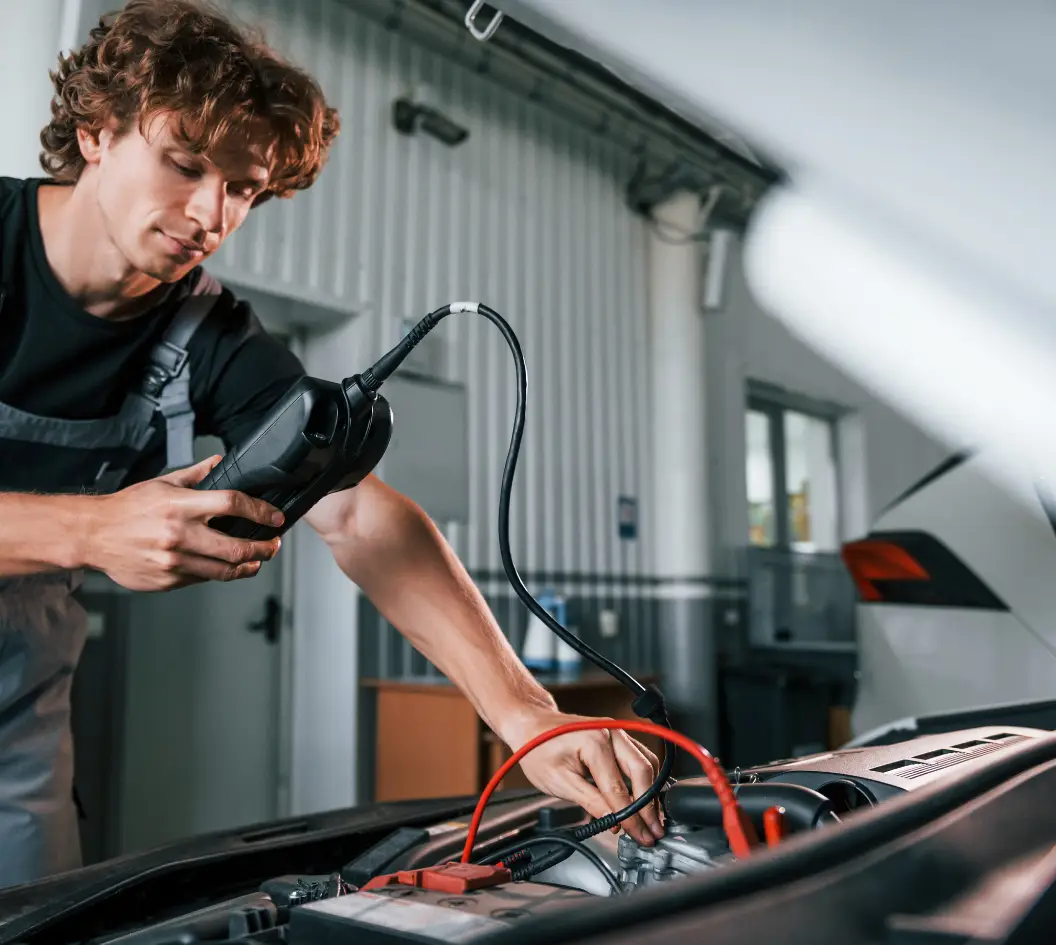
Why hybrid and electric cars are different in the workshop On the road, driving a hybrid or EV in Dubai feels simple: quiet, smooth, instant torque, and in city traffic they can be more relaxing than a normal petrol car. Behind the scenes though, these cars are very different. There’s still a regular engine in many hybrids, but it shares work with one or more electric motors, a big high-voltage battery and complex control units that constantly decide who does what. Even full EVs, which have no engine at all, still rely on cooling systems, gear reduction units and power electronics that need proper care. If you treat them exactly like petrol or diesel cars, you’re going to miss important maintenance items and safety rules. The basics: what’s still the same as a normal car? Let’s start with the familiar parts. Hybrids still have tyres, brakes, suspension, steering, lights, wipers, air conditioning and bodywork. Many of the usual checks and services still apply: alignment, tyre rotation, suspension inspections, cabin filters, brake fluid changes and so on. Plug-in hybrids also have a regular engine that needs oil changes, coolant, spark plugs and belts, although sometimes on slightly different schedules. So you’re not entering a completely new universe, but you are adding extra layers on top of the usual maintenance. High-voltage battery: the heart of the system The part most people worry about is the high-voltage battery. These battery packs are built to last many years, but the heat in Dubai and the wider GCC is no joke. High temperatures are the enemy of battery life, so most hybrids and EVs use dedicated cooling systems for their batteries. Some use air, some use liquid coolant, and some have more advanced thermal management. The key point is this: the battery cooling system is just as important as the engine cooling system on a normal car. Blocked vents, dirty fans or ignored coolant changes can shorten battery life over time. In day-to-day use, there’s not much you can “service” directly in the battery pack, but you can look after it with good habits. Avoid leaving the car parked for weeks in the sun at 100% charge. Don’t run it down to almost zero every single day if you can help it. For plug-in hybrids and EVs, keeping the average state of charge in a moderate range is usually healthier than constantly bouncing between full and empty. Cooling systems: not just about the engine anymore On a hybrid or EV, cooling isn’t only about the engine. You can have separate circuits for the engine, the power electronics (inverter, DC-DC converter), the battery and even the onboard charger. Each of these systems has its own hoses, pumps and valves. If coolant is ignored, these parts can suffer from the same problems as engines: corrosion, internal blockage and leaks. When something in a high-voltage cooling system fails, it can shut down charging or put the car into reduced power mode to protect itself. This is why workshop checks and coolant change intervals matter so much for these cars. It’s not enough to say “the temperature gauge looks fine”. The cooling system needs to be inspected and serviced according to the manufacturer’s guidance, and any signs of leaks or overheating warnings should be taken very seriously. Regenerative braking: why you still need brake maintenance One common misunderstanding is that hybrid and electric car brakes don’t wear out because of regenerative braking. It’s true that the electric motor does a lot of the slowing down by turning kinetic energy back into electricity. That’s great for efficiency and helps brake pads last longer, especially in city traffic. But it doesn’t mean the mechanical brakes live forever. In fact, on some EVs and hybrids, the brake discs can suffer from corrosion because they are used less often. When the car does need them – during hard braking, emergency stops or high-speed driving – they have to work perfectly. Regular brake fluid changes, inspections for rust on discs, and proper cleaning and lubrication of moving parts are still necessary. You want the system in top condition when the electronics decide it’s time for the hydraulic brakes to help out. Engine and oil changes on hybrids For “full hybrids” and plug-in hybrids that still have an engine, oil changes and engine maintenance are still part of life. The twist is that engine usage can be quite different from a normal car. Sometimes it starts and stops a lot. Sometimes it runs mainly at lower revs. Sometimes it spends long periods off, then suddenly kicks in under load, for example when merging onto a highway or climbing a ramp. Because of this, it’s usually best not to stretch oil change intervals too far, especially in Dubai heat. Even if the engine only runs part of the time, when it does run it often has to work hard. Sticking to conservative oil change intervals and using the correct oil grade for GCC conditions is a sensible move. The same goes for spark plugs, air filters and coolant changes. Special fluids for EVs and hybrids Apart from engine oil and coolant, these vehicles often use special fluids for their reduction gears or transmissions. In a typical EV, there’s no traditional multi-gear gearbox, but there is still a gear reduction unit with oil that has to handle high torque and speed. In some hybrids, the transmission is a complex combination of mechanical gears and electric motor functions. Using the correct fluid type is critical here. Mixing generic fluids “that are almost the same” is a bad idea and can damage expensive parts. Workshops that understand these systems will always check the correct specification and interval rather than treating everything as a standard automatic gearbox. Software updates and diagnostics matter more Hybrids and EVs are heavily software-driven. Many important improvements and fixes arrive in the form of software updates: better battery management, smoother transitions between engine and motor, charging improvements, and adjustments to safety systems. Part of good maintenance for these cars is making sure they receive the recommended updates and that fault codes are taken seriously, not ignored. A warning light related to the hybrid system or high-voltage system is not something to reset and forget. Proper diagnostics with the right tools are essential. This is an area where specialist workshops with experience in electrified vehicles stand out compared to generic garages. Safety: why only trained technicians should work on the high-voltage side The high-voltage parts of a hybrid or EV are not something to experiment with. Orange cables, battery packs and inverters operate at voltages that can be dangerous if handled incorrectly. Trained technicians follow strict safety procedures: isolating the system, wearing appropriate protective gear and using insulated tools. For owners, the key point is simple – do not let untrained people open battery packs, splice orange cables or “modify” the high-voltage system. Routine checks like tyre rotations, wiper replacements and basic inspections aren’t a problem for most workshops. Anything that touches the high-voltage system, cooling for the battery or detailed hybrid diagnostics should be left to specialists who know what they’re doing. Daily habits that help hybrids and EVs live longer in Dubai There are a few simple habits that make a big difference in Dubai’s climate. Whenever possible, park in shade or covered parking to reduce cabin and battery temperatures. Avoid fast, repeated DC fast-charging on very hot days if you don’t actually need that much range. For plug-in hybrids, don’t treat the petrol tank as a “backup you never use” – fuel can age if left for very long periods, so it’s good to run it and refill occasionally. Stick to the recommended maintenance schedule, and if your driving pattern is heavy city use in high heat, consider slightly more frequent checks on cooling systems and brakes. If the car shows any hybrid or EV-related warning message, or if it behaves differently while charging, book it in promptly instead of waiting. Why choosing the right workshop matters Because hybrids and EVs mix conventional automotive tech with high-voltage systems and complex software, the choice of workshop really matters. You want a place that understands both worlds: engine and transmission on one side, battery and power electronics on the other. Look for workshops that can clearly explain what kind of hybrid or EV you have, what systems it uses, and what their technicians are trained to work on. Good maintenance for these cars is not about doing “something special” every month. It’s about following the correct schedule, respecting the cooling and high-voltage systems, and catching small issues early. Do that, and hybrids and EVs can handle Dubai life just as well as – and sometimes better than – traditional petrol and diesel cars.
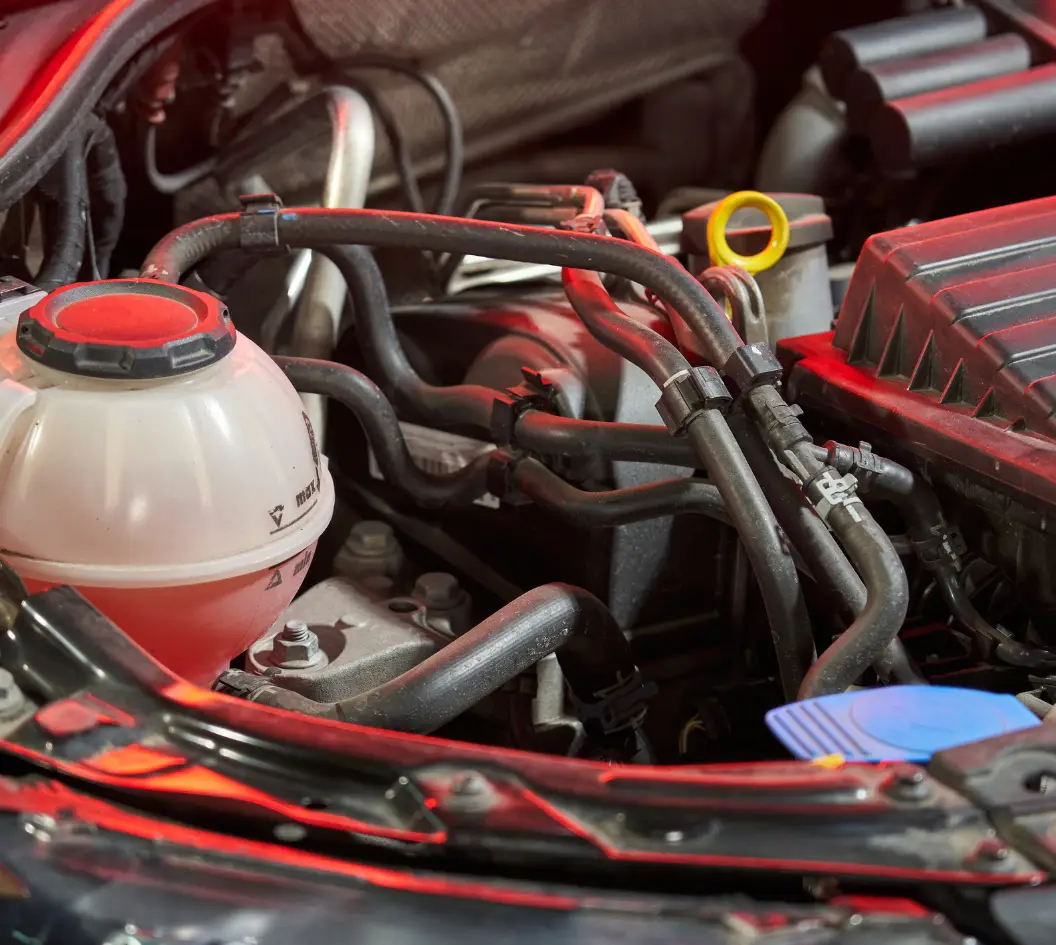
Why overheating is a bigger threat in the GCC than many drivers realise Engines are designed to run hot, but only within a controlled range. In most cars, normal operating temperature sits somewhere around the point where the thermostat opens and the cooling system can steadily remove the heat produced by the engine. In the GCC, that balance is harder to maintain. Ambient temperatures in summer are high enough that the cooling system has less room to work with. Add in long climbs, high-speed highway runs, heavy traffic with the AC on full, and occasional towing or heavy loads, and you have a recipe for stress. Many drivers think that overheating is a rare, sudden event that only happens to neglected cars. In reality, cooling systems often give clues for months or even years before a serious incident. Small leaks, partially blocked radiators, weak fans or old coolant slowly eat into the system’s safety margin. Everything seems fine on a cool morning or on a short city trip, but when conditions line up against the car, the temperature needle suddenly climbs. Understanding those early signs and dealing with them early is much cheaper than paying for a damaged engine later. Early warning signs that your engine is running too hot The first clue is often the temperature gauge, if your car has one. Many modern cars now use simplified gauges that sit in the middle over a fairly wide temperature range, but you can still learn what “normal” looks like for your specific car. If you notice that the needle is consistently sitting a little higher than usual during similar drives, especially with the AC on, that deserves attention. Some cars also show a digital warning or change the colour of the temperature display when things get too hot. Another warning sign is the engine cooling fan running more often or continuing to run for a long time after the engine is switched off. While this can be normal in very hot weather, a sudden change in fan behaviour compared to your usual experience can hint at underlying issues. You might also notice a sweet smell, which is often the scent of coolant evaporating somewhere. Small coolant leaks can leave dried residue around hose joints, radiators or the water pump area long before they become obvious drips on the ground. Loss of cabin heat in cooler months, for cars that use the heater, can also be an early signal of coolant flow problems or low coolant level. While that matters less in the GCC than in colder countries, it still shows that the system is not circulating coolant correctly. Finally, visible steam from under the bonnet or a red temperature warning light is no longer an early sign. It means the situation is already serious and you need to act immediately. Common causes of engine overheating in GCC conditions Low coolant level Coolant is the lifeblood of the cooling system. If there is not enough of it, the pump cannot move heat away from the engine efficiently. Low coolant levels are usually caused by leaks. These may be obvious, like a cracked radiator or a split hose, or they may be slow leaks at hose clamps, plastic fittings or the water pump. In some cases, an internal leak such as a failing head gasket can allow coolant to escape into the engine or exhaust, which needs careful diagnosis. Checking coolant level regularly is a basic but important habit. The reservoir has markings for minimum and maximum levels and should be checked when the engine is cool. If you find yourself topping up coolant more than once or twice a year without a clear external leak, it’s safer to have the system pressure-tested by a workshop to find out where the fluid is going. Old or incorrect coolant Many people think coolant is just coloured water. In reality, it contains additives that prevent corrosion, reduce foaming and raise the boiling point. Over time, these additives break down. Old coolant becomes less effective at protecting the engine and radiator from rust and scale. Deposits can form inside the small passages, narrowing them and reducing flow. In GCC conditions, where heat is already high, this loss of efficiency can push the system past its limits. Using plain water or mixing different types of coolant without thinking about compatibility can also cause trouble. Hard water can contribute to scale build-up inside the system. If you have had to top up with water in an emergency, it’s worth flushing and refilling with the correct coolant as soon as possible, rather than leaving the mixture unknown. Clogged radiator or condenser The radiator and AC condenser sit at the front of the car to catch airflow. Unfortunately, they also catch sand, dust, insects and small debris. Over time, the thin fins can become coated with dirt. As a result, less air passes through, and the system struggles to lose heat. This problem is especially noticeable at low speeds, in heavy traffic, or when driving in dusty areas. On the inside, radiators can become partially blocked by rust and sediment if coolant has been neglected. This internal blockage doesn’t show from outside, but it seriously reduces cooling capacity. A cooling system that is marginal like this might cope during gentle driving in mild weather but will fail during hard use in summer. Faulty thermostat The thermostat acts like a gate controlling coolant flow between the engine and radiator. When the engine is cold, the thermostat stays closed to help it warm up quickly. Once operating temperature is reached, it opens and allows coolant to circulate. If the thermostat sticks closed or doesn’t open fully, hot coolant gets trapped in the engine, and overheating follows fairly quickly. A thermostat that sticks open, on the other hand, can mean the engine takes too long to warm up. In cooler weather this shows as poor heater performance and slightly higher fuel consumption. In GCC conditions, this behaviour sometimes goes unnoticed, but it can still affect how well the engine and cooling system behave under load. Cooling fan issues Electric cooling fans are crucial in modern cars, especially in hot climates. They pull air through the radiator and condenser when the car is stationary or moving slowly. If a fan fails completely, only runs at low speed when high speed is needed, or comes on too late, engine and AC performance will suffer. The AC may feel weak in traffic, and the engine temperature may climb in situations where it previously stayed steady. Problems can come from burned-out motors, worn bearings, damaged wiring, failed relays or control modules. Because fan operation is often controlled by the engine computer, proper testing usually involves both electrical checks and, in some cases, diagnostic tools to command different fan speeds. Old or low engine oil Engine oil plays a role in cooling as well as lubrication. It carries heat away from moving components and helps keep surfaces free from deposits. When oil is old, degraded or low in quantity, internal friction rises, and some areas can run hotter than they should. This extra heat puts more strain on the cooling system and can contribute to overheating, especially under heavy use. Regular oil changes with the correct grade for GCC conditions reduce this risk. It is also important to keep an eye on oil level between services, particularly on engines known to consume some oil. Air pockets in the cooling system If air gets trapped in the cooling system after a repair or coolant change and the system is not bled correctly, it can form pockets that block coolant flow. These pockets often sit near hot spots, such as around the cylinder head, and can cause local overheating even when the overall coolant level appears correct. Some engines are very sensitive to this and require specific bleeding procedures. This is another reason why proper refilling and bleeding after cooling system work matters. What to do if your engine starts overheating while driving If you notice the temperature gauge climbing higher than normal, or if a red temperature warning appears, the first thing to do is stay calm and act quickly. Turn off the air conditioning to reduce the load on the engine, and, if your car has an effective heater, turn it to hot with the fan on high. This draws some heat away from the engine into the cabin, which is uncomfortable but can buy you time. Then, find a safe place to pull over as soon as you can. Do not push on “just a little further” if the temperature is still climbing. Once you have stopped, leave the engine idling for a short moment if the fans are still running, then switch it off. Do not open the radiator cap immediately. Hot coolant is under pressure and can spray out, causing serious burns. Wait at least 15–30 minutes for things to cool down before you even think about checking levels. After the engine has cooled, you can visually inspect the coolant reservoir, looking for obvious low level or leaks, and check for signs of damage like split hoses or wet areas around the radiator. If the engine overheats again as soon as you restart and move, it is safer to call for recovery rather than continuing to drive and risking major damage. Why topping up with water is only a temporary move If you discover that the coolant is low and you are stuck, topping up with clean water to get to a workshop is better than running the engine with air in the system. However, this should be seen only as an emergency measure. Once you reach safety, the system should be inspected for leaks, properly pressure-tested, and refilled with the correct type and mix of coolant. Relying on water alone or constantly topping up without addressing leaks will lead to corrosion, scaling and reduced cooling performance. Over time, this behaviour can damage radiators, heater cores and even the engine itself. It’s much smarter to find out why the coolant is disappearing in the first place. A simple, GCC-friendly cooling system maintenance plan Preventing overheating is mostly about regular, sensible maintenance. At every service, the workshop should check the coolant level and colour, inspect hoses and clamps for signs of aging or seepage, and confirm that cooling fans work correctly. The radiator and condenser should be visually checked for external blockages and cleaned carefully if needed. Every few years, depending on the manufacturer’s recommendations and the car’s age, a full coolant flush and refill with the correct type should be carried out. On older or high-mileage vehicles, the thermostat and radiator cap might be replaced as a preventive step, especially if there have been any borderline temperature issues. Before long summer trips or heavy use, a pressure test of the cooling system and a quick check of fan operation under different conditions are smart precautions. By following this kind of plan, you reduce the chance of sudden overheating and keep your engine in its safe temperature range, even in harsh GCC heat. When to go straight to a specialist workshop You should not ignore repeated small warnings. If the temperature gauge often sits a little higher than it used to, if you see dried coolant stains or smell something sweet after driving, if you find yourself topping up coolant more than occasionally, or if the car has overheated even once badly enough to trigger a warning light or steam, it is time to let a specialist take a proper look. A good workshop will test the system for leaks, check the thermostat and fans, inspect the radiator and water pump, and, if needed, perform tests for internal leaks like head gasket issues. Catching problems at this stage is far cheaper than waiting until the engine suffers serious damage. In GCC conditions, the cooling system is not an area where you can afford to be relaxed. Taking it seriously pays off in reliability and peace of mind.
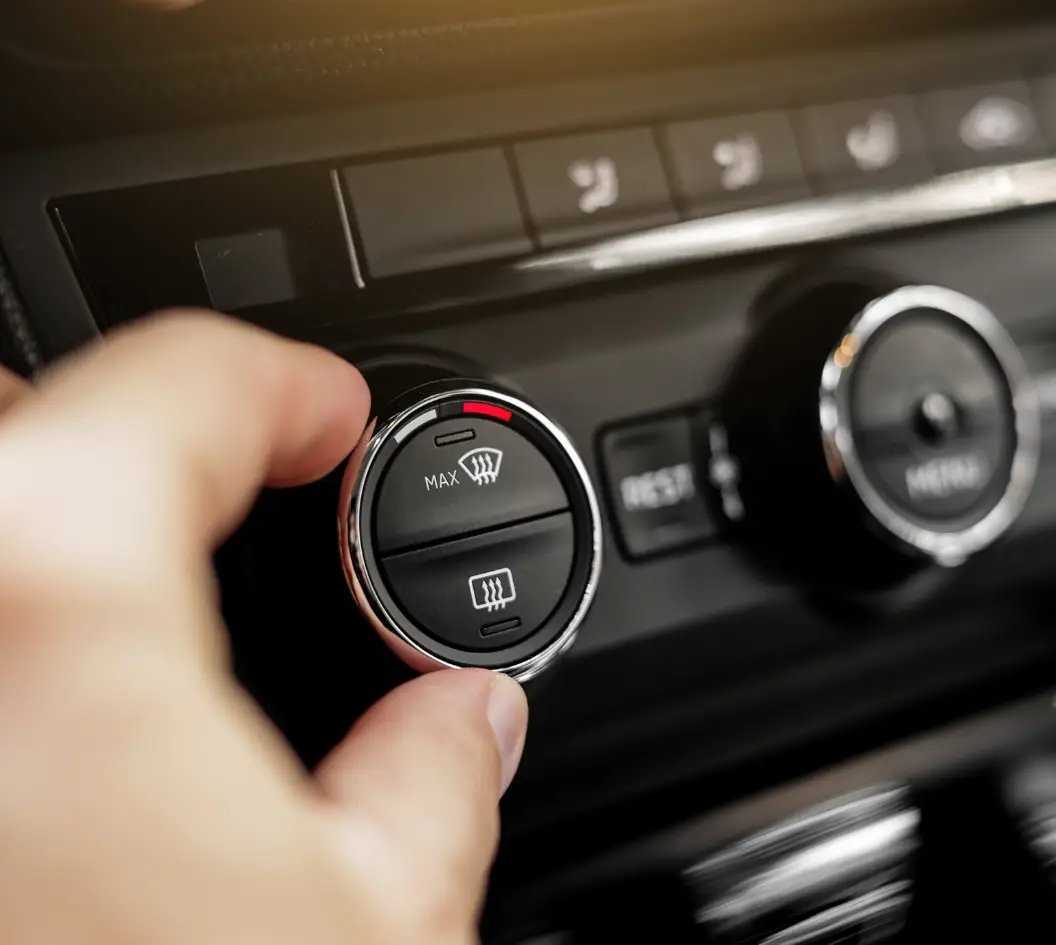
Why a weak AC is more than just uncomfortable in the UAE In the UAE, a strong car AC is not a luxury; it’s a basic requirement. Summer days regularly reach temperatures where the steering wheel feels like a hot plate and the cabin turns into an oven within minutes. If the AC is only slightly cool instead of properly cold, that might feel manageable for a short drive, but over time it takes a toll. Drivers get tired more quickly, passengers become irritated, and long trips can feel like a punishment rather than a simple journey. Beyond comfort, there is also a safety side. When the cabin is too hot, concentration drops, reaction times get slower, and everyone in the car becomes more stressed. Kids and elderly passengers are particularly sensitive to heat. So if you notice that your AC is not performing like it used to, especially during the hottest parts of the day, it is worth taking the issue seriously instead of waiting until it completely fails. Simple checks you can do before visiting a workshop Before assuming that your AC system is failing, it makes sense to check a few basic things that many people overlook. Sometimes, the problem is not a broken component but the way the system is being used or a simple maintenance item that has been ignored. First, look at your AC settings. If the car has automatic climate control, check that the temperature is set low enough and that the fan speed is appropriate. On manual systems, make sure you are not mixing hot and cold air by accident. Many drivers forget that they left the temperature dial somewhere in the middle, which means the system is trying to give a “comfortable” blend of warm and cool instead of maximum cold. Also, pay attention to the recirculation setting. When you first get into a very hot car, it’s usually better to open the windows for a minute to let the hottest air escape, then close them and switch the AC to recirculation mode. This allows the system to cool the already cooled cabin air instead of constantly trying to cool fresh hot air from outside. After the cabin has cooled down, you can turn recirculation off again if the car is full of passengers and you want more fresh air. Finally, listen to the fan. If the blower only gives weak airflow even on the highest setting, or if you hear unusual noises from behind the dashboard, there might be an issue with the blower motor or a blocked cabin filter. These are still workshop jobs, but they are very different from a full AC system failure. UAE-specific reasons why your car AC isn’t cooling properly The UAE environment is tough on AC systems. Constant heat, dust and long periods of idling with the AC on full make components wear faster. There are several common problems that workshops see again and again during summer. Low refrigerant due to small leaks Over time, some refrigerant gas can escape from the system through small leaks at seals, joints or the condenser. This can happen so slowly that you don’t notice a sudden change; you just realise that the AC feels weaker than last year. The system still runs, but it has to work harder to achieve less cooling. A proper fix is not just about topping up the gas. A good workshop will check the system pressure, look for leaks and make sure the correct amount of refrigerant is added according to the manufacturer’s specification. Simply adding more gas without checking for leaks is like filling a bucket with a hole at the bottom. Clogged cabin (pollen) filter The cabin filter cleans the air before it enters the interior. In the UAE, sand and dust block this filter quite quickly, especially if the car spends time in sandy or construction areas, or if it follows closely behind other vehicles on dusty roads. When the filter is blocked, the fan has to work harder, airflow from the vents becomes weaker, and the system becomes noisier. The air might still be cold at the evaporator, but not enough of it reaches you. Replacing the cabin filter is usually a simple and relatively low-cost job that can have a big impact on how the AC feels. Dirty condenser or radiator The AC condenser is normally located in front of the radiator. Its job is to release heat from the refrigerant. When the fins of the condenser get covered in dust, sand, insects and small debris, heat can’t escape efficiently. In the UAE, this buildup happens faster than in many other countries. The same goes for the radiator. If both are partially blocked, the AC performance drops, especially in traffic, and the engine can run hotter than it should. Cleaning the condenser and radiator needs to be done carefully. Blasting them with high-pressure water from the wrong angle can bend the fins and make airflow even worse. A proper workshop knows how to clean them gently and, if necessary, remove covers or panels to reach them correctly. Cooling fan problems Electric cooling fans help draw air through the condenser and radiator when the car is not moving fast enough. If a fan is not working at all, or if it only runs at low speed when it should be on high, AC performance suffers badly in slow traffic or while idling. You might notice that the AC feels acceptable on the highway, when natural airflow is high, but becomes weak when you’re stuck at a junction. Diagnosing fan problems involves checking fuses, relays, wiring and the fan motor itself. On many modern cars, the fan speed is controlled by the engine control unit or a separate module, so a good diagnostic tool and a bit of electrical testing are needed. Expansion valve or evaporator issues Deep inside the dashboard, the expansion valve and evaporator play a key role in cooling. The expansion valve controls how the refrigerant enters the evaporator, where it absorbs heat from the cabin air. If the valve is not working correctly or if the evaporator is partially blocked, cooling becomes uneven. You might feel periods of cold air followed by periods of less cold air, or you might notice ice forming on pipes or around the evaporator. Accessing these parts can be labour-intensive, often requiring partial dashboard removal. Because of that, it’s important not to jump to conclusions. Proper pressure readings and temperature checks should be done before deciding that an expansion valve or evaporator needs to be changed. Blower motor or airflow flap problems If the temperature of the air changes correctly but airflow is poor, or if air only comes from some vents but not others, the issue might be with the blower motor or the internal flaps that direct air to different zones (face, feet, windscreen). These flaps are controlled by small motors or cables. Over time, they can stick, break or lose calibration. Climate control systems on modern cars often store fault codes when flap motors misbehave, so diagnostics can again help narrow down the problem. How a specialist workshop diagnoses AC problems A good AC diagnosis is more than just checking the gas level. In a specialist workshop, the technician starts by asking about the symptoms: when the AC feels weak, how long it takes to cool, whether the problem is worse in traffic or on the highway, and whether any AC repairs have been done before. These details help to focus the inspection. Next, they will check the system pressures using proper gauges and may use a thermometer at the vents to measure actual outlet temperatures. They’ll look at the condenser and radiator, check the operation of the cooling fans, and confirm that the compressor engages properly. In many vehicles, they’ll also connect a diagnostic tool to see if the climate control module has stored any fault codes or if it is limiting performance because of another problem, like an overheating engine. Once the basic data is gathered, they can decide whether the issue is most likely to be a simple cabin filter replacement, a refrigerant leak, a control problem, or a hardware issue like a failing compressor or expansion valve. This step-by-step process avoids unnecessary part replacement and gives a much clearer picture of what is really going on. Simple habits to help your AC survive UAE summers There are a few easy habits that can make a noticeable difference to how your AC performs and how long components last. Parking in shade or under covered areas, when possible, keeps the starting cabin temperature lower. Using a windshield sunshade also helps. When you first get into a very hot car, opening the doors or windows briefly to let the worst heat out makes it easier for the system to cool down afterwards. Inside the car, try not to leave the AC constantly on the lowest temperature and highest fan speed for hours when it’s not needed. Once the cabin is cool, you can reduce the fan speed slightly and adjust the temperature to a comfortable level. Changing the cabin filter regularly, ideally once a year or more often if you drive in dusty areas, keeps airflow strong and reduces strain on the blower motor. Finally, getting the AC checked before peak summer is smarter than waiting until the first 45°C week catches you unprepared. When you should stop using the AC and call a workshop immediately Most AC problems allow you to keep driving until you book a repair. However, there are a few signs that mean you should switch the system off and get help quickly. If you hear loud grinding or squealing noises from the compressor area when the AC is on, that suggests a serious mechanical problem inside the compressor. Continuing to run it can send metal particles through the whole system and make repairs much more expensive. If you see smoke or smell burning from under the bonnet when the AC is running, it is also time to turn it off and park safely. If the AC suddenly switches from cold to warm air and doesn’t recover, that is another reason to get the system checked soon. It may be a simple control issue, but it could also be a sign of a major leak or component failure. In the UAE, having no AC is more than just a comfort problem, so dealing with those symptoms quickly is worth it.

Why your car isn’t “just mechanical” anymore If you still think of a car as a few mechanical parts, some belts and a basic engine, that picture is out of date. Modern vehicles are full of computers and software. Under the bonnet and behind the dashboard, you have control units for the engine, gearbox, brakes, steering, airbags, air conditioning, infotainment and more. They all talk to each other over internal networks. When you press the brake pedal, turn the wheel or even press the start button, there is a lot of data moving around before anything actually happens. Because of this, many problems that look “simple” from the driver’s seat are not simple at all. A rough idle, a hesitation when accelerating or a warning light on the dashboard can have several different possible causes. Some might be mechanical, like a worn part. Others can be electrical or software-related. Guessing is dangerous and expensive. This is why proper computer diagnostics have become one of the most important tools in a serious workshop. What “car computer diagnostics” really means When people hear “computer diagnostics”, they often think of a mechanic quickly plugging a small tool into the car, reading some numbers, and immediately knowing the problem. In reality, diagnostics is a process, not a magic button. Modern cars use a system called on-board diagnostics (OBD), with a standard connector, usually under the dash. A diagnostic tool plugs into that connector and communicates with the car’s control units. During a proper diagnostic session, the technician will read fault codes from different systems, look at live data from sensors, and sometimes run tests where they activate parts like fans, valves or pumps through the computer. A fault code is a clue, not a full answer. For example, a code for an oxygen sensor problem might mean the sensor itself is faulty, but it can also mean the engine is running too rich or too lean, and the sensor is only reporting that fact. Reading the code is just the start. Understanding the context and testing other data is where the real skill lies. Basic code reader vs professional diagnostic tool There is a huge difference between a cheap code reader and a professional diagnostic tool. Many small garages and DIY owners use simple scanners that plug into the OBD socket and display generic engine codes. These tools can be handy in very basic situations, but they are limited. They usually only talk to the engine control unit, and even then, only in a basic way. They may let you read and clear codes, and maybe see a few common sensor values, but that is about it. Professional or OEM-level diagnostic tools, on the other hand, can access many more systems in the car. They can talk to the ABS system, airbag modules, transmission control units, electric power steering, air suspension, climate control, advanced driver-assistance systems and more. They also support brand-specific functions like coding new parts, carrying out calibrations, updating software and running guided tests. For example, if you replace a steering angle sensor or a throttle body on many modern cars, the system needs to be calibrated using a proper diagnostic device, not just fitted and forgotten. This is why serious workshops invest in multiple diagnostic platforms and keep them updated. The more systems they can talk to, and the more deeply they can see into each car, the less guessing they need to do and the more accurate their diagnoses become. Why modern cars leave no room for guesswork Mechanical experience still matters a lot, but modern systems are now so integrated that you cannot rely on “old-school” guesswork alone. A simple symptom like “the car feels down on power” might be linked to turbo boost issues, fuel delivery problems, ignition problems, exhaust restrictions, software limitations due to another fault, or even a misreading sensor that is feeding wrong data to the engine control unit. If someone just replaces parts in the hope that the problem will disappear, your bill climbs while the fault stays. The same goes for transmission issues. Gearboxes in modern cars, especially automatics and dual-clutch versions, rely heavily on electronics. When a driver feels a jerk or delay while shifting, the cause may be worn internal parts, but it may also be old fluid, wrong fluid, software needing adaptation, or a faulty sensor. A proper diagnostic approach looks at fault codes, line pressure data, shift timing and adaptation values to separate a control problem from a mechanical problem. Without this, a simple software issue might lead to an unnecessary gearbox replacement quote. Common problems where advanced diagnostics make all the difference Engine performance and misfires When the engine is not running smoothly, a basic tool might show a misfire code on a particular cylinder. A professional diagnostic process will go further. The technician will compare fuel trim values, check the readings of airflow and pressure sensors, and look at ignition timing and knock data. They might carry out a relative compression test using the starter current draw. This richer picture makes it much easier to decide if the problem is spark-related, fuel-related, compression-related or caused by another system affecting the engine. Transmission faults For gearboxes, advanced diagnostics can show details like internal temperatures, clutch wear indexes (on some dual-clutch units), shift times and pressure targets. With that information, a specialist can tell if the transmission is simply crying out for a fluid change and adaptation reset or if it is showing signs of deeper internal wear. In some cars, a software update can cure shift quality problems that would otherwise be misread as a mechanical failure. ABS, stability control and traction issues ABS and stability control warning lights are another area where a basic approach fails. Replacing a wheel speed sensor without checking the wiring, tone ring, module and other signals may fix nothing. A better approach uses live data from each wheel and tests under different speeds to see exactly where the signal is lost or corrupted. That way, the root cause is fixed, not just the symptom. Airbag and safety systems Airbag systems are very sensitive, and for good reason. When that warning light comes on, some garages simply clear it and hand back the car. That is dangerous. Serious workshops use diagnostics to check each component in the safety chain. They verify that sensors, belts, pretensioners and modules are communicating correctly, and they follow strict procedures before clearing any crash data or fitting new parts. This is not an area for trial and error. Hybrid and electric vehicles Hybrids and electric cars add another layer of complexity. High-voltage systems, battery management, inverters and chargers all have their own logic and safety routines. Diagnosing issues here needs proper high-voltage training, correct safety gear and dedicated diagnostic tools. It is not something that can be handled with a basic OBD reader and a quick look under the bonnet. Why “just clearing the code” is a bad idea It is very common for drivers to see a warning light, visit a small garage, and be told: “We’ll just clear the code and see if it comes back.” The light goes off, everyone feels happy, and the car leaves. The problem is that this approach ignores the reason the fault happened in the first place. The code may contain useful data about the conditions at the time of the fault, such as engine load, temperature and speed. Clearing it without recording or understanding it throws away that information. Also, some systems log intermittent faults that may hint at early failure. If you keep clearing these without looking deeper, you miss the chance to fix a relatively small issue before it becomes a bigger one. In some cases, clearing codes without performing necessary repairs can even lead to safety systems being disabled or emissions systems working incorrectly. A good workshop will always explain what the code means, what might be causing it, and what steps should be taken, instead of simply removing the warning and sending you away. What a proper diagnostic process looks like in a specialist workshop In a specialist environment, diagnostics is a structured process. It usually starts with a detailed conversation about the symptoms: when they happen, how often, at what speeds or conditions, and whether anything has been repaired recently. That information is often as important as the codes themselves, because it gives context to the data. Next, the technician connects a professional diagnostic tool and performs a full system scan, not just an engine scan. They look at fault codes in all modules, compare them, and note which codes are stored and which are active. Then they move to live data, checking sensor values at idle and under load. Depending on the case, they might run specific tests like activating cooling fans, testing fuel pump performance, or performing a road test while watching live graphs. Only after this analysis do they start talking about possible parts and labour. The goal is not to replace as many parts as possible. The goal is to find the root cause with the least amount of guesswork. That takes more thinking time upfront, but it usually saves money, time and frustration in the long run. Why a specialist workshop is worth it for diagnostics Advanced diagnostic tools are expensive and require constant updates. Technicians also need regular training to keep up with new models and technologies. Not every garage is willing or able to make those investments. Specialist workshops that do invest in this area offer a clear benefit: they can diagnose complex issues faster, with fewer wrong turns, and with a better understanding of how different systems interact. For routine jobs like oil changes, tyre rotation and simple inspections, many places can do a decent job. But when it comes to warning lights, strange behaviours, intermittent faults or anything involving gearboxes, electronics, safety systems or hybrids, working with a specialist can be the difference between a single correct repair and a long, expensive series of guesses. When you should go straight to a diagnostic specialist There are some symptoms where you should not waste time with trial and error. These include a flashing check-engine light, transmission warning messages, repeated ABS or airbag lights that keep returning, obvious performance drops, repeated overheating, and any warnings on hybrid or electric vehicles. In these cases, getting the car in front of someone with proper diagnostic tools and the right mindset is not “overkill”. It is the safest and most cost-effective way forward. Modern cars can do a lot for you, but they are also more complex than ever. Treating them like old, fully mechanical vehicles is asking for trouble. A good diagnostic approach respects that complexity and uses it to your advantage instead of fighting against it.
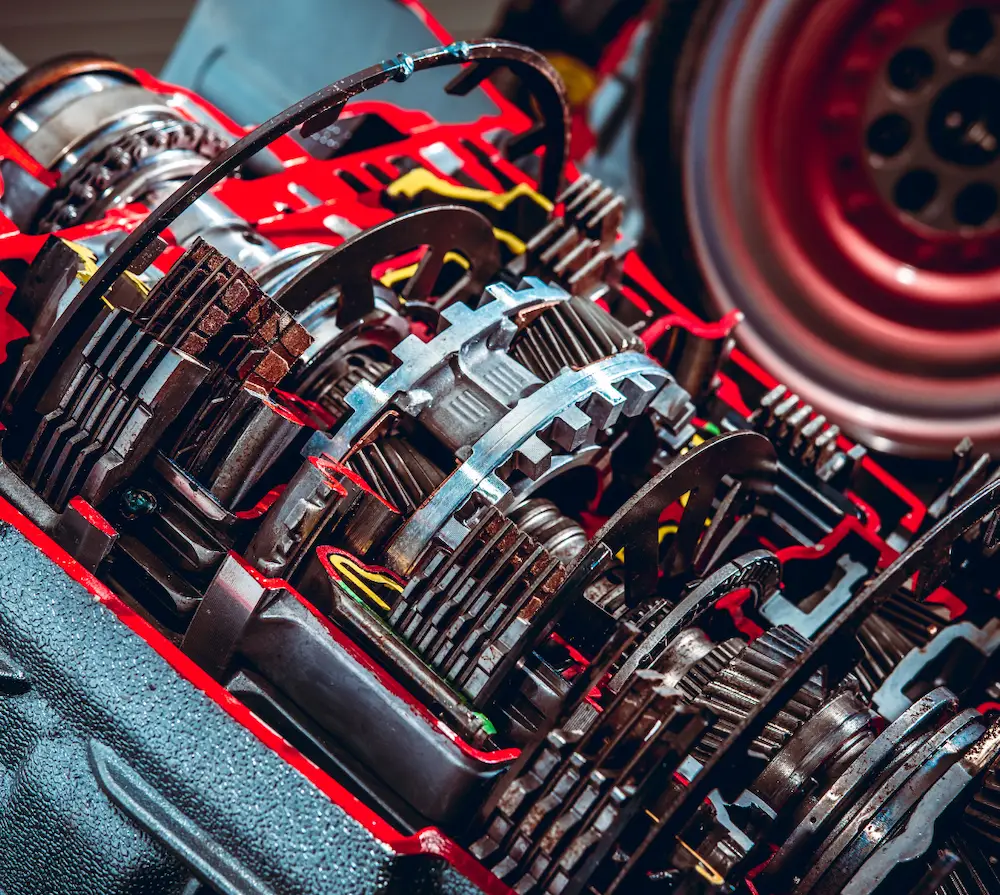
Why gearboxes suffer in UAE conditions Your transmission has one of the hardest jobs in the car: delivering power smoothly while dealing with constant changes in speed, load and temperature. In the UAE, this job is even tougher. Traffic means endless low-speed creeping and sudden acceleration. Highway driving often happens at high speeds in hot weather. Many cars tow, carry full families or climb steep ramps to parking levels. All of this generates heat inside the gearbox. Heat is the enemy of transmission fluid. When the fluid overheats and breaks down, it can no longer lubricate and protect the internal components properly. Wear increases, shift quality drops and, if nothing is done, failure becomes a real risk. The cost of rebuilding or replacing a modern automatic, CVT or dual-clutch gearbox can easily be higher than several years of proper servicing. So it makes sense to treat the transmission as a critical system, not an afterthought. The main types of transmissions you’ll see – and how they differ Most modern cars in the UAE fall into one of three categories: Traditional automatic gearboxes (torque converter automatics)These use hydraulic fluid, a torque converter and sets of gears and clutches. They’re common in many sedans, SUVs and luxury vehicles. They are generally robust but still depend heavily on fluid quality and cooling. CVT (Continuously Variable Transmission)CVTs don’t have fixed gears. Instead, they use a belt or chain between variable pulleys to provide a range of ratios. They’re common in some Japanese and Korean models and focus on efficiency and smoothness. They are very sensitive to fluid type and level. Dual-clutch transmissions (DCT / DSG / S-tronic, etc.)These use two clutches and two sets of gears to offer fast shifts with minimal interruption of power. Some use dry clutches, others wet (oil-cooled) clutches. They can be excellent when maintained correctly but are less forgiving of neglect and wrong fluid. Each type has its own typical problems and service needs, so a “one size fits all” approach doesn’t work. What transmission fluid actually does Transmission fluid isn’t just oil to “make things slippery.” In automatics, it handles lubrication, cooling, cleaning and actually transfers power inside the torque converter and hydraulic circuits. In CVTs, the fluid also has to grip the belt or chain correctly without slipping. In dual-clutch gearboxes, fluid may be used for the internal gears and for cooling and controlling the clutches. Over time, the fluid breaks down from heat and shear forces. It collects fine metal particles from normal wear. Add high ambient temperatures and heavy load, and the fluid can degrade faster than the “lifetime” claims suggest. Once it loses its properties, internal parts are left exposed, and shift quality starts to suffer. “Sealed for life” – what that really means Many modern cars are sold with transmissions described as “sealed for life” or with no official fluid change interval listed. It sounds great: no service needed, ever. But “life” in that sentence often means the life of the warranty or a specific average use pattern, not the life of the car in harsh climates. In UAE conditions, with high heat and demanding driving, many specialists recommend treating “sealed for life” more like “sealed until the fluid is clearly worn” – which may be somewhere around 60,000–100,000 km depending on the gearbox and usage. The smartest option is to talk to a workshop that understands your specific transmission. They can often check fluid condition, look at shift behaviour and advise a safe interval rather than blindly trusting marketing language. Warning signs your transmission needs attention Gearbox problems rarely appear out of nowhere. There are often early hints: Delayed engagement when shifting from Park to Drive or Reverse Jerky, harsh or unusually soft shifts Noticeable flare in engine RPM between shifts Shuddering or vibration at certain speeds or when taking off Whining, humming or clunking noises from the transmission area “Transmission fault” or “Gearbox malfunction” warnings on the dash For CVTs: a rubber-band feeling, where revs climb but speed lags If you notice these symptoms, it’s not the time to ignore them or just reset fault codes. It’s time to get a proper diagnostic check. Sometimes the fix is as simple as a fluid change and software adaptation. Sometimes it’s the early stage of a mechanical fault. Catching it early can save you a lot of money. Typical service work on different gearboxes Traditional automatics For torque converter automatics, service often includes: Draining and refilling transmission fluid, sometimes using a machine to exchange more of the old fluid Replacing the transmission filter if it’s serviceable (some are internal and only accessible during overhaul) Inspecting the pan for metal particles and debris Checking for leaks and gasket condition Performing adaptation resets or relearn procedures if required Many automatics benefit from this service somewhere between 40,000 and 80,000 km in UAE use, then at similar intervals afterwards. CVT gearboxes CVTs are very sensitive to the correct fluid type and level. Service usually includes: Draining the old CVT fluid Refilling with the exact specification and quantity recommended by the manufacturer Replacing the external filter if fitted Resetting learned values or running adaptation routines where required Using a generic automatic transmission fluid instead of proper CVT fluid is a quick way to cause serious damage. This is one area where there is zero room for guessing. Dual-clutch transmissions Dual-clutch service varies depending on whether the clutches are wet or dry. Common tasks include: Changing the gear oil and, on wet clutch systems, the clutch cooling and control fluid Replacement of filters in the mechatronic/hydraulic unit where specified Running clutch adaptation and calibration routines through a diagnostic tool Inspecting for leaks around seals and mechatronic units Skipping these services or using the wrong fluid can lead to shuddering, harsh shifts, overheating and eventual failure. Cooling – the hidden part of transmission life Transmission cooling is crucial and often overlooked. Some gearboxes have dedicated oil coolers; others share a cooling circuit with the engine. If radiators, coolers or lines are partially blocked by sand and dirt, transmission temperatures rise. The driver might only experience this as slightly worse shifts at first, but internally the fluid is breaking down faster. This ties back to your overall cooling-system maintenance. When radiators and condensers are cleaned and coolant is renewed on schedule, the gearbox benefits too. If your car is used for towing, off-road driving or heavy loads, extra attention to cooling is even more important. Driving habits that help gearboxes live longer Your habits behind the wheel matter almost as much as the workshop schedule. Avoid full-throttle launches from a standstill whenever possible. Constant hard launches build heat and stress clutches and bands. In automatics and DCTs, don’t sit with your foot on the throttle and brake at the same time to “creep” forward. Use the brake properly and let the transmission do its job. In heavy traffic, if you know you’re going to be stopped for a long time, shift to Neutral with the foot brake on rather than letting the gearbox fight against the brakes in Drive. For DCTs with dry clutches, avoid holding the car on a slope using the throttle; use the brake or parking brake instead. Don’t tow beyond the rated capacity, especially in high heat, and make sure transmission and engine cooling are in good shape before towing at all. These small choices reduce heat and wear over time. Why diagnostics and fluid choice matter Modern transmissions are closely linked to the engine and other systems. When a gearbox behaves oddly, it doesn’t always mean the fault is inside the gearbox itself. Engine performance issues, sensor problems or software glitches can all show up as poor shift quality. This is why a proper diagnostic session is important before deciding what to do. When fluid changes are needed, using the exact recommended specification matters more than many people think. Gearboxes are designed around specific friction characteristics and viscosity. Cheap or incorrect fluids can cause shuddering, noisy operation and accelerated wear even if they seem fine at first. A specialist workshop will check the correct fluid code, not just grab something “similar”. A sensible transmission service plan for UAE drivers As a broad guideline, you can think along these lines: Up to 40,000 kmListen for early symptoms and make sure your overall cooling system is in good condition. Some gearboxes may already be due for their first fluid change in harsh use. Around 40,000–60,000 kmSerious discussion with a specialist about fluid change for automatics, CVTs and wet dual-clutch boxes. If the manufacturer already recommends a change, follow it. If they say “lifetime”, ask what lifetime usually means here. Beyond 60,000 kmRepeat fluid changes at sensible intervals based on how the car is used. High-mileage and high-load vehicles (taxis, fleet cars, frequent towing) may need more frequent attention. Along the way, always pay attention to new noises, vibrations, warning messages and changes in shift behaviour. These are your early clues. When to see a transmission specialist immediately There are some situations where you should not wait: You feel a strong jerk or bang when the gearbox shifts The car loses drive suddenly or goes into limp mode with a gearbox warning There is a burning smell from the transmission area The gearbox slips so that revs rise without a matching increase in speed You hear loud whining or grinding that changes with gear or speed In these cases, continuing to drive can turn a repairable situation into a complete failure. Getting the car to a workshop that understands your type of gearbox and has the right diagnostic tools is the safest move. Treating your transmission as a key system instead of something to forget after the test drive will save you stress and money. In UAE conditions, proper servicing, fluid quality, cooling and driving habits all work together to keep automatics, CVTs and dual-clutch gearboxes shifting smoothly for years.
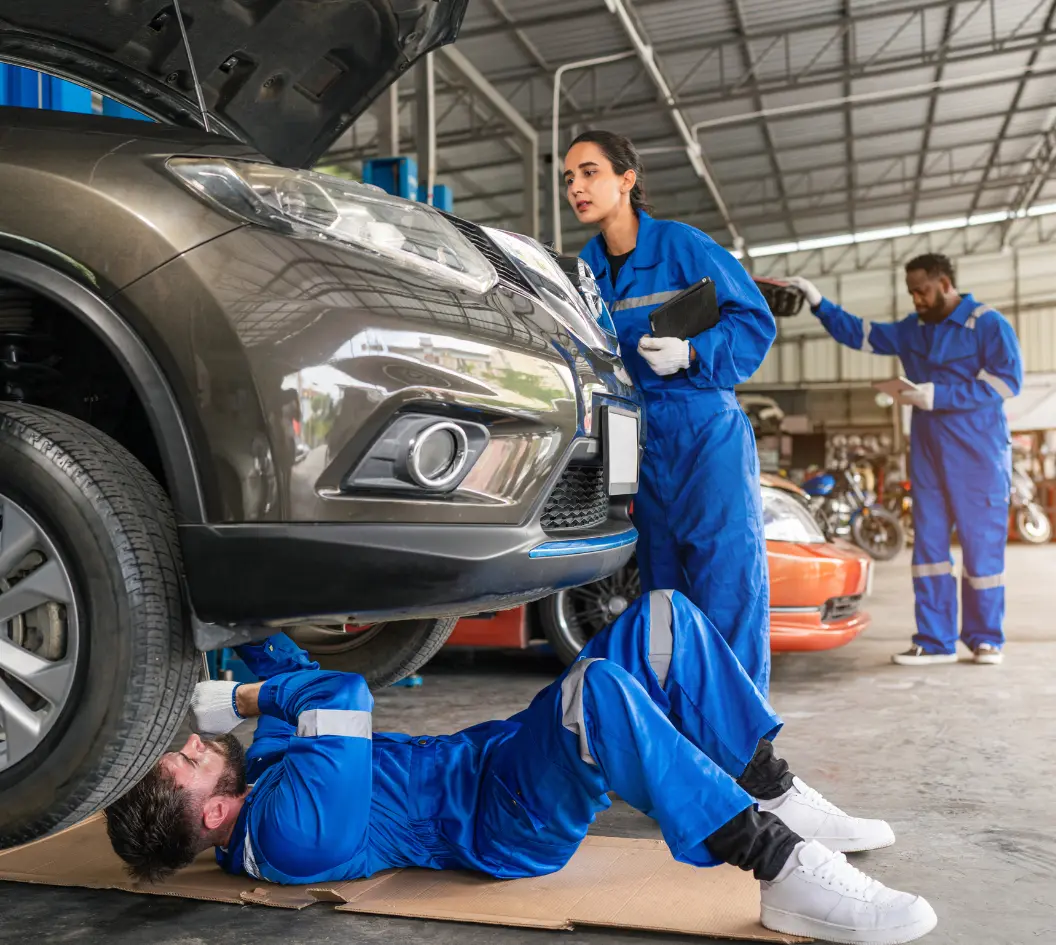
Why “major vs minor service” matters more in the UAE In the UAE, cars don’t have an easy life. Between summer temperatures that can sit in the high 40s, long highway drives between emirates, endless speed bumps and heavy traffic with the AC on full blast, every part of your car works harder than it would in many other countries. What looks like “normal use” here would be classed as “severe conditions” in many owner’s manuals. That’s why the idea of just “servicing the car once a year” doesn’t really fit the reality on the ground. Because of this, most workshops in the UAE push shorter service intervals than what you might see in brochures from cooler regions. Instead of waiting 15,000 km or more, many owners now follow a pattern of engine oil and basic inspection every 5,000–7,500 km or every six months, whichever comes first. On top of that, there are bigger, less frequent services where fluids, filters and wear items are changed together. That’s where the difference between minor and major service comes in, and it directly affects how reliable your car will be and how much you’ll spend over the years. The problem is that “major” and “minor” are not official, global terms. Each dealer and workshop can define them slightly differently. If you don’t really know what you’re paying for, it’s easy to either overspend on things you don’t need yet or, even worse, skip critical items that should have been done years ago. Understanding the logic behind these two types of service makes it easier to plan your costs, ask the right questions, and avoid big surprises. What is a minor service? You can think of a minor service as your car’s regular health check. It’s not there to overhaul everything. It’s there to keep the basics under control, catch early signs of wear, and keep fluids fresh enough that they can protect the engine and other components properly. Typical interval for a minor service in the UAE On paper, many manufacturers still quote 10,000–15,000 km service intervals, especially for modern cars on synthetic oil. But those numbers are based on a mix of driving conditions, not constant heat, traffic and dust. In cities like Dubai and Abu Dhabi, you get a lot of idling, stop-start use, short trips, and long periods with the AC running while the car barely moves. That all counts as heavy use. This is why many owners and workshops move to a shorter cycle: roughly every 5,000–7,500 km or every six months. If you commute through dense traffic, do food delivery or ride-hailing, or often sit with the engine running and the AC on while waiting, sticking to the shorter end of that range is usually the safer option. The goal is to avoid the oil and filters being pushed to their limit. What a minor service usually includes A properly done minor service is more than just “change the oil and stamp the book.” In most cases, it should cover: Engine oil change with the correct grade for GCC climate Oil filter replacement Visual check of front and rear brakes, pads and discs Tyre inspection for wear, cracks, nails and correct pressure Basic suspension and steering check for obvious play or leaks Fluid level check and top-up where needed (coolant, brake fluid, power steering if applicable, washer fluid) Quick check for oil leaks, coolant leaks and damaged hoses Battery check and charging system test Reset of the service reminder and a short road test Some workshops will also connect a diagnostic scanner to look for stored fault codes, even when there are no warning lights on the dashboard. This can sometimes reveal early issues with sensors or systems that have not yet reached the point where a warning is triggered. What a minor service does not usually include A minor service is not meant to replace every fluid or wear part in the car. Typically, it does not cover: Spark plug replacement Coolant flush and replacement Brake fluid flush Transmission fluid change Timing belt or timing chain-related work Deep AC service or cleaning Detailed suspension work Those items fall under major service or specific additional jobs. If someone offers a “minor” service that claims to cover absolutely everything at a very low price, it’s worth asking what brand of parts and fluids they are using and whether the checklist is realistic. What is a major service? A major service is where you reset the “age” of many key systems. It doesn’t happen as often, but when it does, it’s the moment where you replace older fluids, filters and parts that have slowly degraded over years and tens of thousands of kilometres. Typical interval for a major service There is no single universal number, but many manufacturers and experienced workshops treat the 40,000–60,000 km range as a point where a lot of important work comes due. Spark plugs, coolant, brake fluid and sometimes transmission fluid all have their own recommended change intervals. On top of that, rubber parts like belts and hoses also age with time, not just mileage, so many owners aim for a major service every three to four years even if they have not driven a huge amount. The exact timing depends on the car’s brand, engine type, gearbox type, and how it has been used so far. However, as a simple rule, if your car is approaching one of these mileage milestones and you have no clear proof of when these items were last changed, it is sensible to assume you are due for a major service or at least a detailed inspection. What a major service should include A proper major service is quite comprehensive. It normally includes everything in a minor service plus a lot more. For most cars, that would mean: Fluids and filters Engine oil and oil filter Air filter replacement Cabin (AC) filter replacement Fuel filter replacement, if it is serviceable on your car Coolant flush and refill with the correct type Brake fluid flush and bleed Transmission fluid change if the gearbox is designed to be serviced Differential and transfer-case oil change on 4x4s and SUVs Wear items and checks Spark plug replacement where due (copper plugs wear faster than iridium or platinum types) Detailed brake inspection with exact measurements of pads and discs Suspension and steering inspection, including bushings, control arms, ball joints and shock absorbers Check and adjustment of belts, and timing belt replacement if the engine uses one and the interval has been reached Detailed AC performance test and check for leaks, weak cooling or fan issues Diagnostics and software Full diagnostic scan for fault codes stored in any modules Checking and updating software where appropriate Relearning or adaptation procedures for throttle, transmission or other systems if required This kind of service takes more time and costs more than a simple oil change, but it can easily save you from future breakdowns, overheating, braking problems, gearbox failures and random electrical issues. How the UAE environment changes the rules Car manufacturers design their service schedules based on a wide range of climates and usage patterns. Somewhere in Europe, a car that does mainly steady highway mileage in mild weather can often get away with long intervals. In the UAE, that same schedule becomes risky. High ambient temperatures, sandstorms, high humidity near the coast and constant AC use put more stress on the cooling system, the oil, the rubber parts and even the electrical system. Dust and sand clog filters and radiators far more quickly than in cleaner environments. Engines often sit idling in traffic while still producing a lot of heat, and automatic gearboxes spend more time shifting up and down instead of cruising in one gear. All of this means that fluids break down faster and parts have to absorb more thermal cycles. Following a “global” schedule without adjusting for local reality is one of the reasons some cars start to feel tired quite early in their life here. This is why many experienced technicians in the UAE talk about “severe service” schedules. These are the same cars, but on a harsher duty cycle. Shorter intervals for oil changes, more frequent inspections of cooling systems, and earlier replacement of some wear parts are not a way to sell more work for no reason. They are a way to keep engines, gearboxes and brakes in their comfort zone instead of permanently on the edge. What actually happens if you skip each type of service Skipping services is a bit like skipping health checkups. You might feel fine at first, but the damage accumulates quietly. The impact is different depending on whether you’re skipping minor services, major services, or both. Skipping minor services If you push oil changes far beyond their due date, the oil slowly loses its ability to protect your engine. It becomes thinner when hot, it carries more contaminants, and it can start to form sludge inside the engine over time. At first, you might just feel that the car is a bit noisier or rougher, but in the background, wear on bearings, camshafts and timing chains increases. Fuel consumption can also creep up because the engine is not running as smoothly or efficiently as it should. On top of that, worn tyres, brake pads nearing their limit, or small leaks can go unnoticed when there is no regular inspection. You might only find out about these problems when something fails suddenly: a brake warning light appears just before a trip, or a coolant hose finally bursts on a hot day. None of these issues appear overnight. They are often the result of minor services being missed or reduced to the bare minimum. Skipping major services Skipping major services is where things get expensive. Old coolant loses its protective additives and starts allowing corrosion inside the engine and radiator. Deposits build up and narrow the passages through which coolant flows, making overheating more likely, especially in summer traffic. Old brake fluid gradually absorbs moisture from the air, which reduces its boiling point and can make the pedal feel soft or spongy when you need to brake hard. Ignoring spark plug replacement intervals can lead to misfires, poor starting and damaging unburned fuel entering the exhaust system. Transmission fluid that is never changed can also cause trouble. In many modern automatics and dual-clutch gearboxes, fluid plays a huge role not just in lubrication but also in cooling and hydraulic control. When it breaks down, shift quality suffers, clutches behave unpredictably, and internal components wear faster. At that point, you’re not talking about a simple service anymore. You’re talking about repair or overhaul costs that can easily be several times the cost of doing the right major service on time. How to know what your car needs right now Most owners don’t sit with spreadsheets of every service item. The easiest approach is to look at three things: time, mileage and history. Step 1: Check time and mileage since last service Ask yourself two simple questions. When was your last service done, and how many kilometres have you driven since? If it has been more than six months or more than about 7,500–10,000 km, you are almost certainly due for at least a minor service, even if the car feels fine. Oil and inspections are basic protection that shouldn’t be postponed. If your odometer is approaching 40,000, 80,000, 120,000 km or another “big” number, and you are not sure what has ever been done beyond oil changes, it’s a strong signal that you should consider a major service or a professional inspection with a proper checklist. Step 2: Pay attention to symptoms Cars often tell you when they are unhappy. Even before any warning light appears, you might notice rough idling, hesitation when accelerating, longer cranking before the engine starts, strange noises from suspension components when going over bumps, or a brake pedal that doesn’t feel as firm as it used to. Fuel consumption going up for no obvious reason is another hint. If the car feels different in a way that you can’t quite explain, it’s worth mentioning those details when you book your next visit. A good workshop will link those symptoms to potential systems, and then plan the minor or major service around what actually makes sense, rather than just selling a package off a menu. Step 3: Review your service history If you have invoices or stamped service booklets, go through them and look for specific items: when were the spark plugs last changed, when was the coolant flushed, when was brake fluid replaced, and has the transmission ever been serviced? If you don’t see these items in the last few years, chances are they are overdue, even if your kilometre reading seems low. Time matters as much as distance for many fluids and rubber parts. If you bought the car used and the history is incomplete or unclear, it is often safer to assume that the bare minimum was done. In that case, doing one thorough major service when you first take ownership can put you on a clean, predictable baseline. Dealer vs specialist workshop for services in the UAE There is a constant debate about whether it is better to stay with the dealer or switch to a specialist workshop once the warranty expires. Both options have their place, and the best choice depends on your car’s age, value and the kind of work needed. Dealers are usually the right place while the car is under warranty or service contracts. They follow the manufacturer’s schedule, use genuine parts, and have official access to all software updates and technical bulletins. The downside is that labour rates and parts prices can be higher, which adds up as the car gets older. Specialist workshops, especially ones that invest in proper diagnostic equipment and good technicians, are a strong option once warranty ends. They can follow the same schedules, use genuine or high-quality OEM-equivalent parts where appropriate, and often offer more flexibility in terms of customised packages and timing. In many cases, they can also spend more time explaining what your particular car actually needs instead of pushing the same package to everyone. For basic oil changes and inspections, both can do the job. For major services involving complex diagnostics, cooling issues, engine work or transmission care, the important thing is not just the name on the signboard but the tools, training and experience in the workshop. A simple service plan for UAE drivers If this all feels like a lot, you can keep it simple with a basic framework and then adjust it slightly based on your car and your driving. Every 5,000–7,500 km or 6 months: minor service with oil, oil filter and full inspection Every 20,000–30,000 km: add air filter and cabin filter where needed, and give particular attention to brakes and suspension Every 40,000–60,000 km: major service with coolant, brake fluid, spark plugs (if due), transmission service (where applicable), and a full diagnostic scan If you drive less but keep the car for many years, watch the time gaps as well. Fluids and rubber parts age even when the car sits in the parking lot. A good workshop can look at your history and map out a tailored plan on top of this simple structure. At the end of the day, the major vs minor service question is really about timing and depth. Minor services keep your car running smoothly day to day. Major services reset the age of the systems that quietly wear out in the background. Getting both right, especially in UAE conditions, is one of the easiest ways to avoid breakdowns, keep repair costs under control, and protect the resale value of your car.
Range Rovers combine luxury and performance, but they often come with recurring issues that drivers should be aware of. From suspension troubles to electrical faults and engine concerns, these problems can lead to costly repairs if not addressed early. This article highlights the most common Range Rover problems and provides straightforward solutions to keep your vehicle running smoothly. Whether you’re a new owner or a long-time driver, understanding these issues will help you maintain your vehicle more effectively. Introduction: Why Range Rovers Require Specialized Repairs in UAE Conditions A Range Rover is built for comfort and power, but UAE conditions test it harder than most places. The combination of sand, long summers, and endless city traffic is brutal. Even well-maintained models develop faults quicker here. It is why Range Rover issues in Dubai are so common, and why owners turn to experts instead of general garages. Understanding Range Rover Systems: Luxury Meets Mechanical Complexity Range Rovers are not ordinary SUVs. Every system is loaded with tech, from suspension to electronics. This makes the drive smooth but also leaves more room for things to go wrong. People who run into Range Rover problems in Dubai often start with a small light on the dashboard, only to find out it is tied to several connected systems. That is the downside of driving a machine this advanced. Air Suspension Failures in Range Rover: Causes, Symptoms, and Solutions The air suspension is famous for comfort, but in the UAE, it fails more often than owners expect. The heat and dust wear down seals, so leaks appear and the vehicle starts sinking overnight. The compressor then works overtime, eventually burning out. Drivers may notice uneven ride height, warning lights, or a bumpy ride. The fix usually means replacing the air springs or compressor. A workshop will also recalibrate the system to factory settings. Acting quickly avoids bigger suspension bills. Engine Overheating in Range Rover: A Common Issue in Dubai and Abu Dhabi Hot weather pushes engines to the limit. Coolant leaks, blocked radiators, and weak thermostats are common triggers. When the temperature gauge climbs during a long wait in Sheikh Zayed Road traffic, it is a warning sign. Ignoring it can damage cylinder heads. Regular coolant checks, flushing the system, and keeping hoses in shape are basic steps. A Range Rover specialist in Dubai will also pressure test the cooling system to make sure nothing is missed. Transmission Shifting Problems: How to Diagnose and Repair Gearboxes are another area where problems show up. Delayed shifting, jerks when changing gears, or slipping in and out of gear are the usual symptoms. Low transmission fluid or failing sensors are often to blame, while worn clutches inside the unit point to bigger repairs. Sometimes a software update smooths it out, but other times a rebuild is unavoidable. Shops that focus on luxury auto repair centers in Dubai start with a full scan to confirm whether the problem is electrical or mechanical. Electronic Parking Brake Faults: Warning Signs and How German Experts Fix Them The electronic parking brake has a history of failure. Drivers usually see a warning message on the dash or hear grinding when the brake engages. The motor inside the brake module is often the weak spot, and dust makes it worse. Sometimes the system locks up completely, leaving the brake stuck. German Experts fix this by resetting or replacing the module and, if needed, swapping the cables. Once recalibrated, the brake works properly again without repeat warnings. Range Rover Timing Chain and Oil Leak Issues Explained Timing chain wear is an expensive fault but one that appears often. A rattling sound at startup is the usual giveaway. Left alone, it risks serious engine damage. Alongside this, oil leaks are a constant headache. Gaskets and seals harden in the heat, so leaks form around valve covers and oil pans. It is why Range Rover oil leak repair in Dubai is such a regular job. Catching leaks early is the smart move because running low on oil damages the engine far quicker than people realise. Common Electrical Failures: Screens, Sensors, and Control Modules Modern Rovers are loaded with electronics, and those parts fail in the UAE more often than most owners expect. The touchscreen freezes or goes black, leaving drivers stuck without navigation or climate control. Parking sensors stop working or throw errors, and control modules fail outright. Fixes range from a simple software reset to replacing the entire module. Only a Range Rover specialist in Dubai with the right diagnostic tools can get these systems back online quickly. Range Rover Diagnostic Process at German Experts Garage (Dubai & Abu Dhabi) Repairs at German Experts start with proper checks, not guesswork. First, diagnostic scanners are connected to pull error codes. Then technicians inspect the car visually for leaks, worn parts, or signs of overheating. After that, a road test is done to see how the issue appears on the move. Finally, a repair plan is given with clear costs and timeframes. This step-by-step approach is why owners trust them, it saves money by avoiding unnecessary part swaps. Preventive Maintenance Tips from Certified Range Rover Specialists A few habits go a long way in preventing Range Rover problems in Dubai. Service every 10,000 km or six months. Check coolant and oil weekly in the hotter months. Change filters and fluids on schedule, since dust and heat clog parts quickly. Suspension parts should be inspected often, as small leaks grow into major faults here. And never ignore a dashboard light, because early fixes cost far less than delayed ones. Why German Experts Is the Trusted Range Rover Service Center in Dubai and Abu Dhabi German Experts have become the go-to for luxury auto repair shop in Dubai. Their workshops in both cities handle everything from oil changes to full engine rebuilds. They use genuine parts and advanced diagnostic tools, with technicians trained on Range Rovers specifically. That is why owners who face Range Rover issues in Abu Dhabi choose them over smaller workshops. The mix of experience, equipment, and reputation makes the difference. Conclusion: Keep Your Range Rover Performing Flawlessly with Professional Repair The Range Rover is stylish and powerful, but it is not free of faults. Suspension leaks, overheating engines, gearbox troubles, electrical glitches, and oil leaks all appear in UAE conditions. The good news is, with early attention and the right garage, these problems do not have to shorten the vehicle’s life. German Experts give owners confidence that their SUV will keep running smoothly on the roads of Dubai and Abu Dhabi. FAQs What are the most frequent Range Rover problems in Dubai and Abu Dhabi? Suspension leaks, overheating, gearbox faults, parking brake failures, oil leaks, and electrical glitches are the most common. Why is German Experts considered a leading Range Rover specialist in the UAE? Because they use proper diagnostic tools, genuine parts, and certified training to fix Range Rover problems in Dubai and Abu Dhabi. How often should I service my Range Rover for UAE driving conditions? Every 10,000 km or six months. The climate demands shorter service intervals than in Europe. Do German Experts offer warranty-friendly Range Rover repairs? Yes, their repairs use approved parts and methods, so warranties stay valid. Are both Dubai and Abu Dhabi workshops equipped for full Range Rover diagnostics? Yes, both locations have the same equipment and technicians, so service quality is consistent.

Even the most luxurious cars, like Rolls-Royce, can face mechanical or electrical issues over time. This guide covers the most common Rolls-Royce problems and how to solve them quickly and effectively to keep your vehicle performing at its best. Introduction: Maintaining the Legacy of Luxury in the Harsh UAE Climate Driving a Rolls Royce in Dubai or Abu Dhabi feels like the definition of comfort. But comfort takes work. These cars weren’t built with desert dust, 45°C summers, and endless traffic jams in mind. The constant AC load, long idling, and heat cycling slowly wear parts down. Without steady Rolls Royce maintenance in Dubai, owners quickly learn that luxury also comes with upkeep. Small issues start quietly, then snowball. Knowing what to watch for makes the difference between a quick service and a long, painful repair bill. The Precision Behind Rolls Royce Engineering and Why Issues Arise The brand prides itself on precision. Every part, every joint, every sensor has its place. That perfection is also why problems crop up. These cars aren’t forgiving of missed services or poor-quality parts. Combine that with UAE conditions, and you see the usual suspects: heat damage to cooling systems, fluid leaks from gaskets that shrink in the heat, and electronics misbehaving after sandstorms. It isn’t about flaws in design. It’s about a finely tuned machine being pushed daily in one of the toughest driving environments in the world. Suspension Failures in Rolls Royce: Common on Dubai and Abu Dhabi Roads Suspension is what makes the car float. But UAE roads don’t play nice. Dubai highways demand constant braking and lane switching. Abu Dhabi has speed bumps that test even the best cars. Over time, the suspension takes the hit. You’ll notice the ride isn’t as smooth, maybe a sag on one side, or a knocking sound from under the car. These are classic Rolls Royce suspension problems. Once ignored, they get expensive. Most fixes involve replacing air struts, tightening leaks, or recalibrating the system. A quick check-up stops the comfort from slipping away. Engine Overheating Problems in the UAE’s Hot Conditions The heat is brutal. A Rolls Royce engine can handle power, but it can’t fight desert summers alone. Long traffic jams with the AC blasting put the cooling system under constant stress. When coolant runs low or radiators clog, the engine suffers. Signs of heat damage include rising temperature gauges or faint steam. Leave it too long and you risk warped heads or worse. Repairs usually mean flushing the cooling system, swapping weak thermostats, and checking the water pump. It isn’t glamorous, but it saves the engine from cooking itself alive. Air Suspension Compressor Failures and How German Experts Fix Them When the compressor fails, you feel it instantly. The car dips, the ride turns rough, and the luxury feel is gone. That compressor is the lifeline of the air suspension system. Traffic-heavy city driving pushes it to its limits. German Experts run tests that check the compressor, air lines, and valves. Sometimes the fix is a replacement, sometimes a rebuild. The earlier you go in, the cheaper it stays. Booking a Rolls Royce service in Abu Dhabi before the suspension fully drops avoids a huge repair bill later. Electrical System Errors in Modern Rolls Royce Models Modern models rely on electronics for almost everything. That’s great until it isn’t. Owners see random warning lights, infotainment screens freezing, or mirrors that just stop moving. These electrical issues often trace back to weak voltage. In many cases, Rolls Royce battery problems are the real cause. When the battery dips, everything else follows. Sometimes it’s wiring corroded by humidity. Other times it’s software that needs updating. Fixes aren’t about guesswork. They need proper diagnostics, and that’s something only brand-trained specialists can deliver. Gearbox Shifting Delays and Transmission Shudder Issues Gear changes in a Rolls Royce should feel invisible. But after years of heat and traffic, shifts can get sticky. Some owners notice delays. Others feel vibrations under acceleration. Usually, it’s old or burnt transmission fluid. If ignored, the gearbox starts grinding itself down. At that point, a simple fluid change won’t be enough. That’s when a full Rolls Royce repair in Abu Dhabi becomes unavoidable. The cost difference between early service and full rebuild? Huge. That’s why gearbox checks shouldn’t be skipped, no matter how smooth it still feels. Turbocharger and Engine Misfire Faults in High-End Rolls Royce Engines Turbochargers give these engines their effortless push. But the UAE dust and heat chew them up quickly. You’ll know something is off when power drops, exhaust smoke darkens, or you hear a whine during acceleration. Misfires are another headache. Faulty plugs, bad ignition coils, or clogged injectors often cause them. Both problems eat into performance and efficiency. Specialists handle them by replacing ignition parts, inspecting turbo seals, and making sure airflow stays clean. Without that, small misfires become major engine failures. That’s when Rolls Royce specialists in Dubai prove their worth. Rolls Royce Maintenance Tips from Certified Specialists in the UAE Specialists agree on one thing: prevention is cheaper than repair. A few habits go a long way. Book a Rolls Royce maintenance in Dubai or Abu Dhabi every 10,000 km. Skipping service is asking for trouble. Keep an eye on the ground for fluid leaks. Oil or coolant on your driveway is a red flag. Clean filters regularly. It cuts down on dust-related faults and prevents electrical issues. Don’t wait on weak batteries. Early replacement avoids bigger battery problems later. Always check coolant before long drives in peak summer. It’s the best protection against Rolls Royce heat damage. Why Choose German Experts as Your Rolls Royce Service Center in Dubai and Abu Dhabi Rolls Royce repairs aren’t for general garages. German Experts handle these cars daily. Their workshops use brand-level tools, genuine parts, and technicians trained for this exact work. From suspension checks to electrical diagnostics, they know the systems inside and out. Owners booking a Rolls Royce service in Abu Dhabi or Dubai get the confidence that the fix will last, not just patch things up. That’s the difference between a specialist and a corner shop. Final Thoughts: Protect Your Rolls Royce with Specialist-Level Care A Rolls Royce is more than a car. It’s heritage, performance, and comfort all in one. But in the UAE, even the best-built machines need extra attention. Regular servicing, watching for early symptoms, and working with certified experts keeps it running as it should. Whether it’s Rolls Royce suspension problems, battery problems, or electrical issues, addressing them early keeps the ride reliable and the ownership experience stress-free. FAQs What are the most reported Rolls Royce issues in the UAE? The most common include Rolls Royce suspension problems, overheating, fluid leaks, and recurring battery problems. Are German Experts certified Rolls Royce specialists in Dubai and Abu Dhabi? Yes. Our team is trained for brand-specific diagnostics and repairs. How often should a Rolls Royce be serviced under UAE driving conditions? Every 10,000 km or twice a year. The climate here is tough enough to demand it. Do German Experts provide warranty-safe repairs for Rolls Royce vehicles? Yes. We use approved methods and genuine parts. What makes your Rolls Royce service centers in Dubai and Abu Dhabi unique? Our knowledge of common issues, our access to brand-grade tools, and our experience repairing high-end models make us stand out.
Aston Martins offer elegance and performance, but like any high-end car, they can develop faults over time. This guide uncovers the most common issues and how to prevent them, helping you maintain your vehicle's luxury and reliability. Introduction: Luxury Meets Precision with Aston Martin Engineering in the UAE Driving an Aston Martin in the UAE is a statement. The car looks stunning, sounds incredible, and handles beautifully. But the truth is, the summer heat doesn’t do it any favours. Forty-plus degree heat, dust storms, and constant stop-start city traffic take their toll. If you own one, you’ll already know: these cars need more than just the odd service stamp. Understanding Aston Martin’s Complex Performance Systems These cars are finely tuned machines. Every system is linked, every sensor matters. That’s what makes them brilliant and also what makes them fussy. A worn seal, a weak sensor, or a failing damper won’t stay “just a small issue” for long. In everyday cars, you can sometimes ignore things. In an Aston Martin, ignoring things means doubling your bill later. Transmission & Drivetrain Issues in Aston Martin Vehicles The transmission and drivetrain work hard here, and owners often notice the same trouble spots: Gear slipping — usually a sign of worn clutches or gearbox electronics acting up. Ignore it, and you’ll feel the problem spread through the drivetrain. Jerky gear shifts — often from poor calibration or old transmission fluid. Smooth changes depend on both. Vibrations through the drivetrain — worn universal joints or driveshaft problems are the usual culprits, and they don’t fix themselves. Tip: fresh transmission fluid and timely servicing are cheaper than a gearbox rebuild. Suspension & Ride Control System Failures Suspension is one of those things you don’t notice when it’s perfect but really feel when it’s not. UAE roads and heat chew through bushings and dampers quicker than most places. Dampers lose their response, leaving the car too stiff or uneven. Rubber bushings dry, crack, and start making knocks over bumps. Once those go, handling suffers. A regular suspension check keeps the car safe and prevents the smooth drive from turning harsh. Cooling System and Overheating Challenges in Dubai and Abu Dhabi Cooling systems take a beating here. Three weak points stand out: Radiator leaks — corrosion and dust clogging the fins cause them more than you’d expect. Thermostat faults — coolant stops flowing, and the temperature needle shoots up without warning. Water pump wear — if coolant doesn’t circulate, overheating is only a few minutes away. Flush the coolant, keep the radiator clean, and don’t wait on failing parts. In Dubai’s traffic, hesitation overheats engines. Electrical System Glitches and Sensor Failures Modern Aston Martins rely heavily on electronics, and the UAE’s heat isn’t kind to wiring. Sensors fail and trigger false dashboard warnings. Window regulators stop working, infotainment glitches appear, central locking goes stubborn. It’s not always catastrophic, but it is frustrating. A shaded car park and regular diagnostics save a lot of hassle. Brake Wear, Rotor Cracks, and Ceramic Brake Issues Performance brakes are brilliant when new, but they wear fast. Owners often report squealing pads or uneven wear. Heat cycling in this climate makes rotors prone to fine cracks. Ceramic brakes, while excellent, are expensive to replace and sensitive to abuse. Regular brake checks keep you ahead of problems, and smoother driving habits extend their life. Oil Leaks and Engine Component Degradation in UAE Conditions Engine leaks are common because seals and gaskets don’t last as long in this climate. Even small leaks reduce lubrication and can lead to more serious engine wear. Oil also breaks down quicker under constant heat. Changing oil and filters earlier than overseas schedules recommend is the smart move. It costs a little more upfront but saves you from engine rebuilds later. Advanced Fault Diagnostics for Aston Martin by German Experts Finding faults in an Aston Martin isn’t about guesswork. A genuine Aston Martin specialist uses the right diagnostic tools to speak the car’s language. German Experts in Dubai and Abu Dhabi use factory-level systems to pull detailed data from every component. That means they can spot problems hidden beneath the surface, the kind you’ll never see with a standard scan. Quick, accurate diagnostics stop owners from wasting money on trial-and-error repairs. Aston Martin Maintenance Checklist for Dubai and Abu Dhabi Keeping these cars healthy in UAE conditions comes down to discipline. A solid checklist includes: Transmission fluid — replaced more often than in Europe or the US, because heat cooks it faster. Suspension inspections — every few months to catch bushings and dampers before they fail. Cooling system — flushes, leak checks, and radiator cleaning to handle summer heat. Brake checks — pads and rotors don’t last long in stop-start traffic; inspect often. Electrical scans — regular diagnostics to find failing sensors before they strand you. Oil and filter changes — sooner rather than later, because the climate breaks oil down quickly. Ticking these boxes saves money and keeps the car road-ready. Why Choose German Experts for Aston Martin Repair & Maintenance in the UAE When it comes to Aston Martin repair, not every workshop makes the cut. German Experts stand out because they’ve spent more than a decade working on European luxury cars. Their workshops in Dubai and Abu Dhabi carry the same advanced diagnostic tools and are staffed by certified technicians who know the cars inside out. Whether it’s a simple service or complex engine work, they deliver complete Aston Martin maintenance without compromise. Final Thoughts: Keep Your Aston Martin Performing Flawlessly in the Desert Heat An Aston Martin is one of the most rewarding cars to drive. But in the UAE, it demands a little more care than usual. Transmission, suspension, cooling, and electronics are the trouble spots most owners face, and staying ahead of them makes the difference between smooth ownership and costly surprises. With the right approach and the right specialists, your Aston Martin can handle the heat, the traffic, and everything else the region throws at it. FAQs – Aston Martin Service by German Experts Dubai & Abu Dhabi What makes German Experts the top Aston Martin specialist in Abu Dhabi? They use factory-level diagnostics and certified technicians with years of experience on European cars. Do you provide full Aston Martin diagnostics in Dubai? Yes, the Dubai branch offers full diagnostics on all major systems. How often should I book Aston Martin maintenance in the UAE weather conditions? Every 6–8 months or around 7,000–10,000 km is recommended. Can German Experts handle Aston Martin repairs beyond warranty? Yes. They cover repairs and servicing even if your car is out of warranty. Is there a difference in Aston Martin service quality between the Dubai and Abu Dhabi branches? No. Both branches use the same advanced equipment and trained staff.
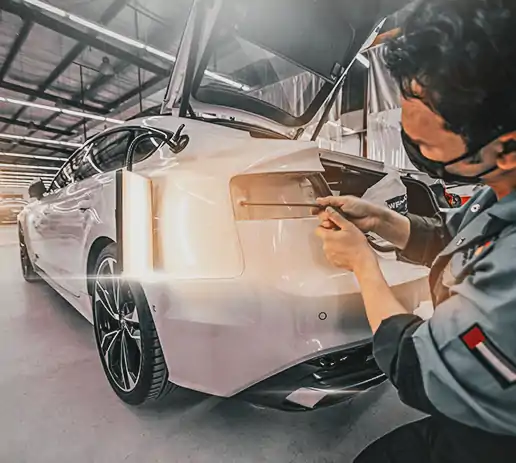
Ferraris are built for speed and style, but they’re not immune to faults. From overheating to gearbox issues, this guide reveals the most common Ferrari problems and how to prevent them to keep your supercar in peak condition. Ferrari Performance Meets Precision Maintenance Owning a Ferrari is exciting. The noise, the sharp lines, the badge on the bonnet: it’s an experience as much as it is a car. But they’re not trouble-free. In Dubai and Abu Dhabi, the mix of heat, heavy traffic, and dusty roads makes issues appear faster than most owners expect. Knowing where Ferraris usually fail gives you a head start in keeping them on the road and out of the workshop. Understanding Ferrari Engineering: Why Even the Best Have Faults Ferraris are built for performance first. High-revving engines, lightweight alloys, and electronics that watch every move make them incredible to drive. The catch is that this also makes them less forgiving. A small leak or a lazy sensor can spiral into a much bigger fault. That’s the trade-off: unmatched driving pleasure, but only if you stay ahead with maintenance. Transmission Troubles: Common Ferrari Gearbox Issues Ferrari gearboxes are brilliant when they’re working right. Shifts are fast, smooth, and precise. But when something’s off, you’ll feel it quickly. Jerky gear changes, hesitation, or warning lights are all early warnings. In UAE conditions, with traffic and constant heat, clutches and hydraulics wear out faster than usual. Ignore the signs and you’ll be facing one of the most expensive fixes on the car. Other systems that often cause headaches include: Suspension & Steering System Failures: Ferrari suspensions are tuned for track-style handling. City roads are far less kind. Worn bushings, stiff racks, and knocks from the front end are common. If the car pulls to one side or steering feels heavy, it’s time for an inspection before it snowballs. Overheating and Cooling System Failures: These engines already run hot, and UAE summers only push them harder. Weak fans, clogged radiators, or faulty thermostats make overheating a common issue. If the gauge climbs while you’re stuck in traffic, don’t brush it off. A coolant flush or radiator check now is far cheaper than an engine rebuild later. Ferrari Electrical Faults and Battery Drain Issues: Many Ferrari owners complain about electrics. Dead batteries, random warning lights, or sensors giving false readings are typical. Because systems are linked, one weak battery or frayed wire can trigger several errors. Regular diagnostics and a healthy battery keep things in check. Brake System Wear and Carbon Ceramic Issues: Carbon ceramic brakes are superb at high speed. In daily traffic, they’re less forgiving. Squealing, cracks, or uneven wear show up faster than most expect. Replacement costs are high, so regular checks are the safest way to avoid sudden shocks. Ferrari Oil Leaks and Engine Sealing Failures: Heat and pressure eventually wear seals down. A drip of oil under the car or a burnt smell under the bonnet shouldn’t be ignored. Small leaks can become major engine problems if left too long. Ferrari Fault Diagnosis Technology: How German Experts Stands Apart Ferraris can’t be diagnosed with generic tools. Their systems need specialised software to read codes correctly and run live tests. Many small garages don’t have this equipment, which leads to guesswork. Workshops like German Experts use dealer-level scanners and technicians trained specifically on Ferrari systems. That accuracy matters. It means the problem is identified properly and fixed the first time, without unnecessary parts or wasted costs. Ferrari Maintenance Schedule: Preventing Problems Before They Start Preventing problems is always cheaper than fixing them. A structured maintenance routine keeps a Ferrari in good shape and protects resale value. Some of the essentials include: Oil and Fluid Changes: Engines and gearboxes rely on clean fluids. Delay changes and wear sets in quickly. Cooling System Flushes: UAE heat stresses cooling systems. Flushing coolant and checking hoses keeps them reliable. Brake Inspections: Carbon ceramic discs need regular checks. Early detection of cracks or pad wear avoids full replacements. Electrical System Scans: Routine diagnostics catch weak sensors and wiring faults before they multiply. Suspension and Steering Checks: Bushings and racks wear quickly. Inspections stop handling problems from getting worse. Choosing the Right Ferrari Repair Specialist in Abu Dhabi or Dubai Handing a Ferrari to the wrong workshop is risky. Look for: Experience with Ferrari Models: A seasoned Ferrari specialist understands both classic and modern systems. Dealer-Level Equipment: Without the tools of a Ferrari service centre, faults can go undetected. Clear Communication: Good workshops explain issues simply and provide upfront costs. Genuine Parts: Using originals protects both performance and safety. Convenience: Whether it’s a car service in Abu Dhabi or Dubai, location makes it easier to keep up with maintenance. Final Thoughts: Owning a Ferrari Shouldn’t Mean Constant Worry Ferraris come with their quirks. Gearbox slips, cooling troubles, or electrical faults are all common. But with the right approach, they don’t have to dominate ownership. Stick to a proper routine, work with a trusted Ferrari mechanic, and problems can be managed before they grow. That way, the focus stays where it should be: on the drive. FAQs What are the signs my Ferrari needs immediate repair? Warning lights, overheating, leaks, or suspension noises. All should be checked quickly. Is Ferrari maintenance more expensive in Dubai or Abu Dhabi? Prices are similar. The main difference is parts availability and the workshop you choose. Can I use a general mechanic for Ferrari auto repair? Not advised. Most general garages don’t have the tools or experience for proper Ferrari auto repair. Why choose a Ferrari specialist instead of a dealership? Dealerships are often more expensive. A workshop focused on Ferrari repair offers the same standard of work, often with more personal service.

Audi owners in Dubai know the thrill of precision engineering, but that performance depends heavily on a well-functioning transmission. When it starts acting up—whether through slipping gears, delayed shifts, or strange noises—your driving experience changes completely. Given Dubai’s harsh traffic and extreme weather, Audi transmission repair in Dubai isn’t just routine maintenance; it’s specialized work that demands real expertise. Introduction: Why Audi Transmission Repair Demands Specialized Attention in Dubai Audi cars are built with precision. You feel it every time you change lanes on Sheikh Zayed Road or head out for a late-night run on the bypass. But when the transmission starts to fail, that precision disappears. Suddenly, the car feels heavy. It hesitates, slips, or refuses to shift the way it should. Dubai doesn’t make it easy on gearboxes either. Stop-start traffic in Marina, weekend drives to Abu Dhabi, and scorching summer heat all speed up wear. That’s why Audi transmission repair in Dubai has to be carried out by people who know these cars inside out. General fixes won’t do. Overview of Audi’s Transmission Systems (S-Tronic, Tiptronic, Multitronic) Audi has used different gearboxes over the years, and each behaves differently. S-Tronic (DSG): A dual-clutch system. It’s quick and sporty but often runs into mechatronic or clutch wear problems. Tiptronic: A torque-converter automatic. Known for smoothness and durability, especially in Quattro models, though still sensitive if fluid changes are delayed. Multitronic CVT: Designed for efficiency, but it didn’t age well. Many owners saw early failures, and Audi eventually dropped it. A real Audi gearbox specialist in Dubai knows how each system reacts in local conditions. That knowledge is what makes the difference between a quick patch and a lasting repair. Most Common Audi Transmission Problems Seen in Dubai The climate and driving habits here create a pattern. Audi drivers complain about the same transmission issues over and over. A few examples: Slipping gears – This is the classic one. You’ll press the accelerator, revs climb, but the car doesn’t pick up speed. It’s the clearest sign the Audi transmission is slipping. Jerky or delayed shifting – Many describe this as Audi shifting problems in Dubai, especially during rush hour when gears keep hunting back and forth. Fluid leaks – Hot weather breaks down seals. You’ll often notice small puddles under the car after parking in the sun. Warning lights – Transmission sensors are quick to flag faults. Ignoring them usually turns a minor service into full Audi gearbox repair in Dubai. Early Warning Signs of Audi Gearbox Failures Gearbox failures don’t come out of nowhere. The car usually sends warnings first. If you catch them early, you save money. If you ignore them, you don’t. Watch for: Slow response – Shifting into drive or reverse and waiting longer than normal before the car moves. Odd noises – Grinding, clunking, or humming when the car changes gear. They don’t disappear on their own. Vibrations – A shudder when accelerating, especially at higher speeds, often points back to the gearbox. Smell of burnt fluid – After crawling through Marina traffic, if you step out and notice a sharp burning smell, the transmission is probably overheating. This is the time to book Audi automatic transmission service in Dubai. Factors That Accelerate Transmission Wear in Dubai’s Climate Dubai punishes gearboxes. A few reasons why they wear faster here than in cooler cities: Heat—Transmission fluid breaks down faster, losing its ability to cool and lubricate. Traffic—Stop-start crawling on Sheikh Zayed Road pushes clutches and solenoids harder. Sand and dust—even fine particles can slip past seals and wear out moving parts. Driving habits—Heavy towing, quick bursts of acceleration, and desert drives all strain the system. This is why Audi transmission service in Dubai often has to be scheduled sooner than the standard factory recommendation. Step-by-Step Audi Transmission Diagnosis at German Experts At German Experts, diagnosis is not guesswork. It’s a process. Here’s how it usually unfolds: Electronic scan – Specialist tools check for error codes hidden in the transmission control unit. Visual check – Leaks, fluid levels, and seals are inspected. A lot can be spotted here before opening anything. Test drive – The car is driven under controlled conditions to replicate problems like Audi shifting problems in Dubai. Internal inspection – If needed, the gearbox is opened to examine clutches, solenoids, and the mechatronic unit. The point of this step-by-step process is to fix the real cause, not just the surface symptom. Genuine Parts vs. Aftermarket: What We Use for Audi Transmission Repairs Cutting corners on transmission parts is never a good idea. German Experts rely on genuine or OEM-grade components. These are designed to match Audi’s engineering, both mechanically and electronically. Aftermarket spares can look the same, but they rarely perform the same. They often lead to repeat breakdowns, which means another visit for Audi gearbox repair in Dubai. With genuine parts, repairs last longer and performance stays consistent. Audi Transmission Maintenance Tips to Avoid Costly Repairs Good habits can extend the life of your gearbox. A few to keep in mind: Change fluid earlier—don’t wait for the longest interval in the service book. Dubai’s heat shortens fluid life. Check the ground—a small drip under the car could be the start of a major leak. Be gentle in traffic—constant hard acceleration in congestion is a quick way to wear things out. Don’t ignore slipping—if the Audi transmission is slipping, get it checked right away. Waiting only makes repairs more expensive. Routine service—A scheduled Audi transmission service in Dubai is the best way to catch small issues before they become big ones. Why Choose German Experts for Audi Transmission Repair in Dubai Not every garage can handle Audi gearboxes. German Experts can, and that’s why they’re trusted as an Audi gearbox specialist in Dubai. Their workshop is equipped with dealer-level diagnostics. Their technicians are trained on German vehicles, not just general systems. Repairs are carried out with genuine parts, whether it’s a routine Audi automatic transmission service in Dubai or a full rebuild. More importantly, their experience means they’ve seen these problems before, and they know how to fix them right. Final Thoughts: Protecting Your Audi’s Performance with Precision Repair Audi transmissions are complex machines. They were built for performance, but they rely on proper care. Ignoring early signs or cutting corners with parts is what turns small repairs into costly rebuilds. The good news is that with expert attention, your gearbox can easily last well beyond 150,000 kilometers, even in Dubai’s harsh conditions. Choosing German Experts for Audi transmission repair in Dubai ensures that your car keeps the performance Audi drivers expect. FAQs – Audi Transmission Service by German Experts Dubai How do I know if my Audi transmission needs repair? If you notice slipping gears, rough shifting, strange noises, or dashboard warnings, it’s time to see an Audi transmission specialist in Dubai. What is the average cost of Audi transmission repair in Dubai? It depends. A service might cost a few hundred dirhams, while a rebuild or replacement can go into the thousands. Early checks always cost less. Why should I choose German Experts over a general repair shop? Because Audi gearboxes are advanced systems. German Experts perform accurate Audi gearbox repair in Dubai with certified technicians and dealer-level tools. Do you offer diagnostics for all Audi transmission types in Dubai? Yes. From S-Tronic to Tiptronic and Multitronic, they provide complete Audi automatic transmission services. Can German Experts repair Audi DSG (S-Tronic) transmissions? Yes. Common DSG issues like clutch wear, fluid leaks, or mechatronic faults are regularly handled by German Experts.

As the UAE National Day approaches, we at German Experts reflect on the unique bond we share with this remarkable nation. This is more than just a date on the calendar; it symbolizes a fusion of values, innovation, and a unique vision for the future that inspired German Experts to shape a 10-year success story as the UAE’s leading service maintenance center. We celebrate UAE National Day and our business growth with immense enthusiasm driven by the synergy between our organizational principles and the dynamic spirit of the UAE. In the following paragraphs, we’ll highlight how UAE values have not only inspired German Experts but also seamlessly aligned with our own values and vision, driving our success and shaping our journey. German Experts and the UAE's Vision for Excellence At German Experts, we pride ourselves on our meticulous approach to every service we provide. This dedication to organization and passion mirrors the UAE's commitment to structured growth and development. The UAE support for business has rapidly transformed into a global hub of creativity and progress, driven by the relentless pursuit of order and efficiency. This alignment of values has fostered a deep connection between our organization and the UAE. Diversity and Multiculturalism One of the most striking similarities between German Experts and the UAE is our embrace of diversity. The UAE is a melting jar of cultures, bringing together people from around the globe. This multicultural environment is a fertile ground for creativity and innovation. At German Experts, our diverse team is a powerhouse of ideas where every voice is heard, and every perspective is valued. This diversity in brands and backgrounds fuels our creativity, enabling us to offer innovative solutions that meet the unique needs of our clients. Our team members come from various cultural and professional backgrounds, each bringing a unique perspective. This diversity not only enriches our workplace but also boosts our ability to understand and meet the diverse needs of our clients. The UAE's multicultural spirit is mirrored in our practices, where collaboration and inclusivity drive our innovative processes. This shared value of embracing diversity has been a cornerstone of our business success in the UAE, allowing us to thrive in a competitive industry. Innovation and Revolution Innovation is at the core of the UAE's and German Experts' identities. The UAE's visionary leadership has positioned the nation as a pioneer in various fields, from technology to sustainability. Similarly, German Experts have redefined the service maintenance industry by creating a unique and unparalleled concept that sets them apart. Before their launch, customers were limited to two extremes: dealership services with high costs or local garages with inconsistent quality. German Experts bridged this gap by introducing a premium alternative, combining the expertise of certified technicians with cutting-edge technology. Their approach empowers customers to oversee every step of their vehicle’s progress, communicate effortlessly with the team through a state-of-the-art mobile app, and experience transparency like never before. This revolutionary concept has not only raised the bar but also transformed how service centers operate, with even more innovative solutions on the way. We are not just building projects or providing services; we are shaping the future. This shared drive for innovation has been a cornerstone of our success, allowing us to stay ahead of the curve and provide the best results. Safety: A Promise We Keep In both the UAE and German Experts, safety is paramount. The UAE's stringent safety standards ensure the well-being of its residents, visitors, and investors, creating a secure environment for growth and development. At German Experts, safety isn't just a protocol; it's our promise. Our commitment to keeping the highest safety standards is unwavering, ensuring every project is executed with the utmost care and precision. This dedication to safety has won us the trust of our customers and positioned us as a leader in the industry. We implement rigorous safety protocols across all our operations. From routine check-ups to final delivery, safety is at the core of everything we do. Our service center operates in a secure, ISO-standardized environment, ensuring the highest standards of protection for both our employees and customers. Our team of experts engages in comprehensive training to stay ahead with the latest safety protocols, cutting-edge technologies, and advanced repair techniques. This unwavering commitment guarantees that every car is serviced with precision and delivered with comprehensive safety checks. We take it a step further by providing customers with timely updates and critical safety information, enabling them to make well-informed decisions that protect their vehicles and their own safety. By embedding safety into every aspect of our operations, we deliver unparalleled quality and reliability, setting a new benchmark for excellence in car maintenance while building trust and peace of mind. A Decade of Success This year marks a significant milestone for German Experts as we celebrate 10 years of business success. Our journey has been featured by a steadfast commitment to delivering top-notch quality and ensuring our clients' comfort. As we reflect on these achievements, our CEO, Ibrahim Ezz El Din, dedicates GE's success to the UAE: “As we celebrate this incredible 10-year journey and the spirit of the UAE National Day, I want to take a moment to extend my deepest gratitude to this great nation that has made all of this possible. Over the past decade, we’ve been fortunate to thrive in an environment that supports innovation, entrepreneurship, and progress. From the UAE’s economic stability to its skilled workforce, world-class infrastructure, and visionary leadership, this country has provided the solid foundation for our success.” Lessons from UAE for Business Growth The UAE's development model has offered valuable lessons for our growth strategy. We've learned the importance of combining innovation with tradition, embracing diversity while maintaining core values, and pursuing excellence while ensuring sustainability. These lessons continue to shape our approach to business and drive our future planning. As we celebrate UAE National Day, we also celebrate the strong bond between German Experts and the UAE. Together, we are more than a team; we are a family shaping tomorrow. Our shared values of excellence, innovation, diversity, and safety have created a synergy that drives us forward. This unique celebration is a testament to the strength of collaboration and its impact on shaping a brighter future. Join Us in Celebrating UAE National Day We invite you to join us in this unique celebration. UAE National Day is not just a holiday; it reflects our shared journey and the values that unite us. As we look to the future, we remain committed to upholding these values and delivering exceptional results. Happy UAE National Day from German Experts!

We've all been there – you're driving along, minding your own business, when suddenly you feel something brushing against the top of your head. You look up, and there it is, your car's roof lining, drooping down like a tired old curtain. It's not just an eyesore; it can be distracting and even dangerous if it obstructs your view. But fear not! In this article, we'll guide you through roof lining repair and help you restore your vehicle's interior to its former glory. Understanding the Problem: Why Does Roof Lining Sag? Before we dive into the fix, let's take a moment to understand why this happens in the first place. Car roof linings, or headliners, are typically made of a foam backing covered with fabric. Over time, heat and humidity can cause the adhesive holding this material to the roof to break down. Gravity does the rest; before you know it, your car has a saggy ceiling. It's a common issue, especially in older vehicles or those frequently exposed to extreme temperatures. Assessing the Damage Now, let's be honest with ourselves. Not every car repair is suitable for a DIY approach. When it comes to roof lining, whether you can handle the damage yourself or need professional help depends on the extent. If the sagging is minimal and confined to a small area, you can handle it independently. However, if the entire headliner is falling or there's significant water damage, it might be best to leave it to the experts. Preparing for the Fix Assuming you've decided to take on this project yourself, let's discuss what you'll need. For a basic roof lining repair, you'll want to gather: A spray adhesive designed for automotive use Straight pins or thumbtacks A small brush or roller Cleaning supplies (for both the roof and your hands) A pair of scissors Some patience (trust us, you'll need it) Remember, having the right equipment can make all the difference between a frustrating experience and a satisfying DIY victory. Preparing Your Workspace Before you start spraying adhesive willy-nilly, take some time to prepare your workspace. This job can get messy, so you'll want to protect the rest of your car's interior. Remove any items from the vehicle that might get in your way, and cover the seats and floor with old sheets or plastic. Working in a well-ventilated area is also a good idea – nobody wants to get high on adhesive fumes while trying to fix their car! A Quick Fix for Small Sags If you're dealing with a small area of sagging, the pin-up method might be your best bet. Start by cleaning the area thoroughly. Then, carefully push the sagging material back up against the roof. Use straight pins or thumbtacks to hold them in place, making them through the fabric and into the foam backing. This method works well for temporary fixes or tiny areas of sagging. Tackling Larger Areas For more extensive sagging, you'll need to break out the adhesive. Begin by carefully peeling back the loose fabric. Clean the roof and the back of the fabric to ensure good adhesion. Apply the adhesive spray to both surfaces in a thin, even layer, following the manufacturer's instructions. Please ensure that the adhesive has become tacky before carefully pressing the fabric back into place. Smooth out any wrinkles as you proceed. Letting It Set Once you've reattached the fabric, resist the urge to hop in your car immediately and go for a spin. Give the adhesive time to set correctly. This usually takes a few hours, but waiting overnight is best. Use pins or a broom handle to keep pressure on the repaired area, ensuring good contact between the fabric and the roof. Dealing with Stubborn Wrinkles Sometimes, even after the adhesive has dried, you might notice wrinkles or bubbles in the fabric. Don't panic! This is where a little heat can come in handy. Use a hair dryer on a low setting to gently warm the fabric. As it heats up, carefully smooth out any imperfections with your hand. Be cautious not to overdo it—too much heat can damage the fabric or weaken the adhesive. Knowing When to Call the Pros While many roof lining issues can be tackled at home, there are times when it's best to admit defeat and call in the professionals. If your DIY efforts aren't yielding the desired results, or if you're dealing with extensive damage, water stains, or mold, it's time to consult an expert. They have the tools and expertise to replace the headliner if necessary, ensuring a factory-fresh finish. Preventive Measures Now that you've fixed your roof lining, you'll want to keep it looking good for as long as possible. Regular cleaning can help prevent dirt and oils from weakening the adhesive. If you live in a particularly hot or humid climate, consider using a windshield sun shade when parked to reduce heat buildup inside the car. And if you notice any small areas starting to sag, address them promptly before they become more significant problems. Conclusion Fixing your car's roof lining might seem daunting, but with patience and the right approach, it's a repair that many car owners can handle. You will save money on professional maintenance and know you've tackled a standard car problem head-on (pun intended). So the next time you feel that telltale brush against your head while driving, don't despair. Roll up your sleeves, gather your supplies, and prepare to give your car's interior a new lease on life. Your newly taut roof lining will constantly remind you of your DIY prowess whenever you hit the road.

We've all been there – that sinking feeling when we spot a dent in our beloved vehicle. Whether from a runaway shopping cart, a stray baseball, or an unfortunate parking lot mishap, dents are unavoidable in car ownership. But fear not! Auto body repair has evolved, and paintless dent repair (PDR) has emerged as a game-changing solution. This article will study the numerous advantages of paintless dent repair and why it's becoming the go-to option for savvy car owners. What is Paintless Dent Repair? Before we discuss the benefits, let's first understand paintless dent repair (PDR). PDR removes minor dents and dings from a vehicle's body without needing traditional body filler or repainting. Professional technicians use specialized tools to carefully massage the dented metal from behind the panel back into its original shape. It's like magic—the dent disappears, and your car's original finish remains intact. Preserving Your Vehicle's Original Paint One of the most prominent advantages of paintless dent repair is that it preserves your car's original factory paint. Maintaining a vehicle's original paint is crucial for its resale value and overall appearance. Traditional dent repair methods often involve sanding, filling, and repainting, which can only partially restore the factory finish. With PDR, worry no more about color matching or paint blending—your car's original paint remains untouched and pristine. Cost-Effective Repairs Our wallets often brace for impact when it comes to auto body repair. However, paintless dent repair offers a refreshingly cost-effective alternative to traditional methods. The overall cost is significantly lower because PDR doesn't require expensive materials like paint and body filler and takes less time to complete. This means you can keep your car looking great without breaking the bank. It's a win-win situation that leaves your vehicle and finances in better shape. Time-Saving Convenience In our fast-paced world, time is a precious commodity. Conventional dent repair can take days or weeks, leaving you without your automobile for an extended period. Paintless dent repair, on the other hand, is remarkably quick. Most PDR jobs can be completed in hours rather than days. This means less time without your car and more time enjoying the open road. For those of us with busy schedules, the time-saving aspect of PDR is a major advantage that shouldn't be overlooked. Environmentally Friendly Approach As we become more conscious of our environmental impact, it's worth noting that paintless dent repair is a much greener option compared to traditional methods. PDR doesn't involve using harmful chemicals, paints, or solvents that can harm the environment. There's no need for energy-intensive paint booths or the disposal of hazardous materials. By choosing PDR, we're not just taking care of our cars but also doing our part to reduce our ecological footprint. Maintaining Your Vehicle's Value Many consider their cars significant investments, and maintaining their value is crucial. Paintless dent repair is vital in preserving your vehicle's resale value. Because PDR doesn't alter your car's original paint or structure, it doesn't impact the vehicle's history in the same way that traditional bodywork does. This means that when it comes time to sell or trade in your car, you can do so confidently, knowing that extensive repairs haven't diminished its value. Versatility in Repair Paintless dent repair is remarkably versatile and can address various dents and dings. PDR technicians can work wonders on various types of damage, from small door dings to larger dents caused by hail damage. However, it's important to note that PDR isn't suitable for every situation. Dents with creases or damage to the paint may require traditional repair methods. A skilled PDR technician can assess the damage and recommend the best course of action for your specific situation. Insurance-Friendly Option When dealing with insurance claims, paintless dent repair can be a favorable option. Many insurance companies prefer PDR because of its cost-effectiveness and quick turnaround time. This can result in lower premiums and deductibles for policyholders. Additionally, because PDR is less invasive than traditional repair methods, it's less likely to cause complications or additional damage during the repair process, which is another factor that insurance companies appreciate. The Expertise Factor While PDR might seem simple, it requires high skill and expertise to execute properly. Professional PDR technicians undergo extensive training to perfect their craft. They develop an intimate understanding of how different metals behave and the precise amount of pressure needed to reshape a panel without damaging the paint. When you choose paintless dent repair from a reputable provider, you're not just choosing a method – you're choosing expertise that ensures your vehicle is in good hands. Conclusion In conclusion, paintless dent repair offers many advantages, making it an attractive option for car owners. From preserving your vehicle's original paint and value to providing a cost-effective and time-saving solution, PDR has revolutionized how we approach minor auto body repairs. It's an environmentally friendly option that aligns with our growing ecological awareness, and its insurance-friendly nature makes it a practical choice for many situations. As we navigate the challenges of car ownership, it's reassuring to know that solutions like paintless dent repair exist. By understanding and embracing this innovative technique, we can keep our vehicles looking their best without the hassle, expense, and environmental impact of traditional repair methods. So, the next time you find yourself face-to-face with an unwelcome dent, remember that paintless dent repair might be the perfect solution to restore your car's flawless appearance.

We often take our car's windscreen for granted, viewing it simply as a barrier between us and the elements. However, this unassuming piece of glass plays a critical role in our safety on the road. In this article, we'll explore why timely windscreen replacement is not just a matter of aesthetics but a crucial aspect of vehicle maintenance that can save lives. So buckle up as we take you on a journey through the world of windscreen safety and the importance of prompt replacement. The Hidden Dangers of a Damaged Windscreen When we think about automobile safety, our minds often jump to airbags, seatbelts, and brakes. But the windscreen is an unsung hero in the realm of vehicle safety. A damaged windscreen, even with seemingly minor cracks or chips, can affect the structural integrity of your vehicle. In a rollover accident, the windscreen provides up to 30% of the vehicle's structural strength. Imagine driving with a weakened support system - a risk we shouldn't be willing to take. How Small Damage Becomes a Big Problem We've all been there - a tiny chip appears on our windscreen, and we think, "I'll get to that later." But here's the thing: that small chip can quickly turn into a larger crack. Temperature changes, road vibrations, and even the pressure of cleaning your windscreen can cause minor damage to spread. What started as a small, easily repairable chip can suddenly become a full-blown crack requiring complete windscreen replacement. By addressing the issue promptly, we can often prevent more significant and costly maintenance. Clear Vision Let's face it - driving requires our full attention and clear vision. A damaged windscreen can significantly impair our view of the road, creating blind spots or distorting our perception. This is particularly dangerous in low-light conditions or during adverse weather. We wouldn't drive with half-closed eyes, so why would we risk driving with a compromised windscreen? Timely replacement ensures we have the clearest possible view of the road ahead, helping us react quickly to potential hazards. The Airbag Connection Many people don't realize that the windscreen plays a vital role in the deployment of the passenger-side airbag. In many vehicles, the airbag uses the windscreen to support itself when it inflates. A weakened or improperly installed windscreen may not be able to withstand the force of a deploying airbag, potentially compromising this vital safety feature. By ensuring our windscreen is in top condition, we also ensure that all our vehicle's safety systems can function as intended. UV Protection Modern windscreens do more than keep the wind out of our hair. They're designed with a special layer that filters out harmful UV rays. This protects our skin and eyes while driving and helps prevent the interior of our car from fading and cracking as a result of sun exposure. A damaged windscreen may have compromised UV protection, exposing us and our vehicle's interior to harmful rays. Timely replacement ensures we maintain this essential protective barrier. The Legal Perspective While safety should be our primary concern, it's worth noting that driving with a damaged windscreen can also land us in hot water legally. Many jurisdictions have specific regulations about windscreen conditions, and driving with a significantly damaged windscreen can result in fines or even points on our license. By promptly replacing a damaged windscreen, we're protecting ourselves physically and legally. The False Economy of Delaying Replacement We get it - replacing a windscreen can seem like a significant expense. But here's the thing: delaying replacement often costs more in the long run. As damage spreads, the repair becomes more complex and expensive. Moreover, driving with a damaged windscreen increases the risk of accidents, leading to much higher vehicle repairs, medical bills, and insurance premiums. Looking at it this way, timely windscreen replacement is a smart financial decision. The Environmental Angle In our increasingly eco-conscious world, considering the environmental impact of our vehicle maintenance decisions is worth considering. Many of us might need to realize that windscreens can be recycled. The glass and PVB (polyvinyl butyral) layer can be separated and reused in various applications. By replacing our windscreen when needed, we're ensuring our safety and participating in a cycle of responsible resource use. It's a small step that contributes to a more sustainable automotive industry. Why Expert Installation Matters When it comes to windscreen replacement, the quality of installation is just as essential as the quality of the glass itself. A poorly installed windscreen can compromise its structural integrity and safety features. Professional installers have the expertise, tools, and materials to ensure your new windscreen is fitted correctly, providing optimal safety and performance. They can also advise on the best type of glass for your vehicle model, ensuring you get the most suitable replacement. Conclusion In conclusion, timely windscreen replacement is more than just a cosmetic concern. It's a crucial aspect of automobile maintenance that directly impacts our safety, the functionality of our vehicle's safety systems, and even our legal compliance on the road. By understanding the importance of a well-maintained windscreen and addressing any damage promptly, we're taking a proactive step towards safer driving. Remember, that small chip or crack might seem insignificant now, but it has the potential to become a much bigger problem if addressed. So the next time you notice any damage to your windscreen, don't put off dealing with it. Your safety and your passengers' safety is worth the investment in timely replacement. After all, when it comes to road safety, having a clear view of the path ahead is not just desirable - it's essential.

We've all been there – driving down a dark road, squinting to see what lies ahead, wondering why our headlights seem dimmer than they used to be. It's a common issue many car owners face but is often overlooked. Cloudy, yellowed, or hazy headlights aren't just an aesthetic problem but a serious safety concern. That's where professional headlights restoration services come into play. In this article, we'll explore the numerous benefits of professionally restoring your headlights and why it's an investment that pays off in more ways than one. The Science Behind Headlight Degradation Before we discuss the benefits of restoration, it's essential to understand why headlights degrade. Most modern headlights are made from polycarbonate plastic, which is durable and resistant to shattering. However, this material is also porous and susceptible to oxidation when exposed to UV rays, pollution, and other environmental factors. Over time, this exposure causes the headlight lens to become cloudy, yellow, or hazy, significantly reducing the amount of light that can pass through. Safety First: Improved Visibility on the Road The most crucial benefit of professional headlight restoration is its dramatic visibility improvement. We often need to pay more attention to how much our driving safety depends on clear, bright headlights. Restored headlights can increase light output by up to 100%, which means you'll be able to see further down the road and have a wider field of vision. This enhanced visibility is particularly important when driving at night or in poor weather conditions, helping you avoid accidents and obstacles you might otherwise miss. Cost-Effective Alternative to Replacement Many car owners assume replacement is the only option when faced with cloudy headlights. However, professional headlight restoration is a far more cost-effective solution. New headlight assemblies can be a significant investment, depending on your vehicle's make and model. In contrast, professional restoration services typically cost a fraction of that amount. By choosing restoration over replacement, we're saving money and reducing waste – a win-win for our wallets and the environment. Enhancing Your Vehicle's Appearance Let's face it – we all take pride in our cars' appearance. Cloudy headlights can make even the most well-maintained vehicle appear old and neglected. Professional headlight restoration can dramatically improve your car's appearance, making it look years younger. This aesthetic enhancement isn't just about vanity; it can also increase your vehicle's resale value. Potential buyers are more likely to be amazed by a car with clear, bright headlights that reflect overall good maintenance. Expertise and Specialized Equipment While DIY headlight restoration kits are available, they often provide temporary results. Professional headlight restoration services offer expertise and access to specialized equipment that at-home solutions can't match. Professionals use industrial-grade compounds, polishes, and UV-resistant sealants that provide long-lasting results. They also know to assess the extent of the damage and apply the appropriate techniques, guaranteeing that your headlights are restored to their clarity without risking damage to the surrounding paint or trim. Time-Saving Convenience In our busy lives, time is a precious commodity. While DIY headlight restoration might seem like a fun weekend project, it can be time-consuming and frustrating, especially if you need to familiarize yourself with the process. Professional services typically complete the restoration in hours, saving you valuable time and potential headaches. You can drop off your car and return to find your headlights looking as good as new without investing time and effort. Long-Lasting Results One of the most significant advantages of professional headlight restoration is the longevity of the results. While DIY kits might temporarily improve the appearance of your headlights, professional services use techniques and products that provide much longer-lasting clarity. Many professional services even offer warranties on their work, giving you peace of mind that your investment is protected. With proper care, professionally restored headlights can maintain their clarity for years, delaying the need for future restorations or replacements. Improved Fuel Efficiency Here's a benefit that might surprise you – clear headlights can improve fuel efficiency. How? When your headlights are cloudy, your car's computer may compensate by increasing the power to the bulbs, which in turn draws more energy from the alternator. This increased load on the electrical system can lead to slightly higher fuel consumption. Restoring your headlights to their original clarity ensures that your car's systems work as efficiently as possible. Environmental Considerations In an age where environmental consciousness is more important than ever, professional headlight restoration offers an eco-friendly alternative to replacement. By restoring rather than replacing, we're reducing the demand for new plastic headlight assemblies and keeping old ones out of landfills. It's a small step that contributes to overall sustainability in the automotive industry. Conclusion Professional headlight restoration is more than just a cosmetic fix – it's an investment in your vehicle's safety, efficiency, and longevity. The advantages of professional restoration are evident, from improved visibility and cost savings to enhanced appearance and environmental benefits. So the next time you find yourself squinting behind the wheel, remember that cloudy headlights aren't something you have to live with. A professional restoration service can bring back the brightness, ensuring you see the road ahead as clearly as possible. After all, there's no such thing as too much clarity when driving.
There's something magical about classic cars. They're not just vehicles; they're time machines that transport us to bygone eras, each with its unique story. For enthusiasts and collectors alike, restoring these automotive treasures is both a labor of love and a meticulous craft. In this article, we'll explore the techniques for authentic classic car restoration, delving into the intricate world of restoring these mechanical marvels back to their former glory. Understanding the Essence of Authenticity When we talk about authentic classic car restoration, we're referring to returning a vehicle to its original factory specifications. This means using period-correct parts, materials, and techniques to ensure the restored car is as close as possible to how it rolled off the assembly line decades ago. It's a challenging endeavor that requires patience, skill, and a deep respect for automotive history. Research: The Foundation of Authentic Restoration Before even picking up a wrench, the first step in any authentic restoration project is thorough research. We must become historians, diving into factory manuals, period photographs, and original documentation. This research phase is crucial for understanding the car's original specifications, from the exact shade of paint used to the type of screws that held the interior panels in place. This attention to detail separates a genuinely authentic restoration from a mere facsimile. Sourcing Original Parts Finding original parts is one of the most challenging aspects of authentic classic car restoration. While reproduction parts are readily available for many popular models, true authenticity often demands genuine, period-correct components. This can lead us to exciting treasure hunts through junkyards, swap meets, and online marketplaces. Sometimes, we may need to network with other collectors or specialists who can fabricate hard-to-find parts using original techniques. The Art of Metal Restoration Many classic cars have suffered from rust and body damage over the years. Authentic restoration requires skilled metalwork to restore these bodies to their original shape. This often involves techniques like lead loading, commonly used in the past but is now a rare skill. We might need to learn or seek experts in traditional panel beating and welding methods to ensure the body restoration is period-correct. Paint and Finish The paint job often catches the eye first, and getting it right is crucial for an authentic restoration. This isn't just about matching the color; it's about understanding and recreating the paint technologies of the era. For instance, many classic cars used lacquer paints, which have a distinct look and feel compared to modern urethanes. Mastering these older painting techniques can be challenging but is essential for achieving that authentic finish. Interior Restoration The interior of a classic car tells its own story, and restoring it authentically requires a keen eye for detail. Every element must be considered, from the correct grain of leather on the seats to the proper weave of the carpets. We often become experts in vintage textiles and materials, learning to recreate or source period-correct upholstery, dashboards, and trim pieces. Mechanical Restoration At the core of any classic car is its engine and mechanical systems. Authentic restoration here means getting the car running and ensuring it runs as it did when it was new. This might involve rebuilding carburetors, restoring original ignition systems, or re-manufacturing obsolete parts. It's a process that combines mechanical skill with historical knowledge as we strive to maintain the original engineering while addressing modern safety and reliability concerns. Electrical Systems Classic car electrical systems can be notoriously picky, and restoring them authentically presents unique challenges. We often decipher old wiring diagrams and source period-correct components like generators and voltage regulators. It's a delicate balance between maintaining originality and ensuring the car's electrical system is safe and reliable for modern use. Documentation Thorough documentation is critical throughout the restoration process. This helps us keep track of our progress and adds value to the restored vehicle. Detailed records of the restoration process, which should include before-and-after photos, parts receipts, and notes on techniques used, create a historical record that enhances the car's provenance and authenticity. The Challenges of Modernization vs. Authenticity One of the ongoing debates in classic car restoration is the balance between authenticity and modernization. While purists argue for keeping everything original, others advocate subtle upgrades to improve safety, reliability, and performance. Finding the right balance is a personal decision, but in authentic restoration, any modifications should be reversible and respectful of the car's original character. The Importance of Patience and Persistence Authentic classic car restoration takes a lot of work. Bringing a car back to its original glory often takes years of dedication. Patience is not just a virtue in this field; it's a necessity. We must be prepared for setbacks, unexpected challenges, and the occasional need to redo work to get it right. This persistence is what ultimately leads to a truly authentic restoration. Conclusion Ultimately, authentic classic car restoration is more than just a hobby or a profession; it's a way of preserving automotive history. Each restored car becomes a rolling museum piece, a shining example of the skill and artistry of its time. As we apply these techniques for authentic restoration, we're not just fixing up old cars but preserving a piece of history for the benefit of future generations to appreciate and enjoy. It's a challenging journey, but for those who love classic cars, there's no greater satisfaction than seeing a piece of automotive history brought back to life exactly as it was meant to be.

When it comes to maintaining the interior of our beloved vehicles, the dashboard often takes center stage. It's the first thing we see when we slide into the driver's seat, setting the tone for the entire driving experience. Over time, however, even the most well-cared-for leather dashboards can show signs of wear and tear. This leaves many car owners pondering a crucial question: should you repair or replace your car's dashboard leather? In this comprehensive guide, we'll explore the factors to consider, the pros and cons of dashboard leather repair or replacement, and provide you with the insights you need to make an informed decision. Understanding Dashboard Leather Wear and Tear Before we tackle the repair-or-replace dilemma, it's essential to understand why dashboard leather deteriorates. Our vehicles' interiors are subjected to harsh conditions, from scorching sunlight to extreme temperature fluctuations. These factors can cause the leather to crack, fade, or peel over time. Additionally, daily use, accidental spills, and occasional scratches from keys or other objects can contribute to the wear and tear of your dashboard leather. Assessing the Damage The first step in deciding whether to repair or replace your dashboard leather is to assess the extent of the damage. Minor issues like small cracks, light fading, or minor scratches often qualify for repair. However, more severe damage like large tears, extensive peeling, or significant color changes might lean towards replacement. Take a close look at your dashboard under good lighting, and don't be afraid to run your hand over the surface to feel for any irregularities. The Case for Repairing Your Dashboard Leather Repairing your dashboard leather can be an attractive option for several reasons. First and foremost, it's often more cost-effective than a complete replacement, mainly if the damage is localized. Many leather repair kits are available on the market, allowing for DIY solutions that can save you significant money. Additionally, repairing your existing dashboard maintains the original look and feel of your vehicle's interior, which can be particularly important for classic or luxury cars where authenticity is critical. DIY Leather Repair: Pros and Cons For the hands-on car enthusiast, DIY leather repair can be rewarding. Modern repair kits come with various tools and materials, including leather fillers, color-matching dyes, and clear sealants. The process typically involves: Cleaning the damaged area. Applying a filler if necessary. Matching the color. Sealing the repair. While this approach can yield impressive results, it's important to note that it requires patience, attention to detail, and a steady hand. The main advantage is cost savings, but the potential downside is that without proper skill, the repair might be noticeable or less durable than a professional job. Professional Leather Repair Services Professional leather repair services are worth considering if you need more confidence in your DIY skills or if the damage is more extensive. Experienced technicians have access to specialized tools and high-quality materials that can often restore your dashboard to near-original condition. With greater precision, they can handle more complex repairs, such as large tears or severe color fading. While more expensive than DIY options, professional maintenance can often extend the life of your dashboard leather significantly, potentially saving you money in the long run. When Replacement Becomes Necessary There comes a point when repairing your dashboard leather is no longer feasible or cost-effective. If the damage is widespread, multiple repair attempts have failed, or the leather has degraded to the point where it's affecting the structural integrity of the dashboard, replacement might be your best option. Additionally, if you want to completely change the look of your interior or upgrade to a higher quality leather, replacement allows for a fresh start. The Replacement Process: What to Expect Replacing your dashboard leather is a more involved process than repair. It typically requires removing the entire dashboard, which can be complex depending on your vehicle model. The new leather is then carefully stretched and fitted over the dashboard frame, ensuring a smooth, wrinkle-free finish. This process is best left to professionals who have experience with your specific make and model. While more expensive upfront, a complete replacement can dramatically improve the look and feel of your car's interior, potentially increasing its resale value. Cost Considerations: Repair vs. Replace When weighing your options, cost is likely to be a significant factor. Repair fees can vary widely based on the loss and whether you opt for a DIY or professional approach. DIY kits can range from $20 to $100, while professional repairs might cost anywhere from $200 to $500. Entire dashboard leather replacement can cost anywhere from $500 to a few thousand, based on the vehicle and the quality of leather chosen. Long-Term Value and Vehicle Resale Considerations It's essential to consider the long-term value of your decision. A well-executed maintenance can prolong the life of your dashboard and maintain your car's value. However, if you plan to sell your vehicle soon, a complete replacement might offer a better return on investment by significantly improving the interior's appearance. Consider your car's overall value and how long you plan to keep it. Preventative Measures for Dashboard Leather Care Whether you repair or replace your dashboard leather, preventative measures can help extend its life. Regular cleaning with appropriate leather care products, using sun shades when parked, and avoiding harsh chemicals or abrasive materials can all contribute to maintaining your dashboard's appearance and integrity. Conclusion The decision to repair or replace your car's dashboard leather ultimately depends on various factors, including the damage's extent, budget, DIY skills, and long-term plans for the vehicle. By carefully assessing your dashboard's condition and considering each choice's pros and cons, you can make an informed choice that balances cost, aesthetics, and functionality. Remember, whether you opt for a simple repair or a complete replacement, investing in your car's interior enhances your driving experience and helps maintain your vehicle's value for years.

In the ever-evolving world of automotive technology, car programming has emerged as a game-changer, revolutionizing how we think about vehicle performance. Gone are the days when a car's capabilities were solely determined by its mechanical components. Today, the magic happens in the digital realm, where lines of code can transform a good car into an exceptional one. As we delve into this topic, we'll explore how car programming reshapes the automotive landscape, enhancing everything from fuel efficiency to driving dynamics. Understanding Car Programming At its core, car programming involves modifying the software that controls various aspects of a vehicle's operation. This software, often called the Engine Control Unit (ECU) or Engine Management System (EMS), acts as the car's brain, overseeing crucial functions like fuel injection, ignition timing, and turbo boost pressure. By tweaking this software, skilled technicians can unlock hidden potential within a vehicle, often achieving remarkable improvements in performance and efficiency. The Evolution of Car Programming The journey of car programming began in the 1980s with the introduction of electronic fuel injection systems. As vehicles became more computerized, the potential for software-based enhancements grew exponentially. What started as simple adjustments to fuel maps has evolved into a sophisticated process that can alter dozens of parameters simultaneously, fine-tuning a car's behavior to meet specific goals or driving conditions. Enhancing Engine Performance One of the most significant impacts of car programming is on engine performance. By carefully calibrating fuel and ignition maps, programmers can extract more power from an engine without compromising reliability. This process, often called "chipping" or "remapping," can significantly increase horsepower and torque. For many enthusiasts, this represents an attractive alternative to costly mechanical modifications, offering a balance of performance improvement and value. Optimizing Fuel Efficiency While performance gains often steal the spotlight, car programming can also improve fuel efficiency. By optimizing the engine's operating parameters, skilled programmers can help vehicles achieve better mileage without sacrificing drivability. This is particularly relevant today, where environmental concerns and rising fuel costs make efficiency a top priority for many car owners. Tailoring Transmission Behavior Modern automatic transmissions are engineering marvels but sometimes behave differently than drivers might prefer. Car programming allows for customizing shift points, speed, and torque converter lockup behavior. Depending on the driver's preferences, these adjustments can transform the driving experience, making a car feel more responsive and engaging or smoother and more relaxed. Enhancing Driving Dynamics Beyond the powertrain, car programming can influence a vehicle's overall driving dynamics. Programmers can alter how a car behaves in various driving situations by modifying parameters related to the ABS, traction control, and stability control. This can result in improved handling, better traction in adverse conditions, and a more engaging driving experience. Customization and Personalization One of the most exciting aspects of car programming is the level of customization it offers. Enthusiasts can tailor their automobiles to suit their needs and preferences, creating a truly personalized driving experience. The possibilities are endless, whether adjusting the throttle response for a more aggressive feel or fine-tuning the exhaust note for a sportier sound. Overcoming Factory Limitations Many vehicles come from the factory with certain limitations built into their software. These limitations might be in place for emissions regulations, warranty considerations, or to differentiate between model variants. Car programming can often overcome these artificial restrictions, allowing a vehicle to perform to its full potential. This can be particularly impactful for turbocharged engines, where boost pressure is often conservatively set from the factory. The Role of Data Logging and Analysis Advanced car programming is closely related to data logging and analysis. By capturing real-time data from a vehicle's sensors during operation, programmers can gain valuable insights into the car's performance. This data-driven approach allows for more precise tuning and can help identify areas for further optimization. Challenges and Considerations While car programming has numerous benefits, it's essential to approach the process with caution. Improper programming can reduce reliability, increase emissions, or cause engine damage. It's crucial to work with reputable professionals who understand the intricacies of vehicle systems and can ensure that any modifications are safe and compliant with local regulations. The Future of Car Programming As vehicles continue to evolve, becoming more electric and autonomous, the role of programming in shaping vehicle performance will only grow. We expect to see even more sophisticated software solutions that enhance performance and efficiency, integrate with smart infrastructure, and adapt to individual driving styles in real time. Conclusion The impact of car programming on vehicle performance is nothing short of revolutionary. From unleashing hidden horsepower to fine-tuning every aspect of a car's behavior, this technology has opened up new possibilities for manufacturers and enthusiasts. As we look to the future, it's clear that the marriage of mechanical engineering and software development will continue to push the limits of what's achievable in automotive performance. Whether you're a speed demon seeking the ultimate thrill or an eco-conscious driver looking to maximize efficiency, car programming offers a world of potential to enhance your driving experience.

In modern automotive technology, the Engine Control Unit (ECU) stands as the unsung hero, silently orchestrating the intricate dance of components that keep our vehicles running smoothly. As we delve into the fascinating world of car electronics, we'll explore how this small but mighty computer has revolutionized driving, improving everything from fuel efficiency to performance and environmental impact. What is an Engine Control Unit? At its core, the Engine Control Unit is the brain of your vehicle's engine management system. This sophisticated computer continuously monitors and controls various aspects of your car's operation, making split-second decisions to optimize performance, fuel economy, and emissions. Think of it as a vigilant conductor, ensuring that every instrument in the automotive orchestra plays in perfect harmony. The Evolution of Engine Management To truly appreciate the role of the ECU in modern cars, we need to take a quick trip down memory lane. In the early days of automobiles, engine management was purely mechanical, relying on carburetors and distributors to control fuel and ignition. As technology advanced, electronic fuel injection systems emerged, paving the way for today's sophisticated ECUs. Critical Functions of the ECU The ECU's responsibilities are vast and varied, touching nearly every aspect of your vehicle's operation. Let's explore some of its essential functions: Fuel Injection Control: The ECU oversees and regulates the quantity and timing of fuel injection into the engine with precision, guaranteeing maximum combustion and efficiency. Ignition Timing: By adjusting the spark timing, the ECU helps maximize power output while minimizing fuel consumption and emissions. Idle Speed Control: Ever wonder how your car maintains a steady idle? Thank your ECU for that smooth operation. Emission Control: Modern ECUs are crucial in managing exhaust emissions, helping vehicles meet increasingly stringent environmental regulations. Sensors and Data Collection The ECU relies on a network of sensors throughout the vehicle to perform its myriad functions. These electronic eyes and ears constantly feed data to the ECU, allowing it to make informed decisions in real time. From oxygen sensors monitoring exhaust composition to temperature sensors keeping tabs on engine heat, this constant stream of information ensures your car runs at peak performance. Adaptive Learning and Performance Optimization One of the most impressive features of modern ECUs is their ability to learn and adapt. As you drive, the ECU continuously fine-tunes its parameters based on your driving style, environmental conditions, and even the quality of fuel you use. This adaptive learning process ensures that your vehicle maintains optimal performance throughout its lifetime, regardless of changing conditions. ECU and Vehicle Diagnostics When that dreaded "Check Engine" light illuminates your dashboard, it's the ECU raising its hand to let you know something's amiss. Modern ECUs are equipped with sophisticated self-diagnostic capabilities, storing error codes that mechanics can read to identify and address issues quickly. This feature has revolutionized vehicle maintenance, making it easier and more efficient to keep our cars in top shape. Tuning and Performance Enhancement For automotive enthusiasts, the ECU represents a gateway to unlocking hidden potential in their vehicles. Through a process known as "chip tuning" or "remapping," skilled technicians can modify the ECU's programming to enhance performance, improve fuel efficiency, or even alter the vehicle's character to suit the driver's preferences. However, it's worth noting that such modifications should only be undertaken by professionals, as improper tuning can result in engine damage or increased emissions. The ECU's Role in Vehicle Safety Beyond engine management, the ECU plays a crucial role in various safety systems. From anti-lock braking systems (ABS) to traction control and stability control, the ECU works with other onboard computers to keep you safe on the road. The ECU communicates with advanced driver assistance systems (ADAS) in many modern vehicles, contributing to adaptive cruise control and automatic emergency braking features. The Future of Engine Control Units As we look to the future, the role of the ECU is set to expand even further. With the rise of electric and hybrid automobiles, ECUs are evolving to manage complex power distribution systems and battery management. Additionally, as cars become more connected, ECUs will likely play a role in over-the-air updates, allowing manufacturers to improve performance and add features remotely. Conclusion The Engine Control Unit may not be the most glamorous component of your vehicle, but its impact on modern automotive technology cannot be overstated. From enhancing fuel efficiency and reducing emissions to enhancing performance and safety, the ECU truly is the unsung hero of the automotive world. As we continue to push the boundaries of what's possible in vehicle technology, one thing is sure: the ECU will remain at the heart of innovation, silently ensuring that our journeys are smoother, safer, and more efficient than ever before.

In the ever-evolving world of automotive technology, car navigation systems have come a long way from the days of paper maps and printed directions. Today, we're witnessing a revolution in how we navigate our vehicles, with cutting-edge technologies transforming the driving experience. From augmented reality displays to AI-powered route optimization, the latest car navigation update technologies are not just about getting from point A to point B; they're about creating a safer, more efficient, and more enjoyable journey for drivers and passengers alike. The Rise of Augmented Reality Navigation One of the most exciting developments in car navigation technology is integrating augmented reality (AR) into navigation systems. AR overlays digital information in the real world, enhancing the navigation experience for drivers by making it more intuitive and immersive. Imagine seeing directional arrows projected onto your windshield, pointing exactly where you need to turn, or virtual street signs highlighting your route. This technology enhances safety by keeping drivers' eyes on the road and reducing the cognitive load of traditional navigation methods. AI-Powered Route Optimization Artificial intelligence is revolutionizing how we plan our journeys. Modern navigation systems use AI algorithms to analyze real-time traffic data, weather conditions, and driver preferences to suggest the most efficient routes. These systems can predict traffic patterns, anticipate congestion, and adjust routes to save time and fuel. Some advanced AI navigation assistants can even learn from your driving habits, suggesting personalized routes that align with your preferences for scenic drives or avoiding certain areas. Integration with Smart City Infrastructure As cities become smarter, car navigation systems evolve to communicate with urban infrastructure. This integration allows real-time updates on parking availability, traffic light timing, and even road conditions. Imagine your navigation system guiding you to an available parking spot or adjusting your route based on upcoming road maintenance. This seamless communication between vehicles and city infrastructure improves individual journeys and contributes to more efficient urban traffic management. Voice-activated Navigation and Natural Language Processing Gone are the days of fumbling with buttons or touchscreens while driving. The latest car navigation systems feature advanced voice recognition and natural language processing capabilities. Drivers can now speak about their destination or ask for nearby points of interest using conversational language. These systems understand context and can even engage in dialogue, asking for clarification or offering suggestions. This hands-free approach to navigation significantly enhances safety and convenience. Enhanced 3D Mapping and Visualization Modern navigation systems are moving beyond flat, 2D maps to provide rich, 3D visualizations of the environment. These detailed renderings accurately represent buildings, landmarks, and terrain, making it easier for drivers to orient themselves in unfamiliar areas. Some systems even incorporate photorealistic imagery, blurring the line between digital maps and the real world. This enhanced visualization improves navigation accuracy and makes the journey more engaging and informative. Integration with Vehicle Sensors and ADAS Car navigation systems are no longer standalone; they're increasingly integrated with various vehicle sensors and Advanced Driver Assistance Systems (ADAS). This integration allows for more accurate positioning and navigation, even in areas with poor GPS signals. For example, wheel speed sensors and inertial measurement units can help track the vehicle's position when satellite signals are obstructed. Additionally, this integration enables navigation systems to work in tandem with safety features like adaptive cruise control and lane-keeping assist, creating a more holistic and safer driving experience. Offline Navigation and Data Management While connectivity is becoming ubiquitous, the latest navigation systems focus on improved offline capabilities. Advanced data compression techniques allow for storing detailed maps and points of interest directly on the device, ensuring navigation functionality even in areas with poor or no internet connection. Some systems also offer intelligent data management, automatically updating maps and information when connected to Wi-Fi, reducing reliance on mobile data, and ensuring up-to-date navigation information. Eco-Friendly Routing Options As environmental concerns become increasingly important, navigation systems adapt to offer eco-friendly routing options. These systems consider elevation changes, traffic patterns, and vehicle characteristics to suggest routes that minimize fuel consumption and emissions. Some advanced systems even integrate with hybrid and electric vehicles, optimizing routes based on battery range and charging station locations. This focus on sustainability benefits the environment and helps drivers save on fuel costs. Personalization and User Experience The latest navigation systems are emphasizing personalization and user experience more. From customizable interfaces to user-specific preferences for routes and points of interest, these systems aim to tailor the navigation experience to individual needs. Some advanced systems even incorporate machine learning to understand and predict user behavior, offering proactive suggestions and alerts based on past patterns and preferences. Conclusion The world of car navigation technology is evolving rapidly, offering drivers more than just directions. These advancements, from augmented reality displays to AI-powered route optimization, create a more intuitive, efficient, and enjoyable driving experience. As we look to the future, we can expect even more integration between navigation systems, vehicle technology, and smart city infrastructure, further transforming how we navigate our world. Whether you're a daily commuter or an adventurous road-tripper, these latest updates in car navigation technology promise to make every journey smoother, safer, and more exciting than ever.

In today's technologically advanced world, vehicles have many sophisticated systems to enhance safety and security. Among these systems, radar technology plays a pivotal role in guaranteeing the well-being of drivers, passengers, and pedestrians alike. However, proper calibration is essential for these radar systems to function optimally. This article delves into the significance of car radar calibration and its far-reaching impact on safety and security. Understanding Car Radar Technology Car radar technology is crucial to advanced driver assistance systems (ADAS) and autonomous driving features. These systems utilize radar sensors to detect and monitor the surrounding environment, including other vehicles, pedestrians, and obstacles. By continuously scanning the area, radar technology enables a range of cutting-edge functions, including adaptive cruise control (ACC), automatic emergency braking (AEB), and lane departure warning systems (LDWS). The Importance of Radar Calibration While car radar technology is highly advanced but not immune to potential misalignments or calibration issues. Even the slightest deviation in the positioning or calibration of radar sensors can lead to inaccurate readings and compromised functionality, which can have severe consequences for safety and security on the road. Enhancing Safety through Precise Calibration Properly calibrated radar systems enhance safety for drivers, passengers, and pedestrians. By accurately detecting potential hazards and responding accordingly, these systems can greatly decrease the chances of collisions and accidents. Precise calibration ensures that features like automatic emergency braking and lane departure warning systems function as intended, potentially preventing devastating accidents and saving lives. Optimizing Security with Calibrated Radar In addition to safety, radar calibration also contributes to enhanced vehicle security. Modern vehicles incorporate radar-based security features like blind spot monitoring and cross-traffic alert systems. These features rely on accurate radar readings to detect potential threats and alert drivers to possible dangers. Proper calibration ensures these security features operate reliably, providing drivers with protection and peace of mind. The Importance of Professional Calibration Services While some vehicle owners may be tempted to attempt radar calibration themselves, it is strongly recommended to seek professional services. Trained technicians possess the expertise, specialized equipment, and calibration tools to ensure precise and accurate calibration. Attempting DIY calibration can lead to further misalignments and compromise the effectiveness of radar systems. Factors Affecting Radar Calibration Several factors can contribute to the need for radar calibration, including: Vehicle repairs or modifications: Any repairs or changes to the vehicle's body or suspension can affect the alignment of radar sensors, necessitating recalibration. Accidents or collisions: Even minor accidents or collisions can cause misalignments, making radar calibration essential for restoring proper functionality. Regular maintenance: Like any other vehicle component, radar sensors may require periodic calibration to ensure optimal performance. Choosing the Right Calibration Service Provider When selecting a calibration service provider, it is crucial to prioritize expertise and experience. Look for providers specializing in radar calibration with a demonstrated track record of providing precise and trustworthy outcomes. Factors such as using state-of-the-art equipment, adherence to manufacturer guidelines, and customer satisfaction ratings should also be considered. The Future of Radar Technology and Calibration As automotive technology continues to evolve, radar systems' role and the calibration's importance will only increase. Since autonomous cars and advanced driver assistance systems become more prevalent, precise radar calibration will be critical for ensuring the safe and secure operation of these cutting-edge technologies. Conclusion Car radar calibration plays a pivotal role in automotive safety and security. Proper calibration enhances safety for drivers, passengers, and pedestrians and optimizes security features designed to protect against threats by ensuring the accurate functioning of radar-based systems. As technology advances, prioritizing professional radar calibration services will become increasingly crucial for maintaining the highest levels of road safety and security

In the ever-evolving world of automotive enthusiasts, car retrofit has emerged as a captivating pursuit for those seeking to enhance their vehicle's performance, aesthetics, and functionality. Whether you are a seasoned gearhead or a newcomer to car customization, retrofitting offers a world of possibilities to transform your ride into a true reflection of your style and driving preferences. Understanding the Fundamentals Before delving into the intricacies of car retrofitting, it is essential to grasp the basics. Retrofitting refers to modifying or upgrading a vehicle's existing components with newer or aftermarket parts. This practice allows car owners to breathe new life into their vehicles, improving various aspects such as engine performance, handling, interior comfort, and exterior aesthetics. Enhancing Engine Performance One of the most popular areas of car retrofitting revolves around engine modifications. You can unlock your vehicle's true potential by installing performance-enhancing components like cold air intakes, exhaust systems, and engine management systems. These upgrades boost horsepower and torque and improve fuel efficiency and overall driving dynamics. Upgrading Suspension and Braking Systems A well-tuned suspension and braking system can significantly enhance your driving experience. Retrofitting your vehicle with performance shocks, struts, and coil-over kits can improve handling, reduce body roll, and provide a more responsive and engaging ride. Additionally, upgrading to high-performance brake pads, rotors, and calipers can ensure optimal stopping power and improved safety. Personalizing Interior Aesthetics Your car's interior is where you spend most of your time, so why not make it a reflection of your style? Car retrofitting offers many options to customize the cabin, from upgrading the seats and steering wheel to installing custom audio systems and ambient lighting. These modifications can transform the ambiance of your vehicle, creating a truly distinctive and personalized driving experience. Exterior Enhancements The exterior of your car is the first thing people notice, and retrofitting can help you make a lasting impression. The possibilities are limitless, from body kits and spoilers to personalized paint jobs and vinyl wraps. These modifications not only improve the visual appeal of your automobile but can also improve aerodynamics and overall performance. Lighting Upgrades Lighting plays a vital role in aesthetics and safety. Retrofitting your vehicle with LED headlights , fog lights, and underglow lighting can improve visibility and add a touch of elegance and personality to your ride. In addition, upgrading to high-intensity discharge (HID) or LED taillights can enhance your vehicle's visibility to other drivers, increasing safety on the road. Wheel and Tire Upgrades The right set of wheels and tires can completely transform the style and handling of your vehicle. Retrofitting with larger or wider wheels and high-performance tires can improve grip, cornering ability, and overall driving dynamics. Customized wheel designs can add a unique flair to your car's appearance, setting it apart from the crowd. Seeking Professional Assistance While some car retrofitting projects can be tackled as DIY endeavors, it is essential to recognize when professional assistance is required. Certain modifications, such as engine tuning or complex electrical work, may require the expertise of experienced mechanics or tuners. Seeking professional guidance can ensure that your retrofitting projects are executed safely and effectively, avoiding potential issues and ensuring optimal performance. In Conclusion Car retrofitting is an exciting journey, allowing you to unleash your vehicle's true potential and express your style. Whether seeking enhanced performance, improved aesthetics, or a combination of both, car retrofitting offers endless possibilities. Following the tips and tricks outlined in this blog, you can embark on a rewarding customization journey, transforming your ride into a true masterpiece that reflects your passion for automotive excellence.

Owning an Aston Martin in Dubai is a dream for many automotive enthusiasts. These British masterpieces are renowned for their exceptional craftsmanship, performance, and timeless elegance. However, even the most meticulously engineered vehicles require regular maintenance and occasional repairs. A DIY repair guide can be an invaluable resource for Aston Martin owners in Dubai’s workshop who prefer a hands-on approach. The Importance of Proper Tools and Equipment Before embarking on any DIY repair project for your Aston Martin, having the right tools and equipment is crucial. Investing in high-quality tools specifically designed for automotive repair can make a great difference in the outcome of your work. From specialized wrenches and sockets to diagnostic tools and precision instruments, having the proper equipment will ensure you can tackle repairs confidently and precisely. Accessing Genuine Aston Martin Parts Sourcing genuine parts is one of the most critical aspects of DIY Aston Martin repairs. Using aftermarket or non-genuine components can compromise your vehicle's performance, safety, and longevity. Fortunately, authorized Aston Martin dealerships and reputable online retailers in Dubai offer a wide range of genuine parts, ensuring that you can maintain the integrity of your vehicle's components. Understanding Aston Martin's Service Manuals Aston Martin's service manuals are invaluable resources for DIY enthusiasts. These comprehensive guides provide detailed instructions, diagrams, and specifications for various repair and maintenance procedures. From engine overhauls to bodywork repairs, these manuals offer step-by-step guidance to help you confidently navigate even the most complex tasks. Joining Online Aston Martin Communities While DIY repairs can be rewarding, they can also present challenges, especially for those new to the process. Fortunately, thriving online communities are dedicated to Aston Martin enthusiasts in Dubai and worldwide. These forums and social media groups offer knowledge, advice, and support from experienced owners and mechanics, making troubleshooting issues and finding solutions more accessible. Safety Considerations for DIY Repairs Safety should always be a top priority when undertaking DIY repairs on your Aston Martin. Suitable safety equipment, including gloves, goggles, and protective clothing, is crucial for injury prevention. Additionally, following all safety protocols outlined in the service manuals and working in a well-ventilated and organized workspace is crucial. Recognizing Your Limits and When to Seek Professional Help While DIY repairs can be incredibly rewarding and cost-effective, it is essential to recognize your limitations. Some repairs may require specialized tools, equipment, or expertise that are beyond the scope of a do-it-yourself project. In such cases, it is advisable to seek the assistance of professional Aston Martin technicians to ensure your vehicle's safety and proper functioning. Maintaining Proper Documentation Keeping thorough records of all repairs and maintenance carried on is crucial. Not only does this help you keep track of your vehicle's history, but it can also be valuable when it comes time to sell or trade-in your car. Proper documentation can also assist in identifying recurring issues and ensuring that all necessary repairs have been addressed. Celebrating Your DIY Achievements Completing a successful DIY repair on your Aston Martin is worth celebrating. You have saved money on labor costs, gained valuable hands-on experience, and gained a deeper appreciation for the engineering and craftsmanship that go into these exceptional vehicles. Share your achievements with fellow enthusiasts, and take pride in your ability to maintain and repair your prized possession. Conclusion Embarking on DIY repairs for your Aston Martin in Dubai can be a rewarding and empowering experience. By following the guidance outlined in this article, investing in the right tools and equipment, and embracing the support of online communities, you can confidently handle a wide range of repairs and maintenance tasks. However, it is essential to prioritize safety, know your limitations, and seek professional aid when necessary to ensure the durability and top performance of your Aston Martin.

Owning a Ferrari in the UAE is a symbol of luxury, prestige, and uncompromising performance. These iconic Italian masterpieces are engineered to perfection, combining cutting-edge technology with exquisite craftsmanship. However, even the most meticulously designed vehicles can fall victim to the occasional mishap or wear and tear, necessitating the expertise of premium body shop services. In this article, we'll explore the advantages of seeking specialized body shop services for your Ferrari in the UAE. Expertise in Handling Exotic Materials One of the primary advantages of premium body shop services for Ferraris in the UAE is their expertise in handling exotic materials. Ferraris are constructed using advanced composites, lightweight alloys, and specialized paints, all requiring specialized knowledge and techniques for proper repair and restoration. These body shops employ highly trained technicians who understand the unique properties of these materials, ensuring that any repairs or refinishing work is done with the utmost precision and attention to detail. State-of-the-art Facilities and Equipment Premium body shop services for Ferraris in the UAE are typically equipped with state-of-the-art facilities and equipment. These workshops feature advanced diagnostic tools, specialized repair equipment, and environmentally controlled paint booths to ensure flawless results. From computer-aided measuring systems to precision welding equipment, these resources enable technicians to accurately assess and address any bodywork issues, restoring your Ferrari to its pristine condition. Genuine Ferrari Parts and Expertise Using genuine parts is crucial for maintaining your Ferrari's integrity and performance. Premium body shop services in the UAE have direct access to these genuine Ferrari parts, ensuring that any replacements or repairs are executed with components that meet the Italian automaker's exacting standards. Additionally, the technicians' expertise in working with genuine Ferrari parts guarantees a seamless installation and optimal performance. Comprehensive Services and Customization Premium body shop services for Ferraris in the UAE offer comprehensive services that go beyond just repairs. These services often include customization options, allowing you to personalize your Ferrari with unique paint finishes, aerodynamic enhancements, or interior upgrades. Whether you desire a subtle touch of individuality or a complete transformation, these body shops enjoy the expertise and have the tools to bring your vision to life. Personalized Attention and Customer Service When you entrust your Ferrari to premium body shop services in the UAE, you can expect personalized attention and exceptional customer service. These service providers understand the value and prestige associated with owning a Ferrari and strive to provide a tailored experience that fulfills your unique needs and expectations. From transparent communication to convenient scheduling and pick-up/drop-off services, they go above and beyond to ensure your satisfaction. Warranty Protection and Resale Value Choosing premium body shop services for your Ferrari in the UAE can also help protect your vehicle's warranty and resale value. These authorized service centers and specialized workshops follow Ferrari's recommended procedures and use genuine parts, ensuring that any repairs or modifications performed do not void your warranty. Additionally, proper bodywork and maintenance can significantly enhance your Ferrari's resale value, preserving your investment for years to come. Conclusion As a Ferrari owner in the UAE, seeking premium body shop services is an investment in your vehicle's longevity, performance, and aesthetic appeal. By entrusting your Ferrari to skilled technicians with access to state-of-the-art facilities, genuine parts, and comprehensive services, you can rest assured that your possession receives the highest level of care. With personalized attention, exceptional customer service, and warranty protection, you can go on adventures with confidence, knowing that your Ferrari is in the hands of experts who share your passion for automotive excellence.

vehicles of Porsch brand, a renowned name synonymous with engineering excellence and uncompromising performance, has captivated automotive enthusiasts worldwide with its precision engineering, cutting-edge technology, and iconic design. This comprehensive blog will delve into the intricate details of the best engineering and programming methods tailored explicitly for vehicles of Porsch brand. We aim to provide you with a deep understanding of these techniques, enabling you to unleash the full potential of your cherished vehicles of Porsch brand and elevate your driving experience to new heights. Precision Engineering and Diagnostics Porsch's exceptional engineering prowess is evident in the meticulous attention to detail and precision that is evident in every aspect of their vehicles. When it comes to maintaining the best condition of your Porsch, seeking out specialized services that utilize state-of-the-art diagnostic tools and techniques is crucial. These advanced tools can detect the most subtle deviations from peak performance, enabling technicians to proactively address any issues before they have the chance to develop into more significant and costly problems. This proactive approach not only guarantees the durability of your Porsch but also helps preserve its performance and value over time. Software Updates and Calibrations Porsch's cutting-edge technology extends beyond the physical components of the vehicle. The sophisticated software systems that control various aspects of your Porsch's performance require regular updates and calibrations. By partnering with our workshops, you can ensure that your vehicle's software is always up-to-date, optimizing performance and addressing potential software-related issues. Performance Tuning and Customization For many vehicles of Porsch brand enthusiasts, the pursuit of perfection goes beyond factory specifications. Performance tuning and customization services offer the opportunity to unlock your Porsch's full potential, tailoring its performance to your specific driving preferences. From engine remapping and exhaust system upgrades to suspension modifications and aerodynamic enhancements, these services can transform your Porsch into a truly personalized driving experience. Preventive Maintenance and Longevity Porsch's engineering excellence is about raw performance, longevity, and reliability. Adhering to a comprehensive preventive maintenance program is crucial to ensuring your Porsch remains in top condition for years. Specialized Porsch service centers offer tailored maintenance plans that consider your vehicle's specific needs, mileage, and driving conditions, helping to extend its lifespan and maintain its value. Genuine parts suitable for Porsch vehicles Using Genuine parts suitable for Porsch vehicles is paramount to maintaining your Porsch's integrity and performance. Authorized service centers and specialized workshops have direct access to these genuine parts, ensuring that any replacements or repairs are carried out with components that meet Porsch's exacting standards. Additionally, the technicians' expertise in working with genuine Porsch parts guarantees seamless installation and optimal performance. Personalized Attention and Customer Service Owning a Porsch extends beyond the acquisition of the car; it encompasses a holistic experience that caters to the desires of Porsch owners. When you entrust your Porsch to specialized service providers, you can expect personalized attention and exceptional customer service that goes beyond the ordinary. These seasoned professionals deeply understand the intrinsic value and prestige associated with owning a Porsch. Their commitment lies in providing a bespoke service tailored to your unique needs and expectations, ensuring that every aspect of your ownership experience is exceptional. Conclusion Porsch's engineering excellence is a testament to the brand's unwavering commitment to performance, precision, and innovation. By embracing the best engineering and programming methods for your Porsch, you can unlock its full potential, ensuring that every drive is an exhilarating and unforgettable experience. Whether you seek precision diagnostics, performance tuning, or comprehensive maintenance, partnering with authorized Porsch service centers and specialized workshops is the key to preserving the integrity and longevity of your prized possession.

Owning an Audi in Abu Dhabi is a symbol of luxury and sophistication. Still, it also comes with the responsibility of ensuring your auto receives the highest level of care and maintenance. As a discerning Audi owner, you understand the importance of entrusting your prized possession to expert hands, especially regarding critical components like the engine and gearbox. This blog will explore the advantages of seeking expert engine and gearbox services for your Audi in Abu Dhabi. Unparalleled Expertise and Experience One of the top advantages of seeking expert engine and gearbox services for your Audi in Abu Dhabi is the unparalleled expertise and experience of the technicians. These highly skilled professionals have received comprehensive training and hold profound expertise in Audi's advanced engineering and technology. They are well-versed in the intricate workings of Audi engines and gearboxes, ensuring that any repairs or maintenance are done with precision and attention to detail. Unparalleled Expertise and Experience Time is essential when recovering a stranded vehicle, and recovery services for BMWs in Dubai prioritize prompt and efficient response times. With a network of strategically located service garages and a team of well-trained professionals, they can quickly dispatch a recovery team to your location, minimizing the time you spend waiting on the side of the road. State-of-the-Art Facilities and Equipment Authorized service centers or specialized workshops typically offer expert engine and gearbox services for Audis in Abu Dhabi. These facilities have state-of-the-art diagnostic tools and equipment specifically designed for Audi vehicles. From advanced engine analyzers to specialized gearbox repair tools, these cutting-edge resources enable technicians to accurately diagnose and address any issues with your Audi's engine or gearbox. Genuine Audi Parts and Expertise Using genuine Audi parts is crucial for maintaining your Audi's integrity and performance. Expert engine and gearbox services in Abu Dhabi have direct access to these genuine parts, guaranteeing that any replacements or repairs are done with components that meet Audi's exacting standards. Additionally, the technicians' expertise in working with genuine Audi parts guarantees seamless installation and optimal performance. Comprehensive Services and Preventive Maintenance Expert engine and gearbox services for Audis in Abu Dhabi offer comprehensive services beyond just repairs. These services often include preventive maintenance programs designed to identify and handle potential problems before they escalate into major problems. Regular maintenance checks, fluid changes, and software updates can significantly extend the lifespan of your Audi's engine and gearbox, saving you from costly repairs down the line. Personalized Attention and Customer Service When you entrust your Audi to expert engine and gearbox services in Abu Dhabi, you can expect personalized attention and exceptional customer service. These service providers understand the value and prestige of owning an Audi and strive to provide a tailored experience that fulfills your unique needs and expectations. From transparent communication to convenient scheduling and pick-up/drop-off services, they go above and beyond to ensure your satisfaction. Warranty Protection and Peace of Mind Selecting expert engine and gearbox services for your Audi in Abu Dhabi is crucial for maintaining your vehicle's warranty. These authorized service centers and specialized workshops strictly adhere to Audi's recommended procedures and utilize only genuine parts, ensuring that any repairs or maintenance performed do not void your warranty. This added layer of protection delivers peace of mind, ensuring that your valuable investment is safeguarded against potential issues. By entrusting your Audi to these trusted providers, you can be confident that your vehicle is in the right hands and receiving the highest quality care and attention it deserves. In Conclusion As an Audi owner in Abu Dhabi, seeking expert engine and gearbox services is an investment in your vehicle's longevity and performance. By entrusting your Audi to skilled technicians with access to state-of-the-art facilities, genuine parts, and comprehensive services, you can ensure that your engine and gearbox receive the highest level of care. With personalized attention, exceptional customer service, and warranty protection, you can drive reliably, knowing that your Audi is in the hands of experts who share your passion for automotive excellence.

As a proud owner of a BMW in Dubai, you understand the significance of maintaining your vehicle's pristine condition. However, even with the utmost care, accidents and breakdowns can occur, leaving you stranded and needing reliable assistance. This is where recovery services for BMWs in Dubai come into play, offering a comprehensive solution to ensure your peace of mind and the safety of your prized possession. Expertise in Handling Luxury Vehicles One primary advantage of using BMW recovery services in Dubai is their expertise in handling luxury vehicles. These specialized companies employ technicians trained to work with high-end cars, ensuring that your BMW receives the utmost care and attention during recovery. They understand these vehicles' unique features and delicate components and take the necessary precautions to prevent further damage. Prompt and Efficient Response Time is essential when recovering a stranded vehicle, and recovery services for BMWs in Dubai prioritize prompt and efficient response times. With a network of strategically located service garages and a team of well-trained professionals, they can quickly dispatch a recovery team to your location, minimizing the time you spend waiting on the side of the road. State-of-the-Art Equipment and Facilities Recovery services in Dubai utilize state-of-the-art equipment and facilities to ensure your BMW's safe and secure transportation. Their specialized recovery vehicles are designed to handle luxury cars carefully, featuring advanced loading systems and secure tie-down points. Additionally, their facilities are equipped with the latest diagnostic tools and repair equipment, allowing for comprehensive assessments and repairs if needed. Comprehensive Services Recovery services for BMWs in Dubai provide a wide range of available services to fit your needs. Whether you require roadside assistance, flat tire replacement, battery jump-starts, or even long-distance towing, these companies have you covered. They also provide storage solutions and help with insurance claims, ensuring a smooth and stress-free experience throughout the recovery process. Personalized Attention and Customer Service Personalized attention and exceptional customer service are paramount when dealing with a luxury vehicle like a BMW. Recovery services in Dubai understand this and strive to provide a tailored experience to each client. From the initial call for assistance to the final delivery of your auto, you can expect courteous and professional service, with clear communication and updates throughout the process. Peace of Mind and Convenience The most significant advantage of utilizing recovery services for BMWs in Dubai is their peace of mind and convenience. It's crucial to have a reliable and trustworthy partner to assist you during vehicle breakdowns or accidents. Their expertise and comprehensive services allow you to concentrate on your daily activities while they handle the recovery process efficiently and professionally. Maintaining Privacy and Discretion One key advantage of utilizing recovery services for BMWs in Dubai is the assurance of privacy and discretion. These companies understand the value of confidentiality, especially when dealing with high-profile clients or sensitive situations. Their recovery teams are trained to maintain a professional demeanor and respect the privacy of their clients at all times. Whether you require assistance during a business trip or a personal outing, you can trust that your information and circumstances will be handled with the utmost discretion. Conclusion Owning a BMW in Dubai is a source of pride and luxury, but it is also responsible for ensuring proper maintenance and care. By partnering with reputable recovery services for BMWs in Dubai, you can rest assured that your vehicle is in capable hands, no matter the circumstances. With their expertise, prompt response, state-of-the-art equipment, and personalized attention, these services provide an invaluable resource for BMW owners in the city, ensuring a seamless and stress-free experience when faced with unexpected situations on the road.

Renault cars are known for their smart design and European driving comfort, but like any brand, they come with quirks that owners in the UAE often face. Whether it’s the Renault Symbol problems that disrupt your commute or Renault Clio problems that leave you with dashboard warnings, the real challenge is not just identifying issues but fixing them quickly, affordably, and safely. At German Experts, we’ve worked on hundreds of Renaults and know exactly what owners can do to extend their car’s life and reduce costs. Overview: Why Renault Cars Face These Issues How Renault Design Impacts Reliability Renault models are built for European roads. In UAE conditions, high heat, sand, and stop-and-go traffic, components like cooling systems, suspensions, and sensors wear out faster. This doesn’t mean Renaults are unreliable; it just means they need localized care. Is Renault Maintenance Costly? Compared to some European luxury brands, Renault repair costs are moderate. The issue is parts availability: neglecting small repairs (like faulty sensors) can snowball into major expenses. Knowing the early signs helps you avoid unnecessary costs. Should You Worry About Renault Reliability? Not if you stay proactive. Most Renault car problems are predictable, diagnosable, and fixable. With timely maintenance, Renault Symbol and Clio owners can comfortably clock 200,000 km and beyond. Renault Symbol: Known Issues & Fixes Engine Power Loss in Renault Symbol Symptoms: Sudden lack of acceleration, rough idling.Causes: Dirty fuel injectors, clogged air filter, faulty throttle body.OBD Codes: P0171, P0300.Solutions: Fuel injector cleaning, throttle body service, ECU reset. Regular use of high-quality fuel prevents recurrence. Electrical Failures in Symbol Models Dashboard glitches, fuses, ECU tests.Renault Symbol models often face fuse burns, faulty ignition coils, or weak battery connections. At German Experts, we test ECU functionality before replacing parts—saving clients from unnecessary expenses. Suspension and Ride Problems Clunking noises or uneven tire wear point to worn ball joints or stabilizer links. Heat cracks suspension bushes faster in UAE weather. Solution: replace worn components early and do alignment checks every 15,000 km. Renault Clio: Warning Lights and Problems Check Engine Light: What It Means & What to Do Often triggered by oxygen sensors or catalytic converter faults. Don’t ignore it—delayed action can ruin fuel efficiency and increase emissions. Oil Pressure Light: How to Prevent Engine Damage A red oil light means immediate risk. Causes include low oil level, oil pump failure, or worn engine bearings. Fix: stop driving, tow to a specialist, check oil pressure, and prevent full engine seizure. ABS Light: What Triggers It and Fixes Usually wheel-speed sensor failures or wiring issues. Quick sensor replacement restores ABS safety without major costs. Renault Diagnostic Tools (Do This Before Spending) Best OBD2 Tools for Renault (User-Friendly Options) Affordable scanners like Launch or Autel models work well. Pair them with Renault-specific software for accurate readings. How to Decode Renault Fault Codes at Home Fault codes like P0420 (catalyst efficiency) or P0301 (misfire cylinder 1) can be read at home. The real fix, however, needs expert interpretation to avoid misdiagnosis. Should You Visit a Dealer or Local Mechanic? Dealers are good for warranty cases, but workshops like German Experts provide faster turnaround, cost-effective part sourcing, and deeper hands-on experience with Renaults in UAE driving conditions. DIY Maintenance Tips to Avoid Renault Repairs Oil, Filter, and Brake Check Routines Change oil every 7,500–10,000 km, inspect brake pads every 15,000 km, and keep filters clean to extend engine life. Tire Rotation, Balancing, and Alignment Advice Rotate tires every 10,000 km and balance annually. It saves suspension parts and avoids uneven wear. Signs You Need Suspension Work Knocking sounds on bumps, drifting steering, and uneven ride height are early warnings. Address them quickly to avoid costly suspension overhauls. Cost Breakdown of Common Repairs (Symbol vs Clio) Engine Repair (Fuel Injector, Spark Plugs) Issues like clogged injectors or worn spark plugs are common in Renault engines. At German Experts, we always begin with thorough diagnostics to confirm the root cause before suggesting repairs. This approach prevents unnecessary part replacements and keeps your bill fair. ABS and Brake System Repairs ABS sensors, pads, and discs are wear-and-tear items on Renault models. We source genuine or high-quality OEM parts, and every replacement is logged with full service history—something that protects resale value. Suspension Part Replacements Ball joints, control arms, and shock absorbers are often the first to wear out in UAE conditions. Instead of quick fixes, we inspect the entire suspension system and give you a transparent estimate so you know exactly what’s worth repairing and what’s better replaced. When to Replace vs. Repair Your Renault Repair Frequency Thresholds If your Renault Symbol or Clio requires major repairs more than twice a year, it’s time to calculate replacement value. Resale Value and Market Advice Well-maintained Renaults hold decent value in the UAE’s used market. Complete service history improves resale by 10–15%. Final Word Renault cars can serve you well in the UAE if you know the common issues and take proactive steps. At German Experts, our role is to make repairs less stressful, prevent costly breakdowns, and keep your Renault on the road longer. Whether it’s routine maintenance or complex electrical diagnostics, our team ensures your Renault Symbol or Clio gets dealer-level care with faster service and smarter pricing. Book your Renault service with German Experts today and drive worry-free. FAQs on Renault Car Issues What are the most common problems with Renault Symbol?Electrical faults, suspension wear, and engine misfires are common Renault Symbol problems. Why is my Renault Clio showing a check engine light?Usually sensor or catalytic converter issues. Get diagnostics before replacing parts. How do I reset warning lights on a Renault?Some can be reset after repairs with an OBD2 scanner, but permanent fixes require addressing the cause. Is it safe to drive with the ABS light on in a Renault?It’s possible but unsafe. Braking efficiency reduces dramatically—fix it immediately. Are Renault parts expensive to replace?They are moderately priced compared to luxury cars. Using genuine or OEM parts from trusted workshops keeps costs manageable. What does low oil pressure mean in Renault Clio?Critical engine risk. Stop driving and check oil pump or level. How often should I service a Renault vehicle?Every 10,000 km or 6 months. UAE driving conditions may require shorter intervals. Why does my Renault lose power while driving?Fuel pump, throttle body, or turbo issues are common culprits. What causes rough idling in Renault engines?Faulty ignition coils, dirty injectors, or vacuum leaks. How do I know if my Renault suspension is damaged?Look for clunking sounds, uneven tires, or drifting steering. What tools do I need to diagnose Renault car issues?A quality OBD2 scanner and Renault-compatible software. What’s the average lifespan of a Renault Symbol or Clio?With proper care, 200,000 km+ is achievable. Can I use third-party parts in my Renault safely?Yes, if sourced from a trusted workshop like German Experts. How do I find fault codes in a Renault without a scanner?Some models display codes via dashboard diagnostics, but accuracy is limited—an OBD2 scanner is recommended.

Spills and stains are a part of everyday driving life—whether it’s coffee during your morning commute, juice on a family trip, or even chewing gum stuck in the fabric. Your car upholstery often takes the hit, and cleaning it isn’t always simple. With the right DIY methods, you can remove stains and keep your seats fresh. And when home fixes aren’t enough, German Experts’ professional car upholstery cleaning services in Dubai restore your interior to a like-new condition. Step-by-Step Guide: How to Prepare Your Car Seats Before Cleaning Why Vacuuming First Matters Before you apply any cleaner, vacuum your seats thoroughly. Dust, crumbs, and loose dirt can grind deeper into the fabric during cleaning, making stains worse. A proper vacuuming ensures the stain remover works directly on the spill, not the debris. Tools You’ll Need (Brush, Microfiber, Gloves) Soft-bristle brush to loosen stains Microfiber cloths for blotting Gloves to protect your hands Spray bottle for mixes A wet/dry vacuum (optional but effective) Tip 1 – Use Baking Soda to Remove Tough Fabric Stains Recipe: How to Mix Baking Soda for Stain Removal Mix ¼ cup baking soda with a few tablespoons of warm water until it forms a paste. Apply directly to the stain and scrub lightly with a brush. Let it sit for 15–20 minutes, then wipe with a damp microfiber cloth. Best Stain Types It Works On (Coffee, Juice, Food) Baking soda is especially effective for acidic stains like coffee, fruit juice, and food spills. It neutralizes odor while lifting residue from the fibers. Tip 2 – Vinegar and Dish Soap for Deep-Cleaning Vinegar Mix Ratio & Application Steps Combine 1 cup vinegar, ½ tablespoon dish soap, and 1 cup warm water in a spray bottle. Spray the solution onto the stain, scrub gently, and blot dry. Fabric Safety & Post-Cleaning Tips Always test vinegar on a small, hidden spot first. After cleaning, run your car AC on low with windows slightly open to help fabrics dry quickly and prevent lingering vinegar smell. Tip 3 – Remove Stains Using Laundry Detergent How to Use Powder vs Liquid Detergent Powder: Dissolve one tablespoon in warm water, dip a cloth, and scrub. Liquid: Apply directly in small amounts, then blot with a damp cloth. Best for Sweat, Odors, and Fabric Yellowing Laundry detergent works well for sweat stains, stubborn odors, and yellowing caused by fabric age or sun exposure. Tip 4 – Use a Dedicated Car Seat Cleaner How to Choose a Good Upholstery Cleaner Look for cleaners labeled car upholstery stain remover or fabric-safe automotive cleaner. Avoid household carpet cleaners—they’re too harsh and may damage stitching. Application Method for Deep Penetration Spray the cleaner, agitate with a soft brush, let it sit for a few minutes, then vacuum or blot thoroughly. For best results, repeat twice on older stains. Tip 5 – Steam Cleaning for Persistent or Old Stains When to Use Steam vs Manual Methods Steam is best when stains have set deep into the fabric or when multiple cleaning attempts haven’t worked. Which Stains Steam Removes Best (Oil, Grease, Kids’ Messes) Grease, chewing gum residue, melted chocolate, and deep-set juice stains respond best to steam cleaning. It sanitizes and refreshes the seat in one go. Bonus: Tips for Leather vs Fabric Car Seats Why You Should Avoid Harsh Chemicals on Leather Bleach, ammonia, and strong detergents strip natural oils from leather, leaving cracks and discoloration. Safe DIY Mixes for Leather Car Seats Mix equal parts distilled water and white vinegar. Apply lightly with a microfiber cloth, then follow with a leather conditioner to restore shine and suppleness. FAQs on Car Seat Stain Removal What’s the best way to remove coffee stains?Use baking soda paste or vinegar solution. Blot gently—never rub—to avoid spreading the stain. Can I use bleach on car seats?No. Bleach damages both leather and fabric, leaving lasting discoloration. How do I get rid of bad odors after a spill?Sprinkle baking soda over the area, leave overnight, then vacuum. For strong odors, steam cleaning is more effective. When DIY Fails: Call Our Car Upholstery Experts What We Can Remove That DIY Can’t Oil-based stains, ink marks, dye transfers, and cigarette burns often need professional treatment. Our car upholstery in Dubai team uses advanced products and tools not available in stores. Full Interior Restoration Services Beyond stains, we restore faded seats, repair fabric tears, and deep-clean your entire interior for a refreshed cabin experience. How to Book a Same-Day Deep Clean Appointment At German Experts, we offer same-day appointments for urgent upholstery needs. Call us today and let our specialists turn your stained seats into spotless, odor-free interiors. Spills and stains are a part of everyday driving life—whether it’s coffee during your morning commute, juice on a family trip, or even chewing gum stuck in the fabric. Your car upholstery often takes the hit, and cleaning it isn’t always simple. With the right DIY methods, you can remove stains and keep your seats fresh. And when home fixes aren’t enough, German Experts’ professional car upholstery cleaning services in Dubai restore your interior to a like-new condition. Step-by-Step Guide: How to Prepare Your Car Seats Before Cleaning Why Vacuuming First Matters Before you apply any cleaner, vacuum your seats thoroughly. Dust, crumbs, and loose dirt can grind deeper into the fabric during cleaning, making stains worse. A proper vacuuming ensures the stain remover works directly on the spill, not the debris. Tools You’ll Need (Brush, Microfiber, Gloves) Soft-bristle brush to loosen stains Microfiber cloths for blotting Gloves to protect your hands Spray bottle for mixes A wet/dry vacuum (optional but effective) Tip 1 – Use Baking Soda to Remove Tough Fabric Stains Recipe: How to Mix Baking Soda for Stain Removal Mix ¼ cup baking soda with a few tablespoons of warm water until it forms a paste. Apply directly to the stain and scrub lightly with a brush. Let it sit for 15–20 minutes, then wipe with a damp microfiber cloth. Best Stain Types It Works On (Coffee, Juice, Food) Baking soda is especially effective for acidic stains like coffee, fruit juice, and food spills. It neutralizes odor while lifting residue from the fibers. Tip 2 – Vinegar and Dish Soap for Deep-Cleaning Vinegar Mix Ratio & Application Steps Combine 1 cup vinegar, ½ tablespoon dish soap, and 1 cup warm water in a spray bottle. Spray the solution onto the stain, scrub gently, and blot dry. Fabric Safety & Post-Cleaning Tips Always test vinegar on a small, hidden spot first. After cleaning, run your car AC on low with windows slightly open to help fabrics dry quickly and prevent lingering vinegar smell. Tip 3 – Remove Stains Using Laundry Detergent How to Use Powder vs Liquid Detergent Powder: Dissolve one tablespoon in warm water, dip a cloth, and scrub. Liquid: Apply directly in small amounts, then blot with a damp cloth. Best for Sweat, Odors, and Fabric Yellowing Laundry detergent works well for sweat stains, stubborn odors, and yellowing caused by fabric age or sun exposure. Tip 4 – Use a Dedicated Car Seat Cleaner How to Choose a Good Upholstery Cleaner Look for cleaners labeled car upholstery stain remover or fabric-safe automotive cleaner. Avoid household carpet cleaners—they’re too harsh and may damage stitching. Application Method for Deep Penetration Spray the cleaner, agitate with a soft brush, let it sit for a few minutes, then vacuum or blot thoroughly. For best results, repeat twice on older stains. Tip 5 – Steam Cleaning for Persistent or Old Stains When to Use Steam vs Manual Methods Steam is best when stains have set deep into the fabric or when multiple cleaning attempts haven’t worked. Which Stains Steam Removes Best (Oil, Grease, Kids’ Messes) Grease, chewing gum residue, melted chocolate, and deep-set juice stains respond best to steam cleaning. It sanitizes and refreshes the seat in one go. Bonus: Tips for Leather vs Fabric Car Seats Why You Should Avoid Harsh Chemicals on Leather Bleach, ammonia, and strong detergents strip natural oils from leather, leaving cracks and discoloration. Safe DIY Mixes for Leather Car Seats Mix equal parts distilled water and white vinegar. Apply lightly with a microfiber cloth, then follow with a leather conditioner to restore shine and suppleness. FAQs on Car Seat Stain Removal What’s the best way to remove coffee stains?Use baking soda paste or vinegar solution. Blot gently—never rub—to avoid spreading the stain. Can I use bleach on car seats?No. Bleach damages both leather and fabric, leaving lasting discoloration. How do I get rid of bad odors after a spill?Sprinkle baking soda over the area, leave overnight, then vacuum. For strong odors, steam cleaning is more effective. When DIY Fails: Call Our Car Upholstery Experts What We Can Remove That DIY Can’t Oil-based stains, ink marks, dye transfers, and cigarette burns often need professional treatment. Our car upholstery in Dubai team uses advanced products and tools not available in stores. Full Interior Restoration Services Beyond stains, we restore faded seats, repair fabric tears, and deep-clean your entire interior for a refreshed cabin experience. How to Book a Same-Day Deep Clean Appointment At German Experts, we offer same-day appointments for urgent upholstery needs. Call us today and let our specialists turn your stained seats into spotless, odor-free interiors.
Tyres are your only contact with the road; they should be stable and in good condition to give you a safe driving experience. Although they are a critical part of your car, keeping them well-maintained will bring significant advantages. In addition to increasing fuel efficiency, improving vehicle performance, and increasing road safety, taking care of your tires will extend their lifespan. When we first mention tyres, the first thing came to our mind is Wheel Alignment. Yes, that is a crucial factor! But, to speak more generally, there are many other tips you need to keep in mind when it comes to keeping your tires in good shape. Want to learn more? Go on reading! Some Tips Will Do The Trick Perfectly! Make sure your tires are inflated correctly: You should always check your tire pressure before any lengthy travel and at least once a month in any other circumstance. Make sure your tires are properly inflated on a regular basis. It is important not to overinflate your tires, but it is also important not to allow them to lose air pressure. Doing this can reduce the buildup of heat caused by underinflated tires, which can cause the rubber to split and wear out over time. Make sure you check your car's owner's manual to find out the recommended PSI values for each wheel before adding air. Look for uneven wear in the tire treads: Several factors can cause uneven tire wear, including an underinflated tire, a slow puncture, and misaligned wheels. Because of this, fixing these issues before they go beyond the legal limit might save you from having to replace the tire. Failure to address a case might result in the need for a replacement tire, which you can avoid by taking action once you notice any change in your tires. The wearing of tires can also be caused by driving over rough surfaces, like potholes and speed bumps, as well as steel plates, which are often left lying in parking lots. It might be a good idea to keep an eye on the state of the roads you usually travel and change ways if required. Check Your Alignment: Get your wheels aligned every two years, or around 25,000 kilometers, to prevent uneven tread wear. Over time, frequent hits like potholes and railroad crossings may easily throw your car's tires out of alignment. Doing this will ensure that all your tires are driven under the same amount of pressure, extending their lifespan. Rotate your tires: Preferably, you should get your tires rotated every 8,000 kilometers or every six months. The majority of car manuals will provide a suggested tire rotation schedule to guarantee uniform tire wear. The front tires on front-wheel-drive cars wear out more rapidly, so the rear tires must be replaced to maintain even wear. Tire rotation will increase tire performance and extend tire life. Maintain an even driving pattern to avoid tire wear: Your driving habits may significantly affect how soon your tires wear. Use your brakes and gas pedals cautiously while driving. Driving harshly may cause your tire tread to wear down more quickly. You should be cautious when starting and stopping and use controlled steering to ensure a long tire life. Never lane-hop or weave between lanes of traffic if you are stuck on a crowded route. Instead, stick to one lane until a spot opens up for you to enter. When you maintain your tires properly, you won't need to replace them as frequently, which keeps you safer on the road and saves you money. It's crucial to keep in mind that tires have an expiration date, ranging from 6 to 10 years following the date of manufacture. You must recycle your old tires when it is time to dispose of them if you want to drive securely and with pleasure. Why Should You Pick The Best Tyre Repair Shop? When it comes to maintaining a long life for your tires, you should hire a professional repair service. It is more likely that a poorly serviced car will experience roadside emergencies at an unexpected time. Besides being inconvenient, a breakdown can also be costly. The cost of a tow truck, a repair, and perhaps a rental car will mount up. In order to avoid problems such as this, bringing your car to a professional mechanic is the best course of action. Get The Job Done Right By The Experts! You can always count on receiving the best repair service from German Experts! You can always count on the greatest service, from maintenance to diagnosis and all in between. Our team of talented, highly qualified technicians employs the most up-to-date equipment and methods to provide you with the best possible service. Our goal is to make driving enjoyable, relaxed, and of course, safe.
Meet Our Spare Parts Delivery Robot: Revolutionizing Car Repairs German Experts Elevates their Car Maintenance in the UAE with the Storekeeper Robot German Experts Car Maintenance, a well-known participant in the vehicle repair industry, has launched the first robot storekeeper in the United Arab Emirates, propelling it into the future of technology. This ground-breaking project demonstrates their steadfast dedication to driving innovation in the automotive sector and establishes a new standard for effectiveness and accuracy. The AutoKeeper, the recently hired robotic storekeeper, is equipped with state-of-the-art technology that makes inventory management and parts and equipment delivery easier. This audacious integration dramatically increases operational efficiency while reducing mistakes, guaranteeing that customers receive an unmatched level of service. German Experts Car Maintenance's CEO, Ibrahim Ezaldeen, acknowledged his excitement for this accomplishment by saying, "We are excited to welcome AutoKeeper to our team, representing a major advancement in automobile repair center automation in the UAE. Our commitment to providing our clients with the best possible service is demonstrated by our investment in state-of-the-art technology. AutoKeeper will be essential for managing the supply of components and improving overall operations. German Experts Car Maintenance's bold decision has attracted a lot of attention from the car repair community and established the business as a leader in automation. AutoKeeper is evidence of the company's dedication to using technology to improve service quality and provide an unmatched client experience. German Experts in Car Maintenance are at the forefront of the automobile repair industry's revolutionary transition towards automation, using cutting-edge technology. In their continuous effort to reshape the industry's future while continuously providing top-notch services, AutoKeeper's launch marks a critical turning point. About Us at German Experts Car Maintenance: German Experts Auto Repair is a top auto repair shop known for its dedication to quality and creative approaches to auto maintenance and repairs. With the advent of AutoKeeper and a staff of highly qualified technicians, the service facility is committed to giving its valued customers the best possible service.

Getting tree sap off of your car might be challenging. You risk damaging your paint if you don't remove it properly. Unavoidably, one day a reckless tree will damage your vehicle. While you're driving along, going about your business, your windshield will suddenly be attacked with a sticky, glue-like substance that will bond to the paint. It might be difficult and time-consuming to get rid of this tree sap. Tree sap comprises three components: resin, latex, and gum. Having a luxury car is an investment, and keeping it in a perfect look and performing is the ideal pick to keep up with. That's why you need a reliable team who knows your car inside out and aims to keep it in perfect condition. This makes booking a Paintless Dent Repair Service the best choice in such a case as it removes the tree sap without causing any damage to the original paint, restoring your vehicle to its best appearance. Where is The Tree Sap Based? Removing the tree sap from your car's body depends on the area it's based. For example, if it's on the paint, removing it is entirely different than when it's on the windows. If you're facing the other option, here are a few easy ways to remove those saps! Try using a generous amount of white vinegar and letting it sit for 5 - 10 minutes. Then, wipe it and clean the area with a cotton cloth. Use a soft box-cutter blade to remove the stains gently without scratching the glass. Use Some Tips With Your Home Products! Even though this is challenging to fix, it can be somehow repaired with your home products. Cooking Oil Fresh sap can be coated in non-toxic cooking oils like coconut or canola if it is still young. Give it five minutes to sit. Apply a hot, moist rag to the top to increase penetration. Lastly, wash the area with soap and hot water. If this method doesn't work the first time, you can try and repeat the first and second steps a few times before cleansing it. Baking Soda Start by mixing baking soda with warm water to create a thick paste. Then, apply the paste to the tree sap area without harming the paint. After that, let it set for a few minutes. (5 - 10 minutes) Heat some water and pour it onto the mixture area. Then, clean it with a spotless damp rag. Be careful not to rub the mixture around to avoid damaging the paint. Hand Sanitizer As Alcohol can be an effective sap remover, you can use it slightly on minor scratches to fix the paint. Ensure you use only a little without rubbing hard, as it can remove the stain and damage the colour. Nail Polish Remover With Acetone This is the best way to combat sticky pine sap. You can follow it up with a cleaning paste of baking soda and then hot water to ensure the acetone doesn't harm or remove your car's paint. Cotton Balls This simple method can also scrub, apply, and remove the residue. Why Rely On An Expert? Even though it may be a pain to remove, there are several good reasons to take the time to clear tree sap off your car. First, if left on your paint long enough, tree sap can cause etching — tiny, permanent scratches. Etching differs from regular scratches or swirl marks because polishing can't remove them. Second, removing tree sap promptly will make it more accessible and easier to withdraw. By relying on an expert, you can ensure your car will return to its original condition soon. Professional technicians use a complex selection of branded products for each car model and type. Basically, they do whatever it takes to ensure you get the best possible results without causing further damage to your car's paint—making it the perfect idea for your car's health and expanding its lifespan. Keep Your Car's Paint in Perfect Condition! A car's paint job is essential for several reasons. Not only does it add to the resale value of the vehicle, but it also protects the car's metal body from rust and other environmental damage. Every car owner can do a few simple things to keep their car's paint looking new. Washing the car regularly with a mild soap and water solution is the best way to remove dirt, road grime, and other contaminants that can damage the paint. Furthermore, you can ensure your car looks remarkable by checking up on it by getting a professional's help. Conclusion At German Experts, we help you keep your car running and looking ideal. As we use the most advanced materials and branded products, we help you keep your vehicle looking superb without worrying about causing any further damage to the vehicle. With us, your car is always looking its best! We offer a list of services that you can ideally benefit from.
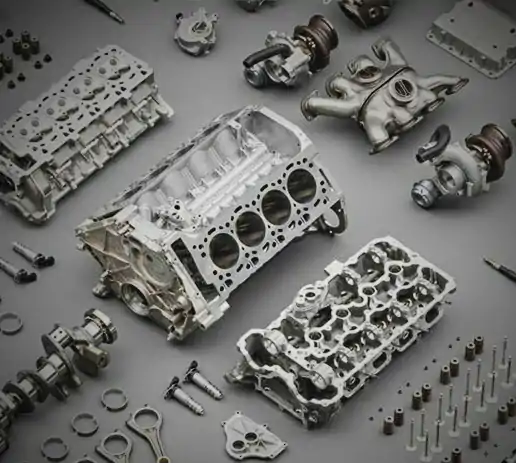
Spare Parts 2 years Warranty Not only we repair and maintain your car with the top class service, but also and for the first time in UAE German Experts provides a 2 Years or 40,000 KM Warrantee Certificate to most of the Spare parts options, no matter what is your choice or budget for the spare parts whether it is New, ATC or After Market. Most of the spare parts are available at German Experts Parts Store to save your time.
Body Shop offer, FREE Repair Evaluation At German Experts , we offer FREE repair Evaluation for all the work that been done on your car in any where else , Including body and Paint quality and density by using the best in the market paint Gauge devices , with the possibility to provide you with written report upon request. Let us say for illustration purposes that your car sustained some major front-end damage. That means not only were body panel replacements and painting required, but repairs to the suspension, frame and engine components. Inspect the following: The body panel seams for uneven gaps Open and close the doors, hood and trunk to notice the fit while listening for strange rubbing sounds. Make sure they open easily and close securely. If an air bag was deployed, was it replaced? This is very important. Check the distance between the tires and fenders and compare those from side to side Ensure that all hoses and wires are connected Turn on your headlights and inspect the beam alignment If the frame needed straightening request a copy of the frame spec printout and have the before and after numbers explained to you If all those check out, now it is time to carefully inspect your car’s paint and finish. How do I Find Auto Paint Job Mistakes? Even when technicians have the factory paint codes, one of the hardest parts of the collision repair process is matching paint to the rest of your car. Existing paint fading dictates that technicians still have to add a little tint to get your car has restored finish perfect. Most vehicles on the road have what has called an “orange peel” paint texture that is sometimes hard to match. These are all reasons to pick up your vehicle during the day and look at it in the bright sunlight. Do so up close first, and then step back several paces from the vehicle to pick up any panel paint inconsistencies. Look for imperfections. If you think this is very complicated and it is also necessary, do not worry, as German Experts offers a Free repair Evaluation for all the work that been done on your car and the possibility to provide you with written report upon request. Call now for more details and appointments
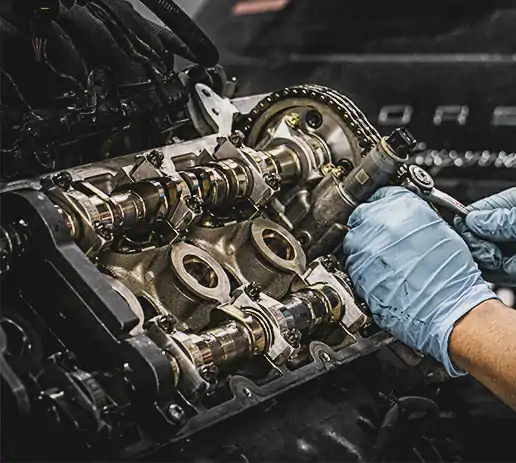
Engine Refurbishment or Engine Overhaul Check now everything you need to know about your car engine! A car engine is a very complex part of your vehicle that requires special care and attention to avoid costly failures. However, in case of a failure German Experts engine specialist would like to explain, in the coming period, different issues you might encounter with your car engine and repair solutions that are not only effective but might save a lot of money from your pocket. Now, let me give you an overview of the main engine components: Engine Crankshaft Engine Crankshaft Bearings Engine Crankshaft Trust Washer Engine Connecting Rods Engine Connecting Rod Bearings Engine Pistons Engine Piston Rings Engine Cylinder Heads Engine Camshaft Engine Camshaft Adjuster or Sprockets (depending on the engine type) Engine Timing Chain (1 timing chain for the in-line or V engine (Audi, VW, and Porsche), 2 or 3 timing chain for the V engines.) Engine Tappets Engine Rocker Arms Engine Valves Engine Intake Exhaust Engine Valve Springs Engine Valve Springs Returner Engine Chain Adjuster Engine Oil Pump Engine Oil Pump Chain If you are here, reading this article, I believe that you should know when you have to accept the engine repair and when engine refurbishment or overhaul is required…. Now… engine repair means just fixing the fault that caused the failure and sometimes if it’s required fixing parts included in the refurbishment process. Engine refurbishment or repair is required when you have one or more of the below faults: Cylinder Liner damage Piston damage Piston rings damage Connecting rod damage Bearings damage Crankshaft damage Our last and biggestTIPis to contact us if you have any symptoms of engine failure, and we will do our best to solve the issue efficient and fast and the most convenient cost possible with 2 Years warranty for Engine refurbishment.
INFO. BMW MOST COMMON FAILURES BMW MOST COMMON FAILURES As admirers of the Bavarian Motor Works brand, we can vouch for the consistent quality of their makes and models. Yet, issues with your vehicle will dependably emerge the more it is driven, regardless. Age, mileage, and driving propensities are enormous supporters of the distance of any car; however, that is the place we come in. North Bay Bavarian has been overhauling all makes and models of BMW for a long time, and we've seen a couple of things. Appropriate support and administration aside, there are a couple of regular issues that can jump up in your BMW. BMW Engine Misfiring Engine Misfiring in BMW cars is a common symptom and can have different causes, but most known ones are coming from the injectors, ignition coil, and manifold for the six cylinders BMW engines. When an engine is misfiring, the air-fuel mixture that entered the engine will come out unburnt, and this will pass through the catalytic converter that can have up to 600 degrees temperatures and in contact with unburnt air-fuel mixture might explode. Symptoms of engine misfiring: Rough idle Rough acceleration Engine Light on Vibrations BMW Crank Position Sensor A crank position sensor monitors the position or the rotational speed of the crankshaft, and according to this information, the engine management system will control the fuel injection and other engine functions. When the crank position sensor malfunctions, your BMW car will have the following symptoms: Engine backfires Higher fuel consume Lower acceleration power If the sensor fails, the vehicle will not start anymore. BMW Transmission In BMW cars, a typical failure meet by German Experts Service Center engineers comes from the transmission, and the most common symptom is the jerking when gears are changing. Transmission Jerking mostly happens because of: the transmission clutch that slips because of wear leaks in different components of the transmission (shock absorbers) Symptoms of a malfunctioning transmission are: Transmission stuck in gear BMW transmission slipping or shifts hard Erratic shifting in one or more gears Transmission warning light on Late answer when changing gears BMW Suspension The most common problems on BMW car suspensions are coming from the: rubber gasket, bushes, and oil leaks. Symptoms of a malfunctioning BMW suspension are: Noises One corner of the car seems lower Rolling Sensation Oily Struts BMW D.M.E. (DIGITAL MOTOR ELECTRONICS) Digital Motor Electronics or Engine Control Unit controls all critical aspects of the engine. Symptoms of a damaged D.M.E.: Check Engine Light stays on after resetting. Car was jump-started on reverse polarity. Engine turning off for no reason. Water Damage or Fire Damage on the E.C. U. The apparent loss of spark. The evident failure of the injection pulse or fuel pump. Intermittent starting problems. Overheating E.C. U. BMW Air Conditioning System (A.C.) The A.C. of the BMW cars at times might get damaged, and one of the most common symptoms is when the compression may switch on for a few seconds and then shut down. If you face this, then your BMW's A.C. system has a malfunctioning ambient temperature sensor and reads a shallow temperature, automatically switching off the compressor.
HAS YOUR CAR BEEN REPAIRED SAFELY? Get a Post-Repair Inspection, and be sure you can drive it safely! German Experts Service Center regularly inspects vehicles after repairs to check for safety, quality, and to assist our customers in the claim approval. In the course of our inspections, we've found that a high percentage of those cars haven't been repaired according to manufacturer guidelines. For more information or to speak to someone at German Experts Service Center, call us at 02 666 6328 or click here to contact us online. In this case study, our customer brought his car to us for a post-repair inspection, and we found serious safety issues with the work that had been performed on his vehicle. The front reinforcement behind the bumper, also called the impact bar because it's absorbing and distributing the shock from an accident all over the car structure, was practically bent from the middle. WHY WOULD A SHOP PERFORM SUCH AN UNSAFE REPAIR? Why would a collision repair facility ever allow this unsafe and unprofessional work to be delivered to a customer? That’s an excellent question! German Experts Service Center would never allow their customers to go back on the road in a vehicle in this condition – or in any other state where their life or even the life of the car will be under a question mark! Some shops, however, believe that their profit on a single repair is more important than the safety of their customers. They’re counting on the idea that you’ll never find out about the corners they cut, or the procedures they’ve skipped. They hope that you’ll see a car that looks “fixed” on the surface, and never think to get an inspection to make sure the structural work is right. WHERE’S THE ACCOUNTABILITY? Knowing there are a lot of safety regulations and guidelines when we talk about the production of vehicles, you will never think that no clear rules are ensuring that also the repaired cars are safe to be driven on the roads. Unfortunately, as the competition on the market is a tough one, somebody shops to receive as many possible cars from the insurance companies are skipping necessary procedures and use substandard parts to repair a vehicle after a collision. As per the Insurance Authority Board of Directors Decision No. (25) Of 2016, chapter 2, point 7, the repair work should be warranted by the repairing shop, and the Insurance Company should make sure that the vehicle is repaired correctly. Click here to learn The Unified Motor Vehicle Insurance Policy Against Third Party Liability according to Insurance Authority Board of Directors’ Decision No. (25) of 2016 HOW IS GERMAN EXPERTS SERVICE CENTER DIFFERENT? At German Experts Service Center, we work with all insurance companies; we do not rebate from following factory specifications in any of the repairs. Our top priority is always to serve the interests of our customers, and we’ll help you make sure your car is returned to the safe, structurally sound condition it was in before the accident, offering six months warranty for labor and mechanical work and no less than five years for any paintwork. That’s why we’re certified and recognized for the highest quality collision repair available. We use only genuine parts, and we always perform the necessary procedures to keep your car as safe as it was when it rolled off the factory floor. KNOW YOUR RIGHTS! If you’ve been in an accident, your insurance company is obligated to return your vehicle to pre-loss condition, and the repairing work should be warrantied! Sadly, they often try to avoid this responsibility, even when it means putting their policyholders in unsafely repaired cars. We understand that this is a challenging condition for our customers to find themselves in. Through an agreement between Watania Insurance and us, we have built a premium car insurance where we are working on behalf of our customers, assisting them through the entire claims process. Just have with you the police report and call us to pick up your car. We will take the approvals, repair it as per the factory specifications and standards and return it to you under warranty and in entirely driving condition! GET A POST-REPAIR INSPECTION If you’ve had a significant structural repair and you feel like your vehicle is not the same as before driving wise or aesthetical or you are concerned about the quality and safety of the work done on your car, German Experts Service Center Offers free post-repair inspections under specific terms and conditions. Information is power, and we genuinely want every car driver in UAE to know their legal rights that your insurance company doesn’t want you to know about: DEPRECIATION PERCENTAGE FOR PARTS of PRIVATE MOTOR VEHICLES: Year Percentage First - Second 5% Third 10% Fourth 15% Fifth 20% Sixth and above 30% The following spare parts, if have been damaged in an accident should be replaced with NEW spare parts without any depreciation deduction: Glass New Brake Master Cylinders New Brake Wheel Cylinders New Brake Calipers New Brake Cables New Brake Hoses New Brake Diaphragms New Steering boxes New Steering rakes New Steering ball joints & swivels New Seat Belts New The Insurance Company should offer recovery service if the car cannot be driven, at 0 costs. If your vehicle is repaired with an approved by the Insurance Company repair shop, the Company shall ensure that the repairing is adequately made and the shop should offer a warranty for the work. The Insurance Company shall ensure that you are enabled to have your car checked by any Motor Vehicle Examination Agency Click here for more information about GERMAN EXPERTS PREMIUM CAR INSURANCE For more information or to speak to someone at German Experts Service Center, call us at 02 666 6328 or click here to contact us online!

TUV NORD CERTIFICATIONS AND ISO BENEFITS FOR CUSTOMERS What are the benefits of ISO to customers? ISO 9001:2015, ISO 14001:2015 & ISO 45001:2018 standards are recognized worldwide, and you, as a customer, will understand the benefits of working with companies that are having ISO 9001:2015, 14001:2015 & 45001:2018 certification. Some customers are doing business with certified companies because it gives them the assurance that the management systems are continuously assessed and approved. They will know from experience that working with ISO 9001:2015, ISO 14001:2015 & ISO 45001:2018 certified companies have the following features: Highly trusted company Industry Leader Consistent and efficient workflow Minimized risk of human mistakes Improved process in reporting and communicating Better quality of products and services More reliable production scheduling and delivery Standards maintained by annual assessments Cost-saving in waste, recycling, and consumption Advanced management of environmental risks Compliance with individual countries environmental regulations Demonstrated commitment to improving the environment Described the responsible future-focused organization Satisfied employees, operating in an environmentally friendly environment Enhanced personal safety as well as organizational security Improved managerial oversight Preventative risk and hazard assessment Trained to deal with risk & opportunities What is TUV NORD Certification, and how is it helping you as a customer? TÜV Nord Group was founded in 1869 in Germany and is a technical service provider with worldwide activities and works to validate the safety of products and services of all kinds to protect humans, material assets, and the environment against hazards. Different types of certifications can be implemented in a company, according to the company field of work. German Experts Service Center has 3 main certifications, approved by the International Organization for Standardization, (the maximum number of certifications available for our industry) and all 3 (Quality, Environmental and Health & Safety) are meant to help us standardize a healthy and efficient work environment, while taking into consideration and prioritizing our customers experience with us. What is the ISO Certification? ISO management standards are a series of frameworks that help businesses run effectively. ISO certification is proof from a third party that a company is complying with an ISO management standard. When a company has the ISO certification, it means that it was inspected by certified auditors and is having CREDIBILITY in services and products that meet the most highest International Standards Why German Experts Service Center and how it is helping you as a customer? German Experts Service Center holds 3 ISO Certificates that only a few companies in the Middle East could ever complete a triple audit and received all certifications at one time. ISO 9001:2015 (Quality Management System) German Experts is demonstrating the ability to provide SERVICES that meet and exceed customer expectations consistently. German Experts aims to demonstrate its commitment to follow legal requirements and continuous improvement and follows specified conditions for a quality management system that: It has a well-organized workflow, managed by highly experienced people who are focusing on maintaining daily the mission of the company and increased cost-effectiveness through continuous process improvement. Has demonstrated its ability to provide products and services that meet customer requirements following specific standards and specifications of different institutions in offering the same quality of work at all times. The senior management is benefiting from international best practices in improving quality at every step of the life cycle of the company. This includes everything from the supply, acquisition, operation, and maintenance, to the circular process of continuous improvement. Aims to enhance customer satisfaction through the practical application of the system, including processes for improvement of the system and the assurance of conformity to customer and applicable statutory and regulatory requirements. ISO 14001:2015 (Environmental Management System) German Experts is aware of the importance of the environment and works with certified products with minimum impact against the people and the environment. The methods implemented are: Reduction and storage of disposal Liability risks are ruled out, and the company is meeting all the obligations imposed by the International Authorities All equipment and materials used are not negatively affecting the staff, customers, or the environment. ISO 45001:2018 (Occupational Health & Safety Management System) German Experts to pro-actively improve it is Occupational Health & Safety in preventing injury & ill-health of workers and offering them a safe environment where they can perform at 100% capacity their daily tasks in repairing and maintaining the cars we are servicing.
LEARN WHAT AND HOW YOU SHOULD CHECK A CAR BEFORE BUYING IT! How to Check a Car before Buying It: Buying a car, mostly if it’s not a new one, is not an easy decision, and if it’s not appropriately checked can become a real problem. What should you look for when buying a car? Can the kilometers of the vehicle be changed? German Experts Service Center and German Experts Body Shop technicians will try to cover the main points that should be taken into consideration when purchasing a car. If you don’t feel confident enough to do it alone call us and we will do the Pre-Purchasing Inspection for you Check the Exterior To check the state of the tires and the alignment of the car you should park the car on level ground. Take some distance from the car from front and rear side and check if it looks straight. Check the Paint Check the paint condition looking for dents, scratches, or rust. None of this will affect the performance of the engine but can affect the price you pay for the car Look at the sides of the car from end to end for waviness and difference in colors– if you notice any, means that the car wasn’t painted in the right way and also indicates that the vehicle suffered a repair. Did the seller tell you anything about an accident or modification in the car? Check the Bottom Check the car’s undercarriage (underside) with a flashlight. Inspect for rust, unaligned panels, or marked difference in the condition of different sections. Check the exhaust system condition- if it’s rusty or has any damage will lead to a costly repair. Also, check for a leak on the ground that indicates the car needs repair. Check the Tires Tires are telling a lot about a used car and how it’s been driven and maintained. Check if the tires have enough tread on them to be safe. Each tire has six tread-wear indicators as in the attached picture – if the tire is too worn, the indicator will be at the same level with the tread, and the car needs tire replacement. Now, if the car is having low mileage and worn–out tires, it might indicate that the odometer is not accurate. If something doesn’t make sense, you should ask the seller why. Putting questions about the car should not harm anyone, and the seller should provide you with all the answers needed. Check The Hatch of the Car Check the condition of the trunk or hutch of the car. Lift the carpet and check for rust and also the spare tire condition. Make sure the Hatch lid is closing properly. Does it stays alone or falls on your head? The dimension of the hatch is the one that you need? Check the Mechanical Components from Under the Hood A proper check-up that will avoid any unexpected future problem on the car can be performed only by an expert, but if you choose to do it alone, you should check the following points: Engine condition: at a visual check-up, the engine compartment should look clean without signs of oil leaks or other fluids. Perform the visual check before and after you test drive the car. Pull the oil dipstick and clean it with a tissue. Reinsert it and remove it again. A right maintained car shouldn’t have a dark and dirty oil, or under the average level. A foam residue on the inside indicates a leaking gasket. With the engine turned off, check the underside of the fan belts for any visible crack or wears Check the strut tower or shock and the corners near the windshield (from the inside) for rust. Pull the transmission dipstick to check the fluid – the fluid should be pink or red. Inspect the hood if it’s opening and closing correctly and if it stays open without being held. Inspect the Interior Check the seats for tears, stains or other damage and make sure the seats can be adjusted Check the window buttons if they are working correctly, and the windows can be opened and closed. Check the A.C Turn on the air conditioning system to make sure it’s working. Turn on the temperature control and check both the heat and cold options. Turn the fan on as well on low and high speed. Let it run for a few minutes and check if any strange smells are coming from the A.C. Check the Indicator and Display Lights Check for any error alerts, and if the lighting system is all functional. Don’t hesitate to test all the lights and signals, inside and outside the car. Do the same with the wipers and cigarette lighter. Test Drive the Car Take your time in the drive, testing the car, and listen carefully if there are any noises or trepidations while driving. Drive the car at different speeds to see how it feels. At first, drive the car down a flat road at 40-50 km/h, taking slightly and carefully your hands from the steering wheel. If the car is pulling right or left, it might just need an alignment or could indicate a bigger problem. After this, drive the car at about 100-110 km/h. If the vehicle wobbles, the tires might be out of balance. Test the car at 72 km/h, 89 km/h, 105 km/h, and 121 km/h and look if there is any trepidation or clucking noise or strange sound. If there is any, it might indicate wear at the direction of mechanical parts or uneven wear the front tires. Check the brakes Drive the car at 50-70 km/h and press the brake hard enough to decelerate fast but not enough to stop the vehicle. It shouldn’t be any vibration or noise from the brake pedal. If the brakes are pulsating, indicate the need for having the rotors resurfaced or replaced and new pads installed. The car should be stable when you press the brakes. If it has any stability deviation might be because of a lousy caliper deviation or worn steering components. Check the Car History Report Ideally would be that the owner of the car kept a record of the repairings and services performed on the vehicle along the time. Are situations when cars are sold because of past accidents or the periodical maintenance haven’t been done on time. Let an EXPERT Check the Car! Book Now a Vehicle Pre-Inspection and save yourself from a costly repairing! You are about to make a long term and costly investment that is closely related to your comfort and not the least your safety. Rather than taking the risk of buying a car with hidden failures which will cost you more to repair in case is coming to this situation, spend a little bit extra and go for a Pre-Purchase Inspection as only a very experienced person can know precisely by computer and visual testing the car if you are about to make, or not a safe investment. Please check the Pre-Purchase Inspection section in our website to see all the point which are a must to be tested in a car and contact us for more info.
WHICH ARE THE MOST COMMON FAILURES OF BENTLEY CARS? BENTLEY’S MOST COMMON FAILURES: All vehicles experience frequent problems, and it's essential to have an understanding of how this may be true for your Bentley as well. Although we typically associate Bentley vehicles as being impervious to damage or failure, this isn't true. While Bentleys are exceptionally designed and engineered, giving them the well-deserved reputation they have earned, they still encounter their fair share of difficulties like any other human-made machine and German Experts Service Center – Bentley specialist would like to share the most common failures which we are facing while we repair Bentley cars. Blocked plenum chamber: A plenum chamber is a pressurized housing containing a fluid (typically air) at positive pressure. One function of the plenum is to equalize pressure for more even distribution, because of irregular supply or demand. A plenum chamber can also work as an acoustic silencer device. On the off chance that you have a blocked plenum chamber, you risk water spilling into the front footwalls as well as spilling through the ventilation framework. This can inevitably harm electrical parts, which will be all-around expensive to fix. Suspension Problems: In Bentley Continental models especially, a common issue meet by German Experts technicians in the early wear or malfunction of the air suspension parts Instead of regular coil type spring under your car, the Bentley is supported by four rubber cylinders or air springs filled with air supplied by an air compressor. Age affects the rubber air springs and will cause small cracks. Once this happened, the air will begin to leak out slowly, and you will notice your Bentley car lower one side or one corner after being parked over the night. Other signs that might indicate a failure in the Bentley suspension system are: roughness when encountering bumps or road imperfections. German Experts Bentley specialist is recommending not to ignore any of these problems as they might lead to a catastrophic failure. If left unrepaired, the springs can blow-out, which will cause significant damage to the body of the car. It also can become very dangerous if it happens while driving. To prevent a suspension failure in your Bentley car, you should adhere to the periodical maintenance schedule set by the manufacturer and have your vehicle checked by experts if you feel any change while driving it Electric Window Failure: No, you presumably didn't break your window, and possibly it hasn't flipped on you presently. Would you be able to hear a murmuring sound originating from your windows when you are moving it up or down? This could be the sign that the engine will come up short, and since each engine has its very own ECU, it tends to be mind-boggling to fix. As solutions needed, the engine can't be supplanted alone, so a substitution unit is required. In German experts Service Center, we have Bentley repair solutions for any failure appeared, and electric window repair for Bentley cars is one of them. Brake Light Failure: A standard failure in Bentley cars is when the brake light fails. The brake light being referred to be situated at the focal point of the backside, over the back window. In German Experts Service Center, we have advanced technology, repair solutions, and experienced technicians specialized in Bentley car repair that will solve the problem most effectively in saving your time and money. We pride ourselves in being experts in European car Repair in UAE, and we are happy to answer questions and concerns regarding Bentley issues or Bentley repairs Please contact us or book an appointment to bring your Bentley today.

Owning a Lamborghini is about more than driving, it’s about experiencing unmatched engineering and prestige. Yet even the most exotic cars come with quirks. From Lamborghini Gallardo problems like clutch wear to Lamborghini Aventador issues with transmission seals, knowing the common faults helps owners save time, money, and frustration. At German Experts, our specialists see these issues daily and know exactly how to fix them before they escalate. Should You Worry About Lamborghini Reliability? How Often Do Lamborghinis Break Down? Unlike mass-market cars, Lamborghinis don’t fail often if maintained properly. What owners experience are predictable Lamborghini issues, clutch wear, hydraulic leaks, cooling problems, that worsen without proactive servicing. Regular check-ups keep breakdowns rare. Cost of Lamborghini Maintenance: Worth It? Exotic cars need specialized tools, genuine parts, and expert hands. While Lamborghini maintenance is costlier than average, it prevents catastrophic repairs later. Skipping routine servicing is where owners lose far more in the long run. What You Need to Know Before Buying a Used Lambo Buying pre-owned can be smart, but only if the car has a clean maintenance history. Watch for warning lights, aftermarket part replacements, or missing service records. Always invest in a pre-purchase inspection at a trusted workshop like German Experts. Lamborghini Gallardo: Top Faults + Fixes Clutch Failure: Why Gallardo Clutches Wear Fast Symptoms: Hard shifts, slipping clutch, burning smell.Causes: Aggressive driving, stop-start traffic, e-gear system strain.KM Range: Clutches often wear around 30,000 km depending on driving style.Fixes: Upgrading to stronger aftermarket clutches or recalibrating e-gear extends lifespan. E-Gear Actuator Problems Symptoms: Jerky shifts, hydraulic leaks, gear not engaging.Causes: High hydraulic pressure strain.Solution: Resealing or replacing actuators, recalibrating software. Trusted specialists can often repair actuators instead of costly replacements. Power Steering + Hydraulic Light Failures Leaks in steering pumps trigger dashboard warnings. Fixes involve pump servicing and hydraulic line inspections before full replacements are needed. Engine Valve Timing Issues Gallardos can develop timing variator faults, leading to rough idling or misfires. German Experts use advanced diagnostics to detect early timing failures before they cause engine damage. Lamborghini Murciélago: Known Issues Nose Lift Return Hose Leak (Undrivable Risk) A common fault that leaves the front suspension unusable. Immediate hose replacement is required to make the car drivable again. Cooling Line Failures (Smoke Behind Passenger Door) Factory lines often detach, causing leaks and smoke. Upgraded lines solve this permanently. Gasoline Tank Leaks (Fire Hazard) Ageing Murciélagos sometimes develop tank seepage. We recommend pressure testing during every major service. Engine Valve Timing Malfunctions As with the Gallardo, variator issues are common. Early intervention prevents full engine rebuilds. Lamborghini Aventador: Common Faults & Warnings Transmission Seal Leaks (Especially 2012 Models) Owners of early Aventadors often face leaking transmission seals. The solution: reinforced seals and proper gearbox servicing. ECU Malfunctions & Reprogramming Needs Warning lights tied to ECU errors are frequent. Software updates or module replacements resolve most problems. Suspension Problems for New Drivers Excessive strain from aggressive city driving leads to worn suspension arms. Preventable with careful driving and routine checks. Maintenance Myths About the Aventador Many owners believe service intervals can be stretched. In reality, missing one service can trigger chain reactions across the clutch, cooling, and electronics. Shared Problems Across Lamborghini Models Overheating Clutches: Gallardo, Murciélago, Aventador Heavy stop-start driving and heat cause clutch overheating. Regular recalibrations and fluid checks reduce wear. Fuel System Failures: Leaks, Fire Hazards Aging hoses and fittings across models pose risks. Preventive replacement is safer than waiting for leaks. Electronics: Warning Lights & ECU Errors Modern Lamborghinis are electronically complex. ECU glitches, sensor failures, and faulty wiring can trigger multiple lights. Professional diagnostics is the only way to separate false warnings from real faults. How to Prevent Costly Lamborghini Repairs Periodic Maintenance Schedule (What & When) Oil and filter: every 7,500–10,000 km Brake and clutch fluid: every 2 years Cooling system inspection: every major service ECU diagnostics: annually Diagnostic Tools for Lamborghinis OBD scanners alone aren’t enough. German Experts use factory-grade diagnostic tools for accurate Lamborghini fault detection. OEM vs Aftermarket: Which Parts Last Longer? Genuine parts guarantee fit and reliability, but certain high-performance aftermarket upgrades (like reinforced clutches or cooling lines) extend longevity. Inspection Checklist Before Buying a Used Lamborghini What to Ask the Seller Full service history Last clutch replacement date Any ECU/software updates done Red Flags in Used Lambo Reports Repeated clutch failures, accident history, or warning lights not addressed are deal-breakers. Where to Get Pre-Purchase Inspections Always have a Lamborghini expert workshop perform a full inspection. At German Experts, we combine diagnostics with a mechanical review to reveal hidden costs. FAQs on Lamborghini Issues Why Do Lamborghini Clutches Fail Fast?Heat, driving style, and stop-start traffic shorten clutch life, especially in Gallardos. What’s the Most Reliable Lambo Model?The Huracán has fewer recurring faults compared to older Gallardo and Aventador models. Can You Drive With E-Gear Problems?Temporarily, but it risks gearbox damage. Get it checked immediately. Why Trust German Experts for Lamborghini Repairs? What Makes Us Different from Other Repair Shops? German Experts specialises in exotic supercars. Unlike general garages, we use dealer-grade diagnostic tools, genuine and high-performance parts, and factory-trained technicians for Lamborghinis. Our Diagnostic & Repair Process Explained Every Lamborghini goes through: Initial fault scan with factory software Mechanical inspection by supercar specialists Transparent repair plan with options (OEM or upgrade) Post-repair testing under UAE driving conditions This ensures precision, reliability, and long-term performance.



Copyright 2026 © German Experts. All Rights Reserved | Sitemap | Privacy Policy