Get A Quotation For Your Warranty Or Service Contract


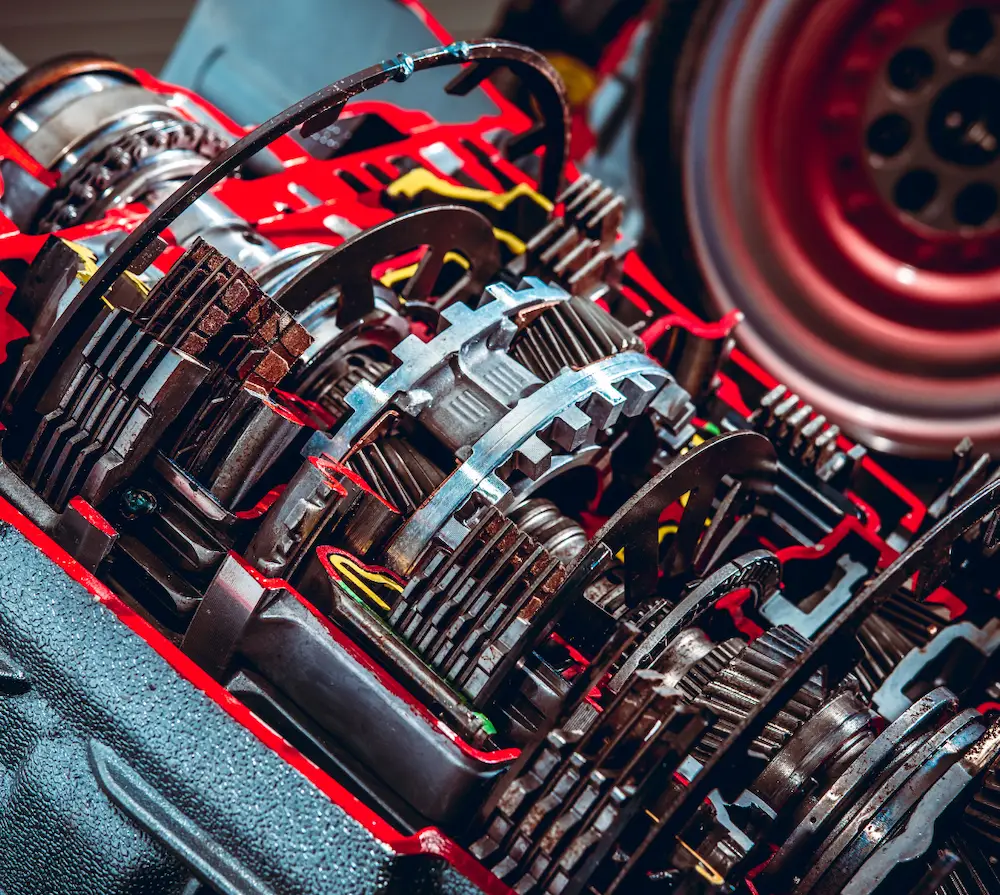
TRANSMISSION SERVICE GUIDE: PREVENTING AUTOMATIC, CVT AND DUAL-CLUTCH GEARBOX FAILURES
Why gearboxes suffer in UAE conditions
Your transmission has one of the hardest jobs in the car: delivering power smoothly while dealing with constant changes in speed, load and temperature. In the UAE, this job is even tougher. Traffic means endless low-speed creeping and sudden acceleration. Highway driving often happens at high speeds in hot weather. Many cars tow, carry full families or climb steep ramps to parking levels. All of this generates heat inside the gearbox.
Heat is the enemy of transmission fluid. When the fluid overheats and breaks down, it can no longer lubricate and protect the internal components properly. Wear increases, shift quality drops and, if nothing is done, failure becomes a real risk. The cost of rebuilding or replacing a modern automatic, CVT or dual-clutch gearbox can easily be higher than several years of proper servicing. So it makes sense to treat the transmission as a critical system, not an afterthought.
The main types of transmissions you’ll see – and how they differ
Most modern cars in the UAE fall into one of three categories:
- Traditional automatic gearboxes (torque converter automatics)
These use hydraulic fluid, a torque converter and sets of gears and clutches. They’re common in many sedans, SUVs and luxury vehicles. They are generally robust but still depend heavily on fluid quality and cooling. - CVT (Continuously Variable Transmission)
CVTs don’t have fixed gears. Instead, they use a belt or chain between variable pulleys to provide a range of ratios. They’re common in some Japanese and Korean models and focus on efficiency and smoothness. They are very sensitive to fluid type and level. - Dual-clutch transmissions (DCT / DSG / S-tronic, etc.)
These use two clutches and two sets of gears to offer fast shifts with minimal interruption of power. Some use dry clutches, others wet (oil-cooled) clutches. They can be excellent when maintained correctly but are less forgiving of neglect and wrong fluid.
Each type has its own typical problems and service needs, so a “one size fits all” approach doesn’t work.
What transmission fluid actually does
Transmission fluid isn’t just oil to “make things slippery.” In automatics, it handles lubrication, cooling, cleaning and actually transfers power inside the torque converter and hydraulic circuits. In CVTs, the fluid also has to grip the belt or chain correctly without slipping. In dual-clutch gearboxes, fluid may be used for the internal gears and for cooling and controlling the clutches.
Over time, the fluid breaks down from heat and shear forces. It collects fine metal particles from normal wear. Add high ambient temperatures and heavy load, and the fluid can degrade faster than the “lifetime” claims suggest. Once it loses its properties, internal parts are left exposed, and shift quality starts to suffer.
“Sealed for life” – what that really means
Many modern cars are sold with transmissions described as “sealed for life” or with no official fluid change interval listed. It sounds great: no service needed, ever. But “life” in that sentence often means the life of the warranty or a specific average use pattern, not the life of the car in harsh climates.
In UAE conditions, with high heat and demanding driving, many specialists recommend treating “sealed for life” more like “sealed until the fluid is clearly worn” – which may be somewhere around 60,000–100,000 km depending on the gearbox and usage. The smartest option is to talk to a workshop that understands your specific transmission. They can often check fluid condition, look at shift behaviour and advise a safe interval rather than blindly trusting marketing language.
Warning signs your transmission needs attention
Gearbox problems rarely appear out of nowhere. There are often early hints:
- Delayed engagement when shifting from Park to Drive or Reverse
- Jerky, harsh or unusually soft shifts
- Noticeable flare in engine RPM between shifts
- Shuddering or vibration at certain speeds or when taking off
- Whining, humming or clunking noises from the transmission area
- “Transmission fault” or “Gearbox malfunction” warnings on the dash
- For CVTs: a rubber-band feeling, where revs climb but speed lags
If you notice these symptoms, it’s not the time to ignore them or just reset fault codes. It’s time to get a proper diagnostic check. Sometimes the fix is as simple as a fluid change and software adaptation. Sometimes it’s the early stage of a mechanical fault. Catching it early can save you a lot of money.
Typical service work on different gearboxes
Traditional automatics
For torque converter automatics, service often includes:
- Draining and refilling transmission fluid, sometimes using a machine to exchange more of the old fluid
- Replacing the transmission filter if it’s serviceable (some are internal and only accessible during overhaul)
- Inspecting the pan for metal particles and debris
- Checking for leaks and gasket condition
- Performing adaptation resets or relearn procedures if required
Many automatics benefit from this service somewhere between 40,000 and 80,000 km in UAE use, then at similar intervals afterwards.
CVT gearboxes
CVTs are very sensitive to the correct fluid type and level. Service usually includes:
- Draining the old CVT fluid
- Refilling with the exact specification and quantity recommended by the manufacturer
- Replacing the external filter if fitted
- Resetting learned values or running adaptation routines where required
Using a generic automatic transmission fluid instead of proper CVT fluid is a quick way to cause serious damage. This is one area where there is zero room for guessing.
Dual-clutch transmissions
Dual-clutch service varies depending on whether the clutches are wet or dry. Common tasks include:
- Changing the gear oil and, on wet clutch systems, the clutch cooling and control fluid
- Replacement of filters in the mechatronic/hydraulic unit where specified
- Running clutch adaptation and calibration routines through a diagnostic tool
- Inspecting for leaks around seals and mechatronic units
Skipping these services or using the wrong fluid can lead to shuddering, harsh shifts, overheating and eventual failure.
Cooling – the hidden part of transmission life
Transmission cooling is crucial and often overlooked. Some gearboxes have dedicated oil coolers; others share a cooling circuit with the engine. If radiators, coolers or lines are partially blocked by sand and dirt, transmission temperatures rise. The driver might only experience this as slightly worse shifts at first, but internally the fluid is breaking down faster.
This ties back to your overall cooling-system maintenance. When radiators and condensers are cleaned and coolant is renewed on schedule, the gearbox benefits too. If your car is used for towing, off-road driving or heavy loads, extra attention to cooling is even more important.
Driving habits that help gearboxes live longer
Your habits behind the wheel matter almost as much as the workshop schedule.
- Avoid full-throttle launches from a standstill whenever possible. Constant hard launches build heat and stress clutches and bands.
- In automatics and DCTs, don’t sit with your foot on the throttle and brake at the same time to “creep” forward. Use the brake properly and let the transmission do its job.
- In heavy traffic, if you know you’re going to be stopped for a long time, shift to Neutral with the foot brake on rather than letting the gearbox fight against the brakes in Drive.
- For DCTs with dry clutches, avoid holding the car on a slope using the throttle; use the brake or parking brake instead.
- Don’t tow beyond the rated capacity, especially in high heat, and make sure transmission and engine cooling are in good shape before towing at all.
These small choices reduce heat and wear over time.
Why diagnostics and fluid choice matter
Modern transmissions are closely linked to the engine and other systems. When a gearbox behaves oddly, it doesn’t always mean the fault is inside the gearbox itself. Engine performance issues, sensor problems or software glitches can all show up as poor shift quality. This is why a proper diagnostic session is important before deciding what to do.
When fluid changes are needed, using the exact recommended specification matters more than many people think. Gearboxes are designed around specific friction characteristics and viscosity. Cheap or incorrect fluids can cause shuddering, noisy operation and accelerated wear even if they seem fine at first. A specialist workshop will check the correct fluid code, not just grab something “similar”.
A sensible transmission service plan for UAE drivers
As a broad guideline, you can think along these lines:
- Up to 40,000 km
Listen for early symptoms and make sure your overall cooling system is in good condition. Some gearboxes may already be due for their first fluid change in harsh use. - Around 40,000–60,000 km
Serious discussion with a specialist about fluid change for automatics, CVTs and wet dual-clutch boxes. If the manufacturer already recommends a change, follow it. If they say “lifetime”, ask what lifetime usually means here. - Beyond 60,000 km
Repeat fluid changes at sensible intervals based on how the car is used. High-mileage and high-load vehicles (taxis, fleet cars, frequent towing) may need more frequent attention.
Along the way, always pay attention to new noises, vibrations, warning messages and changes in shift behaviour. These are your early clues.
When to see a transmission specialist immediately
There are some situations where you should not wait:
- You feel a strong jerk or bang when the gearbox shifts
- The car loses drive suddenly or goes into limp mode with a gearbox warning
- There is a burning smell from the transmission area
- The gearbox slips so that revs rise without a matching increase in speed
- You hear loud whining or grinding that changes with gear or speed
In these cases, continuing to drive can turn a repairable situation into a complete failure. Getting the car to a workshop that understands your type of gearbox and has the right diagnostic tools is the safest move.
Treating your transmission as a key system instead of something to forget after the test drive will save you stress and money. In UAE conditions, proper servicing, fluid quality, cooling and driving habits all work together to keep automatics, CVTs and dual-clutch gearboxes shifting smoothly for years.